Granul Krisan Liar baru-baru ini dimasukkan ke dalam Farmakope Cina (Edisi 2025). Banyak puncak pengotor muncul dalam kromatogram sampel uji, dan linarin tidak dapat dengan mudah dipisahkan dari puncak pengotor yang berdekatan, yang mengganggu penentuan kuantitatif. Untuk menghilangkan gangguan dari puncak pengotor sambil tetap mematuhi spesifikasi farmakope Edisi 2025, parameter kromatografi dioptimalkan untuk mencapai pemisahan puncak yang efektif. Metode HPLC kemudian dibuat untuk kuantifikasi simultan asam klorogenik dan linarin dalam Granul Krisan Liar.
Analisis dilakukan pada kolom kromatografi C18 sesuai dengan persyaratan kromatografi yang tercantum dalam Farmakope Cina Edisi 2025. Dalam uji pengulangan larutan kerja standar, nilai RSD waktu retensi untuk asam klorogenik dan linarin adalah ≤0,033%, dan nilai RSD luas puncak adalah ≤0,299%. Faktor pembuntutan masing-masing adalah 1,027 dan 0,994, dan jumlah lempeng teoritis puncak linarin mencapai 609521, semuanya sesuai dengan kriteria farmakope. Metode ini dapat diadopsi sebagai referensi untuk pengujian kuantitatif rutin asam klorogenik dan linarin dalam Granul Krisan Liar.
Instrumen yang Digunakan
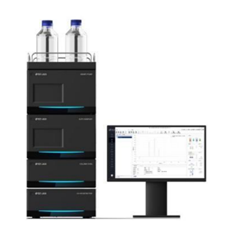
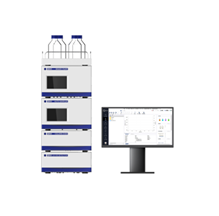
Kromatograf Cair Kinerja Tinggi Persee L820 dilengkapi dengan:
Pompa Pengiriman Pelarut Tekanan Tinggi Biner L820-P22
Autosampler L820-A11
Oven Kolom L820-C11
Detektor UV-Vis L820-D10
LCWin-V5.0 HPLC Workstation (Versi Standar V5.0)
Baki Pelarut L820-C304100001