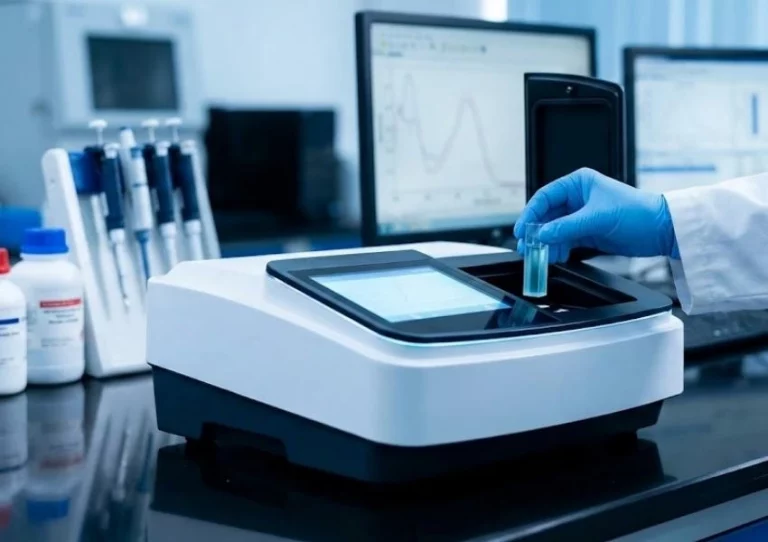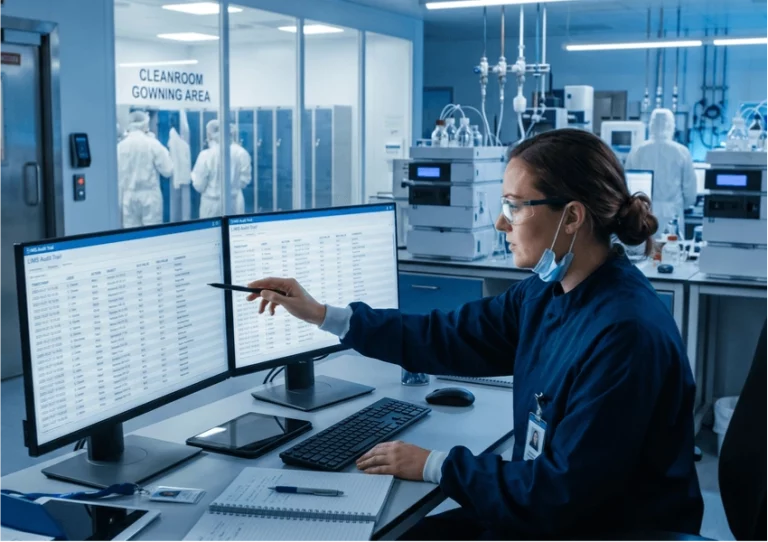
In pharmaceutical QC, a UV-Vis result is not just a number on a screen. It may support an assay, a dissolution check, an identification step, a cleaning verification, a raw-material decision, or a batch release discussion. The reading has to be technically sound, but it also has to be traceable. Who ran the sample? Which method was used? Was the wavelength changed? Was the result reprocessed? Could another person sign in and overwrite the work? Those questions sit at the center of UV-Vis data integrity.
Buyers often focus on wavelength range, stray light, and photometric accuracy first. That is fair. Weak optics can ruin good software. Still, pharmaceutical QC also needs a software and documentation layer that fits GLP or GMP habits. Before purchase, the buyer should look at the whole chain: instrument performance, user roles, password control, audit trail behavior, method storage, export formats, qualification support, and the supplier’s ability to help the lab set up a controlled workflow.
Start With the Records the Lab Must Defend
The right specification depends on the records the lab creates. A research group may only need clean spectra and easy exports. A regulated QC lab has a tougher job. It has to show that data are attributable, legible, contemporaneous, original, and accurate in daily practice. That does not happen because a brochure uses the word compliance. It happens when user identity, method control, raw data, result processing, and review steps are built into routine work.
Map the Workflow Before Comparing Models
List the common UV-Vis tasks before comparing instruments: fixed-wavelength photometry, spectrum scanning, quantitative calibration, kinetic measurement, DNA or protein work, dissolution accessories, or long-path cells. Then mark which steps create regulated records. A QC lab may need one user to create methods, another to run samples, and a reviewer to check results. If the software cannot separate those roles cleanly, the lab may end up controlling too much by paper and memory.
Ask What Happens After a Result Is Created
Data integrity problems often appear after the measurement. Can the analyst reprocess a result without a visible record? Are methods stored with enough detail to repeat the test? Can data be exported in formats that the laboratory system can retain? Is software activity logged automatically? A buyer should ask for a live demonstration using a normal QC task, not a polished sales example.
Software Controls Are a Buying Requirement
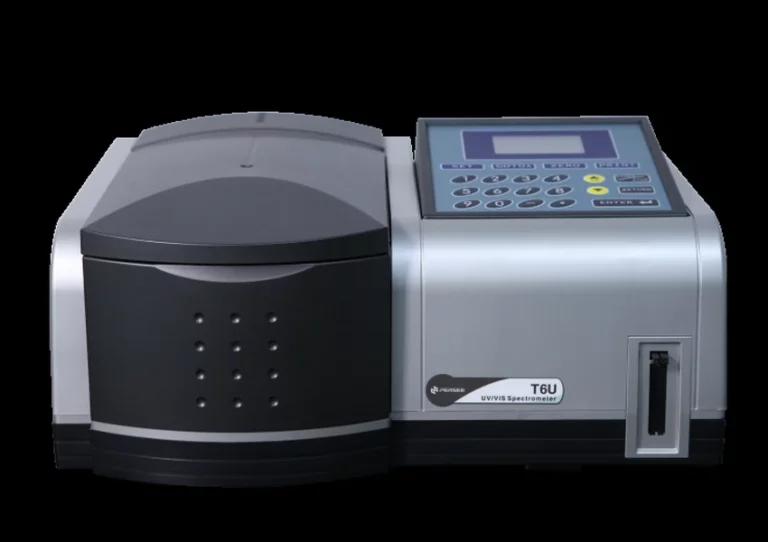
For pharmaceutical QC, software should do more than draw a spectrum. PERSEE’s UVWin 6/GMP software connects to benchtop UV-Vis spectrophotometers and provides instrument control, data acquisition, and mathematical tools across spectral analysis, quantitative analysis, kinetic analysis, and photometric analysis. More important for controlled labs, its administrative settings support GLP/GMP/GRP conformity, custom user groups, privilege settings, automatic activity logging in an audit trail, and password control for instrument use.
User Access Control Should Be Practical
User access control is only useful when it matches real staff behavior. QC laboratories may have analysts, senior analysts, supervisors, reviewers, and administrators. The software should let the lab create user groups and assign actions by role, not by shared passwords. Shared logins are convenient for a week and painful during an audit. Password control also needs to be part of daily instrument use, so records can be tied to the person performing the work.
Audit Trail Review Must Be Usable
An audit trail should not be treated as a hidden database that nobody reviews. Buyers should ask how software activity is logged, how entries are viewed, and whether the lab can review the record during investigations. For UV-Vis software compliance, the audit trail needs to help a supervisor answer simple questions quickly: who changed a method, who ran the sample, what was reprocessed, and when.
Optical Performance Still Carries the Result
Data integrity does not rescue weak measurement. A controlled record of a poor result is still poor. Pharmaceutical UV-Vis buyers should check stray light, wavelength accuracy, bandwidth control, photometric range, baseline stability, sample compartment options, and the accessories needed for the actual method. The instrument has to fit both the record system and the chemistry.
Bandwidth and Pharmaceutical Assays
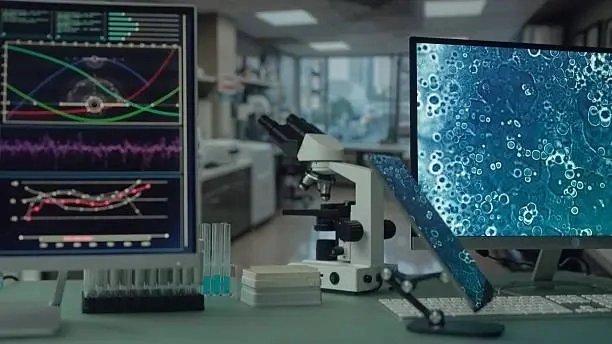
Các T8DCS UV-vis is a double-beam spectrophotometer with continuously selectable spectral bandwidth from 0.1 to 5 nm. It is positioned for pharmaceutical industry and scientific research use, with a Czerny-Turner monochromator, holographic grating, photomultiplier tube detection, automatic wavelength correction, and UV-Win software supplied as standard. PERSEE’s drug-inspection example around spectral bandwidth shows why this matters: bandwidth can change absorbance response, and some pharmaceutical samples require a narrower, carefully chosen setting.
That point is practical, not academic. If a method for an API, preservative, impurity indicator, or dissolution sample depends on a defined spectral bandwidth, the buyer should check whether the instrument can hold that condition across operators and methods. Data integrity includes method integrity. The number in the report only means something when the measuring conditions are controlled.
Low Stray Light and Deep UV Work
Các T9DCS UV-Vis Và T10DCS UV-Vis add a higher optical tier for labs that need very low stray light and broader photometric range. Both use true double-beam double-monochromator optics, a sealed design, ultra-low stray light listed at 0.00004%T at 220 nm, a photometric range of -8.0 to 8.0 Abs, nitrogen purge support for deep ultraviolet wavelengths, and integrated mercury lamp correction for wavelength accuracy. These features fit buyers working with demanding UV methods, high-absorbance samples, or metrology checks.
Qualification and Routine Checks Need a Home
A pharmaceutical buyer should not leave qualification planning until installation week. UV-Vis instruments need documented checks for wavelength accuracy, photometric accuracy, stray light, baseline behavior, and other items tied to the lab’s SOPs. The supplier should be able to support the instrument, accessories, software, and documentation without sending the buyer to separate vendors for every question.
Think Beyond the Main Instrument
PERSEE lists a UV {{url_placeholder_0}} iq {{url_placeholder_1}} within its molecular spectrometer offering. Buyers should ask how the kit fits the selected model and site SOPs, how often checks are normally repeated, and what records the software can keep. Accessories also matter: thermostatic cell holders, long-path cells, sipper pumps, integrating spheres, dissolution accessories, and automatic cell holders may each change the method risk picture.
The purchasing team should also ask about service response, user training, and method setup support. PERSEE has manufactured analytical instruments since 1991 and reports R&D, manufacturing, sales, and an analysis service testing team, along with quality and environmental management certifications. That background is useful when a lab wants one supplier conversation covering hardware, UV-Vis software compliance, accessories, and practical operation rather than separate answers from separate teams.
A Short Buyer Checklist
Before placing an order, ask for a demonstration built around the lab’s own QC workflow. Create two user roles. Run a fixed-wavelength or quantitative method. Save the method, acquire a result, export the data, change a parameter, and review the audit trail. Confirm whether 21 CFR Part 11 software is an included module, an option, or a separate package. Check whether the supplier can provide qualification materials and training for both analysts and administrators.
Then return to the optics. If the lab mostly runs routine photometry with controlled methods, the T8DCS may cover the work with strong sensitivity and variable bandwidth. If the lab needs deep UV measurement, ultra-low stray light, a wider photometric range, or advanced sample compartment flexibility, the T9DCS or T10DCS may be the better conversation. Good UV-Vis data integrity is never just software and never just hardware. It is the fit between records, methods, people, and the instrument used every day.
Câu hỏi thường gặp
Q1: What is the most important UV-Vis data integrity feature for pharmaceutical QC?
A1: User access control and audit trail logging are usually the first checks. The lab must be able to connect each action to a user and review method or result changes without relying on informal notes.
Q2: Does 21 CFR Part 11 software make an instrument compliant by itself?
A2: No. Software can provide controls such as password access, user roles, audit trail records, and electronic record handling. The lab still needs validated procedures, trained users, review practice, and documented qualification.
Q3: Should a buyer choose T8DCS, T9DCS, or T10DCS for pharmaceutical QC?
A3: T8DCS fits many routine pharmaceutical and research tasks that need variable bandwidth and sensitive detection. T9DCS and T10DCS suit labs needing ultra-low stray light, deep UV capability, wider photometric range, and advanced accessory flexibility.