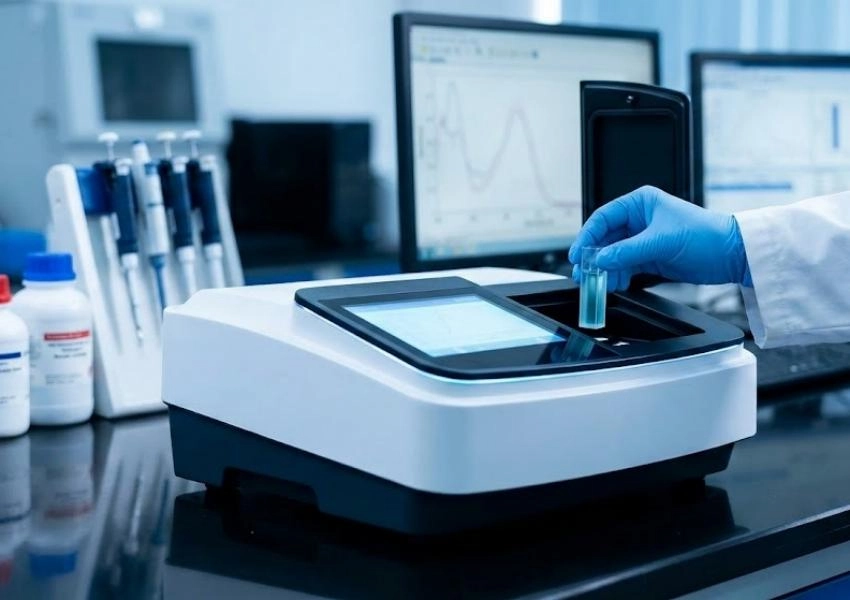
UV-Vis spectrophotometry remains one of the most vital analytical tools in laboratories worldwide, serving as a cornerstone for both qualitative and quantitative analysis across industries such as pharmaceuticals, environmental science, and materials research. The distinction between double-beam and single-beam UV-Vis spectrophotometers has a profound influence on measurement accuracy, operational efficiency, and long-term cost-effectiveness. For laboratories aiming to maximize ROI, evaluating these systems from both technical and economic perspectives is crucial.
Core Principles Behind Each Spectrophotometer Type
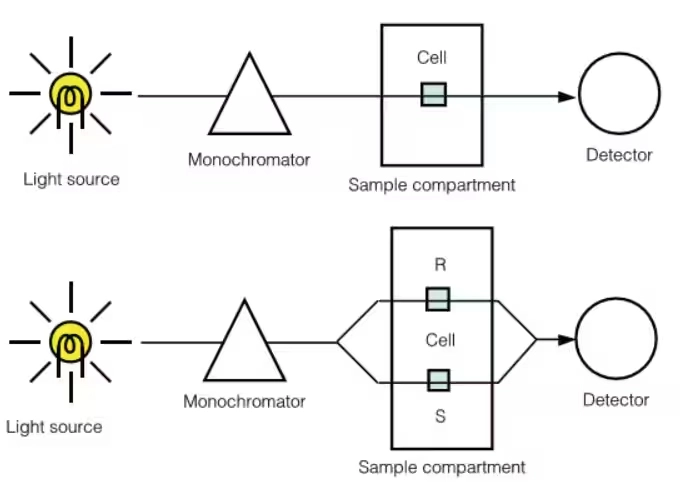
A single-beam spectrophotometer measures the intensity of light passing through a sample sequentially with reference measurements taken separately. In contrast, a double-beam design splits the light beam into two paths—one passing through the sample and the other through a reference—allowing simultaneous detection. This optical difference directly affects baseline stability and compensates for drift caused by lamp fluctuations or detector sensitivity changes.
Spectroscopy is based on the interaction of light and matter. Both types rely on precise wavelength calibration for accuracy; however, double-beam configurations inherently offer superior performance consistency due to their continuous referencing mechanism.
Technical Comparison: Double-Beam vs Single-Beam UV-Vis
Optical Path Design and Performance Stability
The optical design plays a decisive role in instrument stability. Double-beam systems maintain continuous reference correction during operation, effectively minimizing signal drift over time. Stable performances: The dual beam optics ensures good stability. This feature is particularly valuable for long-duration experiments or kinetic studies where baseline consistency is critical.
Single-beam models require manual or software-based baseline correction between measurements. While they can achieve reliable results with careful calibration, they are more susceptible to environmental fluctuations such as temperature changes or lamp intensity variations. The enhanced baseline stability offered by double-beam instruments translates directly into improved reproducibility across extended experimental runs.
Measurement Speed and Throughput Efficiency
Measurement speed becomes an important factor in high-throughput environments such as pharmaceutical quality control or research facilities handling large sample volumes. Double-beam configurations allow simultaneous acquisition of sample and reference data, eliminating delays associated with sequential measurements typical in single-beam designs.
T8DCS is a high performance double beam spectrophotometer with a continuously selectable spectral bandwidth from 0.1–5nm. Its true double-beam optical system coupled with an efficient electronic control system ensures high stability and low background noise while maintaining rapid scanning capabilities suitable for industrial-scale operations. These time savings contribute directly to higher ROI through reduced operator time and increased sample throughput.
Accuracy, Sensitivity, and Data Reliability
Accuracy during changing conditions shows the true reliability in any UV-Vis spectrophotometer comparison. Double-beam tools usually beat single-beam models when room conditions change. Their simultaneous referencing instantly fixes sudden shifts in light source brightness or detector reactions. Advanced systems also use photomultiplier tube detection. This delivers the extreme sensitivity needed for trace-level analysis in life sciences or environmental checks. Single-beam units can reach similar accuracy levels. Yet, they need regular recalibration and more human effort to stay precise over time.
Economic Evaluation: Maximizing ROI with the Right UV-Vis Spectrophotometer
Cost of Ownership and Maintenance Considerations
From an economic standpoint, initial investment costs differ significantly between designs. Double-beam instruments typically command higher upfront prices due to their complex optics but compensate through lower maintenance frequency and reduced downtime over their lifecycle. Single-beam models feature simpler construction yet may incur hidden costs through regular recalibration needs or additional operator labor hours. Evaluating total cost of ownership rather than purchase price alone provides a more accurate assessment when optimizing ROI for laboratory instrumentation procurement. The basic mechanical structure and modular electrical parts make normal upkeep quite easy. This simple maintenance greatly improves uptime. High uptime is vital for labs working under strict production deadlines or tough regulatory rules.
Productivity Gains Through Automation and Software Integration
Modern double-beam systems integrate advanced automation features that streamline workflows from scanning to data analysis. When connected to a computer the Spec UV software adds many additional functions, such as 3D spectrum analysis, GLP laboratory protocol. Automated baseline correction, method storage, and GLP-compliant reporting reduce human error while ensuring consistent results across operators.
Our portfolio includes fully automated options that support network connectivity, enabling remote monitoring or integration into digital LIMS platforms—further strengthening productivity gains that translate into measurable ROI improvements over time.
Application Scenarios: Matching Instrument Type to Laboratory Needs
Research Laboratories Focused on Method Development
Research environments often demand flexibility across wavelength ranges and measurement modes. Double-beam instruments are ideal here due to their capability for kinetic studies, reaction monitoring, and full-spectrum scanning without manual recalibration interruptions. The T9DCS offers extremely low stray light characteristics (≤0.00004%T NaI at 220 nm) which allow for an extensive photometric range (-8.0 – 8.0 Abs). Such performance ensures accurate detection even at deep ultraviolet wavelengths where precision is paramount.
Quality Control Environments in Manufacturing or Pharma Labs
Regulated fields like pharmaceuticals or food processing rely heavily on repeatable results to meet compliance rules. In these spaces, double-beam systems lower the variations caused by different operators. They also keep processing speeds high.However, smaller-scale QC setups performing routine absorbance checks may find single-beam units sufficient if measurement frequency remains moderate. Measurements at deep ultra-violet wavelengths can also be achieved with the use of Nitrogen purged optics. This capability broadens application scope from drug purity verification to trace contaminant quantification within stringent quality frameworks.
Academic Institutions and Teaching Laboratories
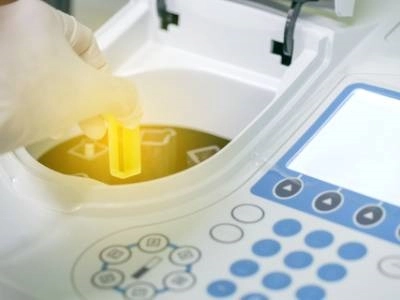
Schools and universities value affordable prices just as much as teaching benefits. Single-beam spectrophotometers fit this need very well. They offer basic, straightforward operation. This helps students learn core spectroscopy ideas without facing confusing setup steps. Their clear simplicity makes them wonderful teaching tools. At the same time, they maintain solid performance for standard analytical experiments..
PERSEE: A Reliable Partner in Analytical Instrumentation
Our mission extends beyond manufacturing—PERSEE focuses on empowering laboratories through accessible innovation backed by responsive service networks available worldwide via our contact us page. Our double-beam series represents our commitment to precision optical engineering combined with intuitive user interfaces designed for long-term reliability across industries from life sciences to environmental testing. A modern high-tech enterprise integrating R & D, manufacturing and sales of scientific instruments. With global service support throughout each instrument’s lifecycle, we ensure every customer benefits from consistent performance backed by expert consultation tailored to specific analytical goals.
Conclusion
Choosing between double-beam and single-beam setups comes down to balance. You must weigh your performance needs against your budget limits. Double-beam designs yield a stronger ROI. They do this through better stability, great automation options, and lower running costs. They also scale well for harder analyses. All of these factors are vital for labs wanting lasting analytical success.
For organizations seeking dependable outcomes supported by robust technology platforms engineered for longevity, investing in precision-built instruments from us represents not merely an equipment purchase but a strategic decision toward enduring laboratory value creation.
FAQ
Q1: What are the main advantages of a double‑beam UV‑Vis spectrophotometer?
A1: Double‑beam designs measure the sample and reference beams at the exact same time. This ensures very stable baselines and cuts down on signal drift. They are perfect for high‑volume or highly precise tasks that need steady accuracy over long working hours.
Q2: How does a single‑beam UV‑Vis spectrophotometer remain relevant today?
A2: Single‑beam models remain essential due to their affordability and simplicity; they provide cost‑effective solutions for educational settings or low‑volume testing environments where ultimate precision is not mandatory but functional reliability remains important.
Q3: How can we help your lab choose the right UV‑Vis system?
A3: Through personalized consultation available via our contact platform, we guide laboratories toward optimal configurations—whether prioritizing cost efficiency or automation—to ensure maximum ROI throughout operational cycles.