In 2026, portable and benchtop analytical instruments are no longer just smaller versions of older systems. Buyers expect faster start-up, cleaner data handling, less bench clutter, and a better fit with point-of-need testing. That shift shows up across environmental monitoring, food safety, pharmaceutical QC, teaching labs, and factory laboratories. The question is not only whether an instrument is compact. It is whether the workflow around it stays practical when the lab is busy, short on space, or running mixed sample types.
Current lab searches lean toward portable lab analyzers, benchtop spectrophotometer options, compact GC-MS systems, and smart workflow tools that reduce rework. Buyers are not chasing novelty for its own sake. They want an instrument that gets close to the sample, shortens transfer time, and still produces data that can survive review. That is the real standard for portable laboratory instruments now.
What Changed First: Workload, Not Size
The market moved because sample flow changed. Labs now see more rush work, more small-batch release testing, more decentralized sampling, and more pressure to prove turnaround time. A compact instrument is useful only if it can handle that pace without creating a second layer of work for the operator. Easy warm-up, stable optics or ion source behavior, clear software, and simple maintenance matter as much as footprint.
Field Use Is Not Just About Mobility
Portable does not always mean handheld. In many labs, the better answer is a benchtop unit that can move between rooms, fit on a smaller bench, or support a focused workflow near sample prep. That model is increasingly attractive for water stations, incoming inspection areas, and small QC labs that do not want a full large-frame system for every method.
Software Now Sits Beside the Optics
A compact instrument that still relies on loose file handling is already dated. Buyers now expect local data storage, method templates, audit-ready logs where needed, and simple export options. If the software makes a simple run feel complicated, the footprint savings quickly disappear in labor time.
UV-Vis Will Stay the Entry Point for Many Labs
UV-Vis remains the most common benchtop starting point because it covers many routine tests without heavy consumable costs. PERSEE’s molecular spectrometer line fits that logic well. The T6u is a split-beam UV-Vis with a 190 to 1100 nm range, 2 nm fixed bandwidth, and local fixed-wavelength photometry. For labs that want a simple, dependable benchtop spectrophotometer for daily use, that combination keeps the purchase straightforward.
When the work becomes more demanding, the T8dcs gives buyers a true double-beam platform with continuously selectable 0.1 to 5 nm bandwidth, PMT detection, automatic wavelength correction, and UV-Win software as standard. That matters in 2026 because many buyers now compare not only spectral range but also how comfortably the instrument supports methods across operators and sites.
What Buyers Should Check in a Benchtop UV-Vis
The short checklist is familiar but still useful: wavelength control, stray light, baseline stability, sample compartment access, accessories, software, and qualification support. PERSEE’s UV/VIS IQ/OQ/PQ kit gives the UV-Vis line a more controlled path for regulated or semi-regulated labs, and the UVWin 6/GMP software is part of the wider compliance conversation when data control matters.
AAS Still Owns the Small-Bench Metals Job
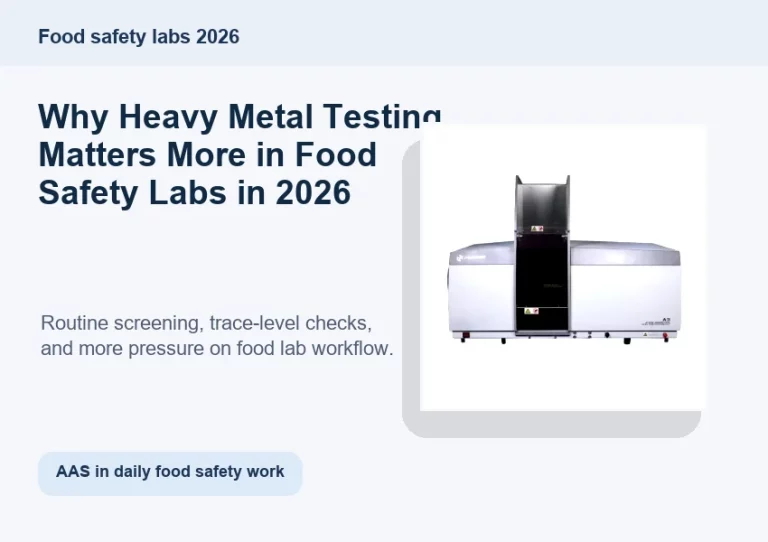
Portable laboratory instruments in metals work usually mean a compact bench setup, not a tiny gadget. AAS still fits because it gives clear answers for lead, cadmium, zinc, iron, and other target elements without forcing the lab into a larger, more expensive platform. PERSEE’s A3g graphite furnace system supports automatic operation, dual safety protections, and a universal autosampler for flame and graphite furnace use. That makes it a strong fit when a small bench still has to deal with trace metals.
For mixed jobs, the AA990AFG combines flame, hydride generation, and graphite furnace atomization in one platform. In practice, that is what many buyers want: one compact system that can carry a broader element list without jumping straight to a larger multi-technique footprint.
Hotter Benchtop Demand Comes From Trace Work
The push toward compact AAS is not about shrinking capability. It is about saving space while keeping trace analysis sharp enough for routine use. Buyers still need to think about digestion, lamps, gases, and qualification. Compact hardware only pays off when the supporting workflow stays lean and predictable.
GC-MS Is Getting More Practical, Not More Decorative
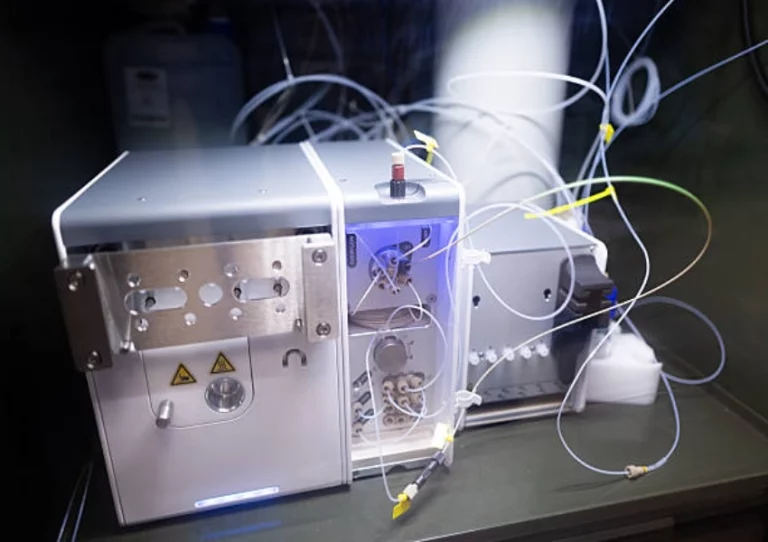
In 2026, compact GC-MS is increasingly judged by uptime, serviceability, and ease of daily use. The M7 Single Quadrupole GC-MS fits that pattern. It is designed for routine mass analysis and precise research applications, with food safety, environmental protection, material chemical industry, life science, medicine research, and criminal investigation in its application range. Its EI source, dual filaments, vacuum system, and remote support features matter more than any flashy label.
The smaller footprint only matters if the system still handles real sample lists. For target compounds such as VOCs, solvents, PAHs, and pesticide residues, a compact GC-MS can be the right middle ground between simple GC screening and larger high-resolution platforms. The buyer should care less about the machine looking modern and more about whether it stays serviceable under routine sample load.
The Buying Test for 2026
A good way to judge a portable or benchtop system is to run the same test through three filters. First, can the method fit the bench and the staff available? Second, can the system support routine data review without extra manual cleanup? Third, can the supplier explain qualification, service, and accessories in the same conversation as the instrument itself? If the answer is yes, the instrument is probably built for current lab reality, not just for a brochure.
Persee‘s broader portfolio makes that conversation easier because the same vendor can cover molecular spectrometers, atomic spectrometers, chromatography, and supporting accessories. That does not eliminate method review, but it does reduce the number of disconnected purchases. For many labs, that is the difference between a bench that stays productive and one that fills up with half-matched equipment.
FAQ (häufig gestellte Fragen)
Q1: Are portable analytical instruments replacing benchtop systems in 2026?
A1: Not completely. Portable tools are growing, but many labs still need benchtop UV-Vis, AAS, and GC-MS systems for better control, stronger method coverage, and more stable routine work.
Q2: What is the biggest buying mistake with compact instruments?
A2: Choosing size before workflow. A compact unit that cannot handle method load, qualification, or maintenance will create more trouble than a larger but more balanced system.
Q3: Which PERSEE products fit the 2026 compact trend best?
A3: T6U and T8DCS fit compact UV-Vis use, A3G and AA990AFG fit bench metal work, and M7 fits compact GC-MS needs where target compounds and routine throughput matter.