When we look at lithium-ion battery recycling, testing accuracy heavily shapes the financial and green success of saving materials. You need to measure lithium, cobalt, nickel, and manganese correctly. This step is crucial. It guarantees that the saved materials hit the strict purity marks needed for fresh batteries. This guide outlines atomic-absorption-spectroscopy methods. These methods help find calcium, copper, lithium, magnesium, manganese, potassium, sodium, strontium, and zinc in rain, fresh waters, and salty pools. We apply these exact ideas to battery materials. Here, spotting tiny amounts of metal keeps the whole process stable.
The Role of Precise AAS Analysis in Lithium-Ion Battery Recycling Quality
People know atomic absorption spectroscopy (AAS) for its top-tier accuracy in finding these elements. Scientists have understood a key fact for over a century. Atoms of certain elements get excited when they turn into vapor and enter a flame. Later, these atoms go back to their normal state. When they do, they give off light at specific, measurable wavelengths. This basic trait helps AAS give very steady results across many recycling batches. Solid testing makes the final product safer,and it also boosts the market price of reused materials. It does this by proving the chemical makeup stays the same.
Challenges in Current Lithium-Ion Battery Recycling Processes
Tech has moved forward. Still, today’s recycling setups deal with tough issues around managing dirt and testing shifts. Unwanted bits can sneak in during machine shredding or liquid chemical soaking. These extra bits can sharply drop how well we recover useful stuff. Different labs sometimes use testing methods that do not match. This mismatch often creates shifting purity levels across different batches. Global recycling amounts are growing fast because more people drive electric cars. Because of this growth, the need for uniform testing rules is huge. Setting up exact AAS-based methods helps fix this problem. These methods offer clear and steady tracking steps, and these steps easily back up massive factory setups.
Atomic Absorption Spectroscopy as a Core Technique in Battery Material Testing
We will look into its uses in lithium-ion battery recycling soon. First, we must see how atomic absorption spectroscopy works at a basic level. We also need to understand why it beats other ways to check elements.
Principles of Atomic Absorption Spectroscopy in Metal Analysis
Walsh (1955) used a light beam from a hollow-cathode lamp. This lamp was made of the target metal. He used it to build atomic-absorption instrumentation. During AAS analysis, free atoms absorb certain light waves. These waves match their electron shifts. This absorption ties directly to the amount of the element, following the Lambert-Beer law. The light beam’s wave size is unique to the target metal. Therefore, the flame’s absorbed light energy measures how much of that metal sits in the sample. This direct link allows exact counting with great accuracy, and it works well even at very tiny sub-ppm levels. This feature is a must-have when checking reused cathode parts that hold tiny bits of dirt.
Careful setup using official standards brings steady results, which keeps things uniform across different groups of recycled lithium-ion batteries. Checking this setup often cuts down on machine shifts, and it also keeps the system stable for a long time. These features are key when running heavy, non-stop factory tasks.
Advantages of AAS Over Other Analytical Methods in Battery Recycling
You can compare it to ICP-OES or XRF tools. AAS gives better focus for transition metals in specific mixes. At the same time, it keeps running costs low. Preparing samples for it is quite simple, which makes it perfect for daily lab quality checks during battery material testing. The method works fast. This speed allows quick checks of saved liquids before the final cleaning steps., which gives fast feedback for system tweaks. These tweaks boost both output and purity at the same time.
Enhancing Lithium-Ion Battery Recycling Quality Through AAS-Based Control
We want to keep circular energy systems green and lasting. To do this, exact testing control through AAS must fit into every step. This runs from checking the raw inputs all the way to approving the final goods.
Improving Purity and Recovery Efficiency with Precise Measurements
Exact element counting through AAS backs up closed-loop feedback setups. These setups improve chemical soaking and sorting rules. Non-stop tracking helps workers keep recovery rates high, and it also cuts down on chemical use. Atomic absorption allows very low spotting limits. Because of this, the outlined steps can easily test rainwater. This sharp focus works well to find tiny bits of dirt, like iron or aluminum. These tiny bits could hurt cathode workings if they slip back into the making process.
Smart tweaks rely on exact AAS numbers. This data-driven approach cuts down on waste, and it also makes better use of resources. These points are major signs of green factory recycling habits. They line up well with worldwide earth-saving goals.
Ensuring Compliance with Environmental and Industrial Standards
Testing accuracy acts as a key part in checking rules for heavy metal leftovers. Steady proof through AAS guarantees clear tracking across supply chains, which stretches from gathering spots to final lab checks. It gives strong trust to both builders and rule-making groups. Solid data sets boost buyer trust in reused material-quality papers. At the same time, they meet tough green laws that manage dangerous waste.
Integration of Advanced AAS Instruments into Recycling Workflows
Today’s gear has grown a lot. It moved from basic flame setups to smart, self-running systems. These new machines can check many elements at once, and they need very little human help to run.
Key Features of Modern AAS Systems for Battery Applications
Current tools reach sub-ppm spotting limits. These low limits are vital for very pure cathode starters used in top-tier batteries. Self-running parts boost the work pace. They allow the gear to run alone for long times. This hands-free running is a must when handling the huge sample loads seen in massive recycling plants. These systems work well with many mix types.
Unser A3f system shows off this skill nicely. The instrument is equipped with a flame atomiser only. Three flame options are available to the user, with air/acetylene being the standard configuration. This choice makes sure you get quick checks across different metals, like lithium or nickel. You do not need long reset times. It is a perfect fit for spaces that need non-stop process tracking.
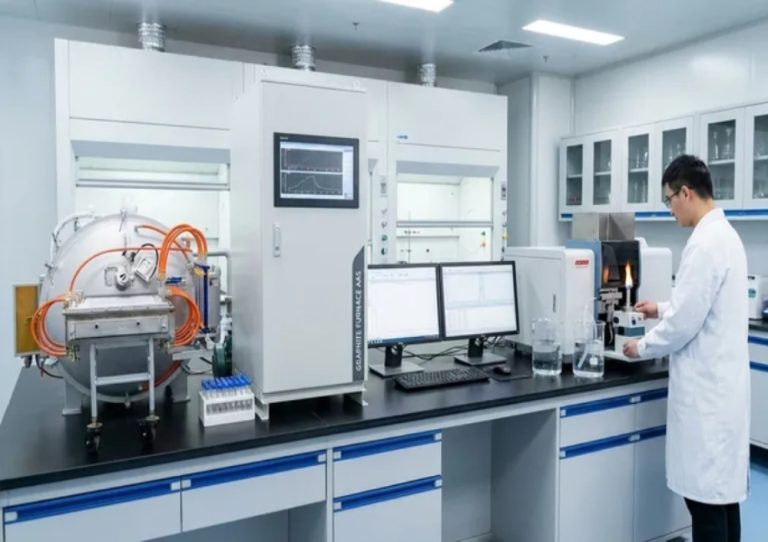
Sometimes you have higher focus needs. These might involve tiny dirt bits or elements that vanish easily. For these tasks, our A3g gives graphite furnace heating. A computer system fully runs this setup. The temperature of the transversely heated graphite tube is accurately controlled by means of a precision feedback system. This layout guarantees exact heat control. Good heat control is vital for steady heating during the tough mix checks found in old battery liquids.
Some labs need two-way options. They want to mix flame and furnace heating in a single machine. Our A3afg offers smooth shifting through its AA-Win 3.0 software screen. This smooth shift gives wide coverage. You can move from counting large element blocks to spotting ultra-tiny dirt bits. You can do all this inside one single work path.
Data Management and Process Optimization Using AAS Results
Digital links turn raw wave data into useful facts. They do this through live connections across factory lines. Math-based control tools use AAS numbers. These tools spot errors early on. This early warning helps plan repairs ahead of time. It also builds steady sameness from batch to batch. This sameness is a basic need for massive business setups. Central data hubs also help build rule-following reports. At the same time, they back up non-stop upgrade plans. These plans aim to shrink the earth-harming footprint for every ton of saved output material.
PERSEE: Reliable Manufacturer of Analytical Instruments for Battery Material Testing
Persee acts as a top builder focusing on light-based testing gear. We mix 35 years of deep study skills with great modern building methods. This mix brings tough testing answers made just for factory uses, like lithium-ion battery recycling. We are a modern high-tech enterprise integrating R&D, manufacturing, and sales of scientific instruments. Our product list covers molecular spectrometers, atomic spectrometers, chromatographs, and X-ray items. We also offer lab robot tools. We build these items for exactness-focused businesses around the globe.
Our promise goes past just making gear. We focus heavily on fresh ideas. We do this through non-stop money put into research and design. Strict quality check systems back up this effort. Trusted groups verify these systems. This setup promises Class I accuracy rules across all our items. We welcome experts to connect with us through our Kontaktseite.
FAQ (häufig gestellte Fragen)
Q1: Why is atomic absorption spectroscopy preferred for lithium-ion battery material testing?
A1: It gives exact counts of main metals like lithium, cobalt, nickel, and manganese at tiny levels. It does this using very focused light-absorbing rules. This action promises steady quality checks during recycling tasks.
Q2: How does precise AAS analysis improve lithium-ion battery recycling efficiency?
A2: It hands over correct makeup facts. This data backs up live system tweaks. These tweaks drop dirt risks. They also push recovery amounts to the top when handling old electrode parts.
Q3: What advantages do your instruments offer laboratories engaged in battery material testing?
A3: Our setups mix smart self-running traits with sub-ppm focus. This mix allows fast checks of many elements at once. We pair this with wide global support services. This pairing promises lasting testing trust across many different working spaces.