The single beam vs double beam UV-Vis spectrophotometer decision is rarely about choosing the instrument with the longest feature list. It is about matching optical design to the work that happens in the lab every day. A teaching lab, water testing room, or small production site may value a compact instrument, simple fixed-wavelength measurements, and low service burden. A pharmaceutical, research, or multi-user QC laboratory may place more weight on drift control, method flexibility, automatic correction, and stable results across a long sequence.
Both designs can produce useful quantitative data. The difference is how the instrument handles the reference signal, how much stability the workflow needs, and how much the lab is prepared to spend on optical performance and accessories. The right comparison starts with sample volume, run length, wavelength range, method type, and the level of record control expected after the measurement.
What Single Beam and Double Beam Mean in Practice
A single beam spectrophotometer measures the blank or reference and the sample in separate steps. The design is straightforward, which can make the instrument easier to operate and maintain. It is often a sensible fit for routine absorbance checks where the measurement sequence is short and the laboratory can run a blank at the right time. The tradeoff is that lamp output and other changes during the sequence are not tracked against a reference beam at the same moment.
Where a Single Beam Setup Makes Sense
Single beam systems can work well for education, basic color or concentration checks, and laboratories that run a limited number of stable methods. They are also useful when budget and bench space are tight. A buyer should still check wavelength accuracy, stray light, spectral bandwidth, lamp replacement, cell holders, and software upgrades. A lower purchase price does not remove the need for sound method control.
A Note About Split Beam Instruments
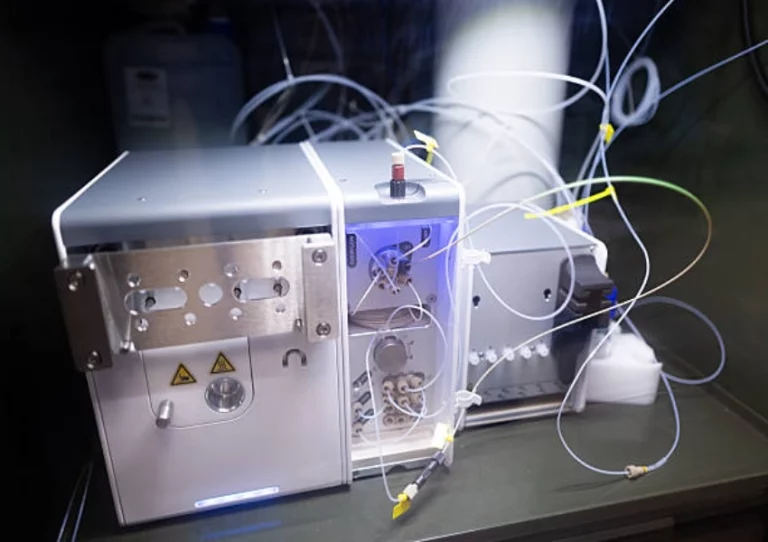
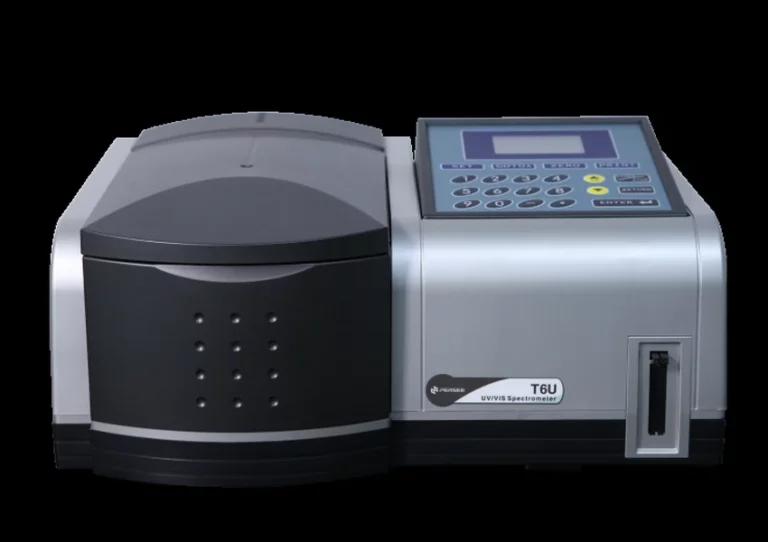
Single beam and split beam are sometimes mixed together. They are not identical. PERSEE’s T6U is described as a split beam UV-Vis spectrophotometer operating from 190 to 1100 nm, with a fixed 2 nm spectral bandwidth, wavelength accuracy of plus or minus 1 nm, and low stray light of 0.05%T. It is better described as a compact entry-level split-beam system rather than a pure single-beam design.
That distinction matters when a laboratory compares brochures. The T6U offers local fixed-wavelength photometric control and can be upgraded for quantitative analysis, multi-wavelength work, and kinetics. Optional UV-Win software and CFR21 Part 11 software options are available. For a lab that wants a modest starting platform with a path to broader testing, those upgrade points may matter more than the label on the optical layout.
Why Double Beam Systems Cost More
A double beam instrument measures the sample and reference paths in a coordinated optical arrangement. This helps the system compensate for changes in lamp intensity and other short-term effects during a run. The benefit is most visible when methods are sensitive to baseline movement, when sequences run for a long time, or when several users rely on the same method throughout the day.
Stability Over Long Sequences
Double beam does not make every method automatically better. It does, however, give the lab a stronger base when stability is part of the result. Long pharmaceutical assays, kinetic work, multi-sample screening, and research scans can place more demand on the optical and electronic system than a quick fixed-wavelength test. In these settings, less manual correction often means fewer interruptions and fewer questions about whether a change came from the sample or the instrument.
When Variable Bandwidth Matters
Spectral bandwidth affects resolution, sensitivity, and the usable linear range of a calibration. A broad bandwidth can smooth a narrow peak and lower apparent sensitivity. A very narrow setting can increase noise. The correct value depends on the natural bandwidth of the sample signal, not on a universal preference for the smallest number.
PERSEE’s T8DCS is a true double beam spectrophotometer with continuously selectable spectral bandwidth from 0.1 to 5 nm. It uses a Czerny-Turner monochromator with holographic grating, photomultiplier tube detection, automatic wavelength correction, and UV-Win software supplied as standard. Its application material includes a drug inspection example in which absorbance changed as spectral bandwidth was varied, showing why bandwidth control belongs in a purchase discussion.
Compare the Instrument With the Actual Workflow
The best choice depends on what the lab measures, how often it measures, and what happens when a sample is not clean or predictable. A short list of questions will usually separate a real fit from a tempting specification sheet.
Sample Load and Measurement Rhythm
For ten fixed-wavelength samples a day, a compact split-beam instrument may be perfectly adequate. For hundreds of samples, repeated scans, or methods that use several wavelengths and kinetic curves, a double beam system with automated cell handling can reduce manual steps. PERSEE’s higher UV-Vis models support motorized cell holders and a broad selection of cell and sample accessories, which can change the practical throughput of the method.
Applications and Accessory Fit
The same optical platform may serve food and beverage testing, environmental monitoring, agricultural analysis, life science, or pharmaceutical QC, but the accessory package will differ. A sipper pump, thermostatic holder, long-path cell, micro-cell holder, integrating sphere, or dissolution accessory is not a minor add-on if the method depends on it. Ask for the complete working configuration rather than comparing the base instrument alone.
When a Higher Double Beam Tier Is Justified
Some laboratories need more than stable routine photometry. Deep UV measurements, very low stray light, wide photometric range, small sample volumes, and demanding reference checks can justify a higher optical tier. PERSEE’s T9DCS uses true double beam double-monochromator optics, nitrogen-purged optics for deep UV work, continuously adjustable bandwidth from 0.1 to 5 nm, and beam-size adjustment. Its stated stray light level is 0.00004%T at 220 nm, with a photometric range from -8.0 to 8.0 Abs.
This type of system is not automatically the right answer for every lab. If methods are simple and sample demand is modest, the extra optical capability may not earn back its cost. The better question is whether the lab has a method, sample class, or future requirement that actually uses the added range and control.
A Practical Buying Decision
Choose the compact or simpler route when the lab mainly runs short, established measurements, has a limited budget, and does not need intensive automation or deep UV performance. Consider a double beam system when sequences are longer, several users share methods, baseline stability affects release decisions, or spectral bandwidth must be adjusted for different compounds.
For a supplier comparison, the Перси molecular spectrometer provides a useful progression from the T6U split-beam platform to the T8DCS double-beam system and the T9DCS double-monochromator tier. The point is not to buy the largest model. It is to buy the optical stability, bandwidth control, accessories, and software that the method can actually use.
Часто задаваемые вопросы
Q1: Is a double beam UV-Vis spectrophotometer always more accurate?
A1: Not automatically. Accuracy also depends on wavelength control, stray light, bandwidth, sample preparation, calibration, and operator practice. A double beam mainly adds stronger control of drift and reference changes during measurement.
Q2: Is PERSEE T6U a single beam instrument?
A2: The T6U product material describes it as a split beam system. It can be considered when comparing compact entry-level workflows, but it should not be labeled as a pure single-beam design.
Q3: Which model fits demanding UV-Vis work?
A3: T8DCS fits many routine pharmaceutical and research methods that need double-beam stability and variable bandwidth. T9DCS is better suited to work needing very low stray light, deep UV capability, wide photometric range, or advanced sample handling.