Food laboratories have been watching microplastics for years, but FDA’s 2026 language gives the topic a sharper business edge. The agency is not presenting one universal routine method for every food matrix. It is moving the problem into a more formal research lane: accurate, reproducible detection, quantification, and characterization of microplastics in human food. That is a different kind of pressure. It tells lab managers that the weak point is no longer public awareness. The weak point is whether a laboratory can produce defensible data when particle size, polymer identity, food matrix, and contamination background all change at the same time.
For FDA microplastics food testing, the next practical question is not “which single instrument solves the issue?” It is how the food testing laboratory workflow should be cleaned up, documented, and broadened before official expectations become more settled. Labs serving manufacturers, importers, packaging suppliers, and third-party testing buyers need to look at sample handling, particle isolation, polymer characterization, supporting chemistry, and report language as one connected job.
FDA’s 2026 Language Points to Method Readiness
The 2026 microplastics priority sits inside FDA’s food chemical safety work. The 2026 microplastics priority describes research aimed at detecting, quantifying, and characterizing microplastics in human food with accuracy and repeatability. A separate FDA food method needs list also calls for microscopy methods for standard single and mixed polymers and methods that can separate microplastics from endogenous food material. That detail matters. A lab cannot treat microplastics analysis in food like a simple add-on to a standard residue panel.
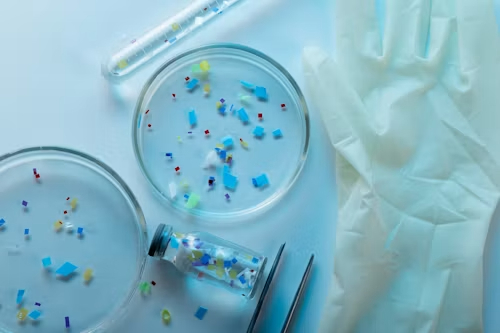
Food matrices are messy. Fat, starch, fiber, protein, pigments, salts, and natural particles can hide or imitate small plastic fragments. A clean water method may not behave the same way in seafood, milk powder, honey, infant food, beverages, or processed meals. Microplastic sample preparation has to reduce the matrix without adding plastic contamination from bottles, pipette tips, filters, gloves, lab coats, or airborne fibers. In daily work, that means blank discipline, low-plastic consumables, glassware control, and a written contamination map.
Sampling Will Decide Whether the Result Can Be Defended
A microplastics result can look precise and still be hard to defend if the sampling plan is weak. Food products are rarely homogeneous at the particle level. One pouch, bottle, batch, or process point may not represent the whole lot. Labs should document how the sample was collected, mixed, split, stored, and opened. Packaging contact should be recorded too, because buyers may ask whether a detected particle came from raw materials, processing, filling, storage, or handling inside the lab.
The better purchase conversation starts before instruments. A lab should ask whether suppliers can support stainless-steel or glass workflows, clean filtration stations, low-background digestion or extraction steps, and method blanks that travel with the sample. When a customer sends a high-value food for dispute testing, a vague preparation note will not be enough. The chain from receiving to final report needs to show where contamination was controlled and where uncertainty remains. For buyers comparing microplastics analysis in food services, the food testing laboratory workflow is often the difference between a useful result and a report that raises more questions.
Instrument Planning Should Cover More Than Polymer ID
Polymer identification is the headline topic, often tied to microscopy and spectroscopic imaging methods. But food labs rarely work with one hazard in isolation. A microplastics program may sit next to work on additives, heavy metals, PFAS, flavors, process contaminants, or packaging extractables. That is why food safety analytical instruments should be planned as a platform, not as one isolated purchase.
UV-Vis Work Still Supports Routine Chemistry
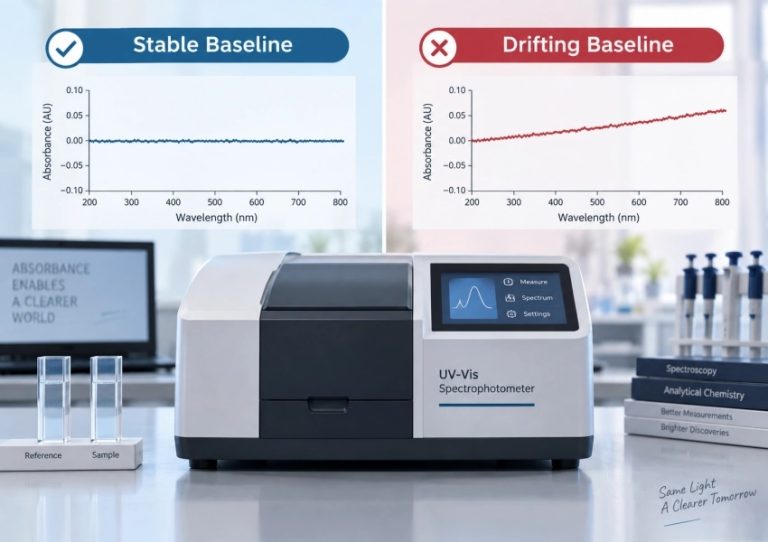
UV-Vis is not a direct polymer-identification answer for a full microplastics method. Its value is different. Routine food chemistry still needs photometric assays, spectrum scans, quantitative checks, and method support around additives, colors, enzymes, vitamins, and minerals. The T8DCS UV-Vis is relevant for laboratories that need stable double-beam photometric work, PMT sensitivity, automatic wavelength correction, and continuously selectable 0.1-5 nm spectral bandwidth. In a food lab building broader chemical capacity, that kind of instrument can handle established optical assays while the microplastics workflow develops separately.
Higher Optical Performance Has a Place
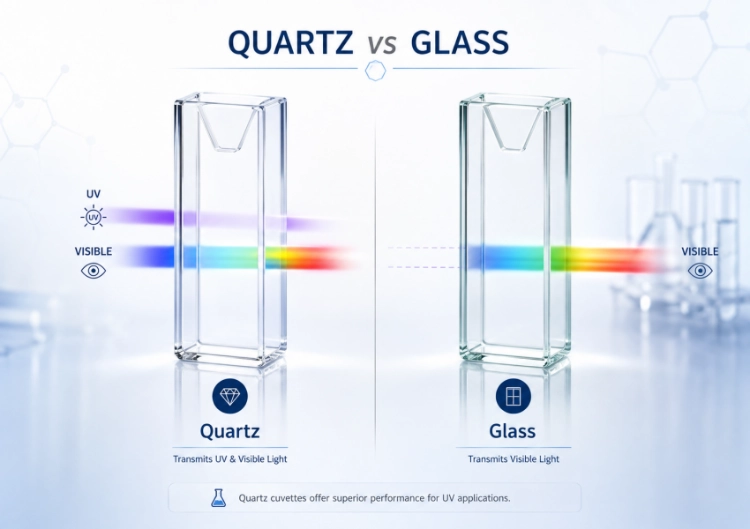
Some laboratories handle low-transmission samples, narrow absorbance features, or method development where stray light becomes a real limitation. The T9DCS UV-Vis gives a higher optical tier with a double-monochromator design, very low stray light, a 185-900 nm range, nitrogen purging, and UV-Win workspaces for spectral, quantitative, kinetic, and photometric work. It should not be sold as a microplastics compliance shortcut. It is better framed as a strong spectrophotometric tool for supporting chemistry around food safety programs.
Heavy Metals and Packaging Questions Will Not Disappear
FDA’s 2026 food chemical safety priorities also keep attention on contaminants such as lead, cadmium, arsenic, mercury, and PFAS. Food laboratories building microplastics capability should avoid starving their established contaminant work. A manufacturer may ask about particles one month and toxic elements the next. Import buyers often care about both, especially for children’s foods, seafood, beverages, dietary supplements, and powders.
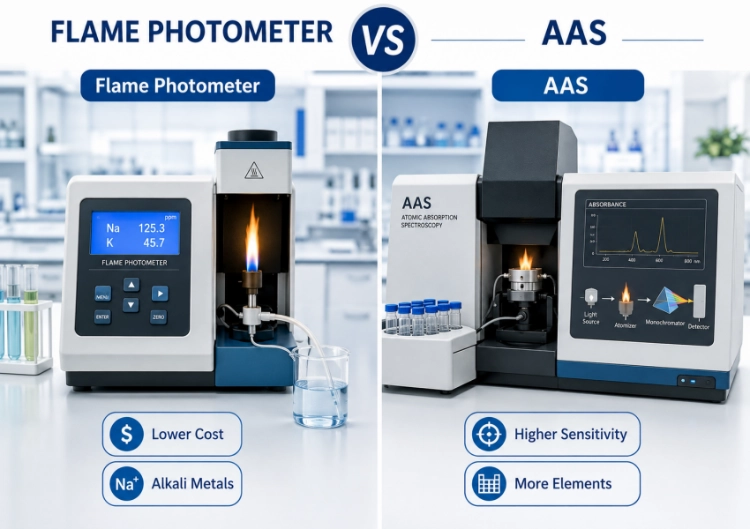
Graphite furnace AAS remains useful for trace-element work when the method and matrix fit. The A3G atomic absorption spectrometer supports graphite furnace atomization, computer-based operation, safety protection, and autosampler options for routine and trace-level element testing. PERSEE also links A3G applications to water, agriculture, food science, and pharmaceutical samples, including toxic elements such as arsenic and lead in food. That makes it a practical companion capability for a lab that wants a broader chemical safety bench, not a replacement for particle-specific microplastics analysis.
What Buyers Should Ask Before Adding Capacity
A buyer should ask the laboratory or instrument supplier for a realistic method map. Which sample types are in scope? Which plastics are targeted? What particle-size range can be recovered? How are blanks handled? Can the workflow distinguish plastic particles from cellulose, starch, protein residue, or mineral particles? What part of the report is validated data, and what part remains research-grade interpretation? These questions may feel slower than buying a headline instrument, but they prevent overpromising. FDA microplastics food testing is moving toward better methods, so careful wording now protects both the lab and the customer later.
The same thinking applies to internal labs at food factories. If the current work is quality release and supplier checking, it may be wiser to build a disciplined screening and referral workflow first. Complex confirmatory polymer work can be sent to a specialist until the internal team has enough sample volume, trained staff, clean facilities, and instrument budget. For labs planning a staged build, PERSEE can support the surrounding optical, elemental, and chromatography bench through instruments, training-oriented application discussion, and service planning. PERSEE is the simplest starting point for buyers who need to compare product families before asking for a method-specific quotation.
FAQ
Q1: Does FDA’s 2026 microplastics priority create a finished food testing method?
A1: No. The public FDA language points to research and method development for accurate, reproducible detection, quantification, and characterization. Labs should track FDA updates and avoid writing reports as if one broad mandatory method already covers every food matrix.
Q2: Can UV-Vis or AAS directly identify microplastics in food?
A2: UV-Vis and AAS support surrounding food chemistry and contaminant work. Particle isolation and polymer characterization need method-specific tools and validation.
Q3: Where can a food lab start if budget is limited?
A3: Start with clean sampling, blank control, documented preparation, and a clear referral plan for advanced polymer work. Supporting instruments for routine food chemistry can then be added around the confirmed workload.