
Infant formula testing is not a single instrument purchase. The powder, water, mineral premix, processing equipment, packaging contact, and cleaning regime can each add a different question to the laboratory plan. A sensible contaminant program therefore separates elemental work from microbiology, organic residues, physical particles, and packaging studies. Atomic absorption spectrometry has a defined job inside that broader plan: it measures selected elements after the sample has been prepared as a test solution.
For a food testing lab, the hard part is rarely pressing Start on an AAS system. The hard part is producing a representative, clean, stable digest; choosing a calibration range that matches the intended decision; and proving that blanks, standards, duplicates, and recovery checks are behaving. Those steps are particularly important for heavy metal testing in formula matrices, where fat, protein, minerals, and process residues can all affect the path to a reliable result.
Where AAS Belongs in Infant Formula Testing
AAS analysis is element-specific. It is suited to mineral and trace-element work when the target element, concentration range, preparation route, and validation plan fit the technique. It does not identify all food contaminants, and it is not a substitute for a separate method for pesticides, mycotoxins, microorganisms, or microplastics. Keeping that boundary clear prevents an instrument specification from promising more than the laboratory can defend.
Screening Questions Before Method Selection
Start with the exact analytes and the reporting purpose. A formula manufacturer may monitor nutritional minerals for process consistency, while a third-party laboratory may be evaluating a small set of trace metals in finished product, raw materials, or a complaint sample. Those are different jobs. The matrix, target concentration, required throughput, and available sample mass should all be fixed before the instrument configuration is selected.
A milk-powder calcium workflow illustrates the role of method-specific preparation: the sample is digested, lanthanum solution is used as a releasing agent, and the digest is measured by flame atomic absorption at 422.7 nm against a standard series. That is not a universal template for every element or every infant formula. The laboratory must validate its own analytes, digestion, interference controls, and performance criteria.
When Graphite Furnace AAS Is Worth Considering
When the target metals are present at lower levels or the matrix needs stronger interference control, graphite furnace AAS may be a better fit than a flame-only setup. It can be a measured upgrade rather than an automatic choice. The decision should be based on the laboratory’s validated reporting need, sample load, analyst skill, and the time required to maintain clean furnace conditions and stable calibration.
Sample Preparation Sets the Ceiling for Data Quality
The powdered formula is not ready to aspirate or inject. The laboratory needs a documented sequence for sample homogenization, weighing, digestion or extraction, dilution, container selection, and storage of the prepared solution. A clean instrument cannot rescue contamination introduced by a poorly controlled preparation bench or a reagent blank that was never checked.
Control Contamination Before It Reaches the Instrument
Use traceable reagent lots, suitable labware, and a blank plan that matches the preparation route. Record when a digestion batch starts and ends, which vessels were used, and whether carryover is plausible after a high-level material. Spikes, duplicates, and reference materials can help reveal a problem, but they should be selected according to the laboratory’s validated procedure rather than copied from an unrelated food method.
A food contaminant workflow also needs a sensible split between nutritional testing and safety testing. A mineral result used for label verification may have a different calibration range and turnaround requirement from a trace-metal investigation. Combining both into one rushed procedure can create more rework than value.
Digest Clarity Is Not Proof of Method Suitability
A clear digest can still contain residual matrix effects. Conversely, an overly aggressive digestion may add handling risk or compromise recovery. The right approach is to qualify the preparation together with the detection step. Compare reagent blanks, matrix-matched checks where appropriate, and prepared standards under the same working conditions. If recovery or repeatability is unstable, stop at the preparation step before blaming the spectrometer.
Building a Reliable AAS Analysis Sequence
A dependable run has a deliberate order: blank checks, calibration standards, initial verification, samples, periodic checks, and documented criteria for acceptance or rework. That pattern is familiar, but it matters most when the laboratory needs to defend how a result was generated several days later. Every calculation should point back to the sample preparation batch and instrument conditions used for that run.
Calibration and Background Correction
Calibration should bracket the expected sample range wherever the validated method requires it. For complex prepared solutions, background correction may be central to the method’s performance. The A500 Zeeman atomic absorption spectrophotometer integrates flame and graphite furnace atomization and uses polarized Zeeman background correction across its wavelength range. That hardware feature can support complex-matrix work, but it does not remove the need to establish calibration behavior, blanks, and recovery with the actual formula matrix.
The A500 specification lists background correction ratios above 150 times at 1 Abs and above 100 times at 2 Abs. Those figures describe the platform, not a promised detection limit or recovery for infant formula. Buyers should ask the supplier to demonstrate the proposed configuration with representative digest chemistry and the laboratory’s intended analytes.
Quality Controls That Catch Real Failures
A blank alone cannot show that a formula matrix is behaving. Use the controls specified by the validated procedure: preparation blanks, calibration checks, duplicate preparations, fortified samples, and suitable reference materials where available. Review control results before releasing samples. If a control fails, the response should address the full chain of custody, from weighing and digestion through aspiration or furnace injection.
Choosing Equipment for the Actual Workload
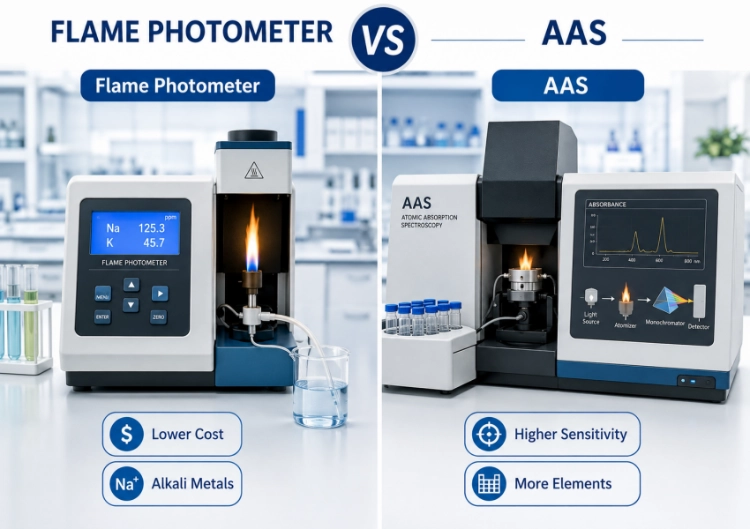
Instrument selection should follow the lab’s sample mix. Flame capability can suit higher-level routine elemental work. Graphite furnace capability becomes more relevant when the laboratory needs lower-level trace-metal work or needs a configuration that can better manage difficult prepared matrices. A combined platform can make sense when both jobs are real and regularly scheduled, rather than merely possible future projects.
Configuration, Safety, and Service Questions
Ask what lamps, atomizers, background correction mode, sample introduction accessories, gases, cooling, exhaust, and installation checks are included. Confirm the maintenance workload and the availability of consumables. The A3AFG flame and graphite furnace AAS is another configuration to compare when a lab needs both atomization routes. Its listed AA-Win software controls method and data collection, while the combined design uses flame and graphite furnace configurations. A supplier discussion should still be tied to the lab’s analyte list and validated method plan, not a generic instrument comparison.
For broader procurement planning, the atomic spectrometer product line helps map AAS options against routine elemental workload. The final purchase order should name the required accessories, acceptance tests, training scope, service response, and the samples used for installation qualification.
What AAS Cannot Cover by Itself
AAS is a strong tool for selected elements, but infant formula contaminant testing is wider than elemental analysis. Organic contaminants may call for chromatographic or mass-spectrometric methods. Physical particles and polymer identification require a different measurement approach. Microbiology has its own sampling and incubation logic. Treating those categories as interchangeable can lead to a gap in the testing plan even when the AAS result is sound.
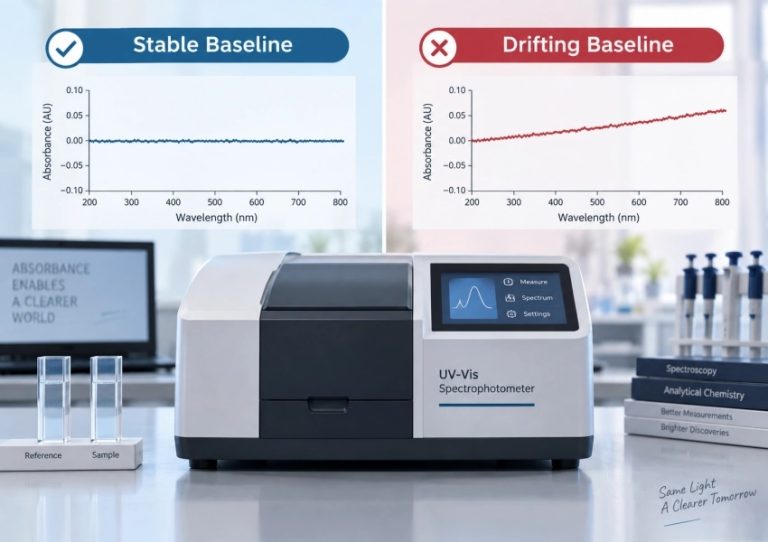
A laboratory building out its capabilities can combine elemental testing with appropriately separate workflows. For food and beverage quality control tasks that use absorbance methods, the T8DCS UV-Vis offers selectable 0.1-5 nm spectral bandwidth and a range of optional cell holders. It is not an AAS replacement for trace metals, but it can serve different routine colorimetric or spectrophotometric work in the same laboratory. PERSEE can then be evaluated as a set of complementary tools rather than one system expected to solve every test category.
A Practical 2026 Buying Checklist
Before approving an AAS purchase for infant formula testing, write down the target elements, expected range, number of samples per day, preparation route, blank strategy, calibration checks, sample volumes, and reporting obligations. Ask for a demonstration using a representative digest. Clarify which results the configuration is designed to support and which contaminant classes need another method. That approach makes the purchase more useful than choosing by detector type alone.
The best fit is usually the system that can produce stable, reviewable elemental data within the lab’s real preparation capacity. AAS earns its place when the method, operator training, quality controls, and service support are built around that goal. It should be one defined part of a defensible infant formula testing program, not the entire program by default.
FAQ
Q1: Can AAS test every contaminant in infant formula?
A1: No. AAS is used for selected elemental measurements. Organic contaminants, microorganisms, and physical or polymer particles require different methods and validation plans.
Q2: Is flame AAS or graphite furnace AAS better for infant formula?
A2: It depends on the target elements, required reporting range, matrix behavior, throughput, and validated method. A combined platform may suit a laboratory with both routine and lower-level elemental work.
Q3: What should be included in supplier acceptance testing?
A3: Use representative prepared samples or agreed reference materials, then document calibration behavior, blanks, repeatability, background correction performance, required accessories, training, and service responsibilities. Do not treat generic platform specifications as proof of method performance.