La espectroscopia de absorción atómica (EAA) es uno de los métodos cuantitativos más eficaces para la detección de oligoelementos en ámbitos como el medioambiental, farmacéutico e industrial. Durante más de un siglo, los científicos han observado que los átomos de ciertos elementos se excitan al vaporizarse y exponerse a una llama. Al regresar a su estado fundamental, estos átomos emiten radiación en longitudes de onda específicas que pueden medirse con precisión. Esta idea básica respalda la alta precisión y la consistencia de los resultados que hacen de la EAA una herramienta fundamental en los laboratorios actuales.
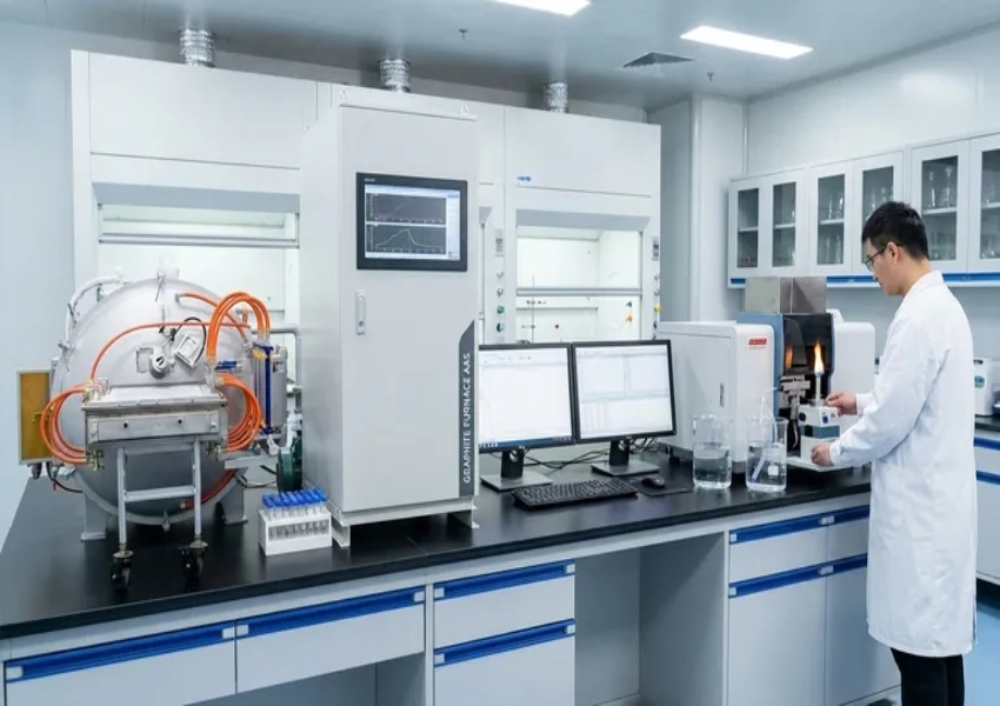
En la configuración analítica en PerseguirCombinamos sistemas de absorción atómica con llama (Flame AAS) y con horno de grafito (Graphite Furnace AAS). Esta integración garantiza fiabilidad, precisión y el cumplimiento de los estándares internacionales de laboratorio. Nuestros dispositivos están diseñados para ofrecer resultados consistentes, tanto en el análisis de agua ambiental como en muestras farmacéuticas complejas.
Descripción general de las técnicas de espectroscopia de absorción atómica (AAS)
Principios clave de la espectrometría de absorción atómica con llama (AAS) y la espectrometría de absorción atómica con horno de grafito (AAS).
Tanto la espectrometría de absorción atómica con llama (AAS) como la espectrometría de absorción atómica con horno de grafito (AAS con horno de grafito) se basan en el proceso de absorción, pero difieren en la forma en que crean los átomos. Muchos elementos no se excitan fácilmente en una llama, por lo que la mayoría de los átomos permanecen en su estado fundamental. Estos átomos pueden absorber energía de un haz de luz con la longitud de onda adecuada. En la AAS con llama, la atomización se produce por combustión, mientras que la AAS con horno de grafito emplea un tubo de grafito calentado eléctricamente para un control preciso de la temperatura y una mayor sensibilidad.
Técnica de absorción atómica de llama (Flame AAS)
Mecanismo y funcionamiento de la AAS de llama
La absorción atómica de llama funciona transformando una muestra líquida en una fina pulverización que se dirige a una zona de llama controlada. Ajustando la mezcla de combustible y aire en el quemador, se puede generar una llama oxidante con mayor cantidad de aire o una reductora con mayor cantidad de combustible. El tipo de llama —como aire-acetileno u óxido nitroso-acetileno— varía según el elemento que se esté analizando.
Nuestra Modelo A3F Este método se ilustra claramente, ya que incluye tres opciones de llama: aire/acetileno para pruebas comunes, N₂O/acetileno para elementos resistentes como el calcio o el vanadio, y aire/GLP para metales básicos como el sodio o el potasio. Estas opciones permiten a los laboratorios adaptarse rápidamente a diferentes tipos de muestras.
Rendimiento analítico de la espectrometría de absorción atómica de llama (AAS)
La espectroscopia de absorción atómica de llama permite un procesamiento rápido con mediciones precisas a niveles de mg/L. Es ideal para laboratorios que manejan muchas muestras y requieren una sensibilidad moderada. Los resultados consistentes del método lo hacen perfecto para análisis elementales cotidianos donde no se necesita una detección muy baja.
Ventajas y limitaciones de la espectrometría de absorción atómica con llama (AAS)
El diseño sencillo y el bajo coste de los sistemas con bastidor resultan atractivos para tareas de análisis rutinarias. Sin embargo, su menor sensibilidad en comparación con los sistemas de horno de grafito limita su uso en casos de detección de niveles muy bajos. Los problemas derivados de la matriz de la muestra también pueden afectar a los resultados en muestras biológicas o ambientales complejas.
Técnica de absorción atómica en horno de grafito (AAS en horno de grafito)

Mecanismo y funcionamiento del horno de grafito AAS
La espectrometría de absorción atómica en horno de grafito comienza colocando una pequeña cantidad de muestra en un tubo de grafito, seguida de etapas de calentamiento (secado, pirólisis, atomización y limpieza) para liberar los átomos para su análisis. La temperatura en el tubo de grafito, calentado lateralmente, se controla con precisión mediante un sistema de retroalimentación, lo que ayuda a minimizar los problemas comunes en este método.
Nuestra Instrumento A3G Incorpora modernas medidas de seguridad, como comprobaciones de presión de gas argón y protección contra sobrecalentamiento, al tiempo que mantiene una fuerte atomización gracias a sus tubos de grafito revestidos.
Rendimiento analítico de la espectrometría de absorción atómica (AAS) en horno de grafito
Los sistemas de horno de grafito alcanzan límites de detección en el rango de µg/L o ng/L gracias a que su espacio de atomización cerrado optimiza la concentración del analito antes de la lectura. Si bien cada prueba requiere más tiempo que los métodos de llama, estas herramientas ofrecen la precisión excepcional necesaria para análisis de bajo nivel en fluidos corporales o muestras ambientales.
Ventajas y limitaciones de la espectrometría de absorción atómica con horno de grafito
Las principales ventajas son su mayor sensibilidad en las mediciones AAS, la necesidad de pequeñas muestras y su resistencia a problemas de matriz. Sin embargo, su elevado coste inicial y los posibles efectos residuales de las muestras requieren un mantenimiento regular para garantizar un rendimiento constante.
Comparación de la espectrometría de absorción atómica con horno de grafito frente a la espectrometría de absorción atómica con llama para el análisis de elementos traza.
Sensibilidad en AAS: Evaluación de los límites de detección en diferentes métodos
La sensibilidad en la espectrometría de absorción atómica (AAS) depende de factores como el control de la temperatura de atomización, la longitud del recorrido óptico y la eficiencia de entrada de la muestra. Los sistemas de horno de grafito ofrecen límites de detección mucho más bajos, ya que mantienen una temperatura uniforme durante la atomización. Por otro lado, la absorción atómica con llama funciona bien para concentraciones medias donde no se requiere la máxima sensibilidad.
Nuestra combinación Sistema A3AFG Este dispositivo combina ambos atomizadores en una sola unidad, lo que permite a los usuarios alternar fácilmente entre pruebas detalladas con horno de grafito y pruebas rápidas con llama, ofreciendo opciones para diversas necesidades de análisis.
Consideraciones sobre el rendimiento de las muestras y la eficiencia operativa.
Los laboratorios que priorizan la velocidad sobre la detección a niveles muy bajos suelen optar por la absorción atómica de llama para reducir el tiempo entre muestras y facilitar los cambios. Los métodos con horno de grafito implican ciclos más largos, pero ofrecen mayor precisión a niveles bajos, un equilibrio importante a la hora de establecer los objetivos del laboratorio.
Factores de eficiencia de costos y mantenimiento
Los hornos de grafito suelen tener un coste inicial más elevado debido a sus avanzados sistemas de control de temperatura, pero su capacidad para detectar metales traza los hace rentables a largo plazo, especialmente para normativas que exigen límites muy bajos. Si bien los tubos de grafito generan costes recurrentes, mejoran directamente la calidad del análisis.
Selección de la técnica apropiada en función de los requisitos de la aplicación.
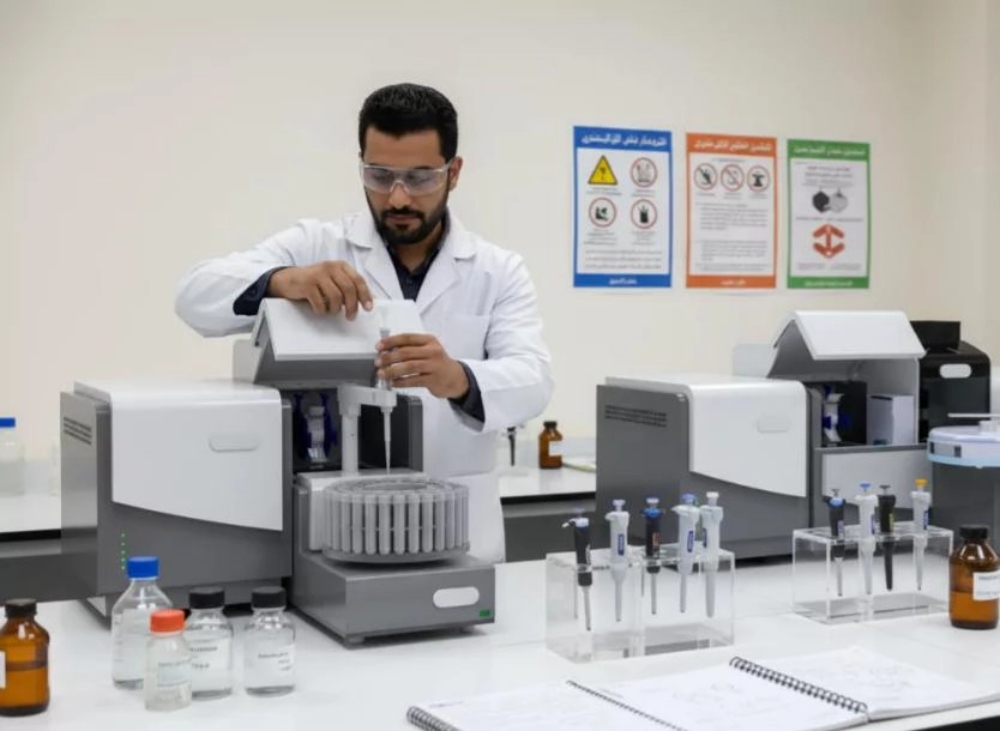
Aplicaciones de Monitoreo Ambiental
Las pruebas ambientales con frecuencia necesitan detectar metales pesados como el plomo o el arsénico por debajo de los niveles de µg/L, por lo que la espectrometría de absorción atómica con horno de grafito proporciona la máxima sensibilidad en estos casos. Modelo AA990G Utiliza tecnología de calentamiento lateral para lograr temperaturas uniformes en los tubos y una menor interferencia química, lo que la hace ideal para controles de calidad del agua según las normas nacionales.
Aplicaciones de control de calidad farmacéutica
Las revisiones periódicas de elementos en la fabricación de fármacos obtienen resultados rápidos a través de sistemas de absorción atómica de llama como el nuestro. Sistema AA990AFGEste sistema mixto combina llamas de aire-acetileno y calentamiento eléctrico bajo control de software para aumentar la seguridad y mantener la precisión necesaria para cumplir con los estándares de calidad de los medicamentos.
Aplicaciones de control de procesos industriales
En entornos industriales donde los niveles de metal varían desde grandes piezas de aleación hasta pequeñas impurezas, la elección del método adecuado depende del rango de concentración. La absorción atómica de llama maneja bien grandes cantidades, mientras que la espectrometría de absorción atómica con horno de grafito resulta fundamental para controles precisos de impurezas en procesos de metalurgia o petróleo.
PERSEE – Fabricante fiable de instrumentos analíticos
En PERSEE, desde 1991, somos una empresa de alta tecnología que integra investigación, producción y ventas. Con certificación ISO 9001 y homologación CE, nuestro enfoque se centra en la precisión impulsada por la innovación en cada herramienta que ofrecemos. Más del 30 % de nuestro personal se dedica a la investigación para impulsar el desarrollo tecnológico en espectroscopia, incluyendo espectrómetros UV-Vis, difractómetros de rayos X, cromatógrafos y espectrómetros atómicos como la serie A3F mencionada anteriormente.
Nuestro objetivo va más allá de la simple venta de productos; ofrecemos capacitación completa a través de centros certificados para ayudar a los trabajadores de laboratorio a sacar el máximo provecho de nuestras herramientas en todo el mundo. Invitamos a los laboratorios que buscan alianzas sólidas a explorar las opciones a través de nuestra plataforma. portal de contacto.
Conclusión
La espectrometría de absorción atómica con horno de grafito ofrece mayor sensibilidad en tareas que requieren una cuantificación muy baja, mientras que la espectrometría de absorción atómica con llama satisface las necesidades rutinarias con buena rapidez. Los laboratorios que sopesan el costo frente al nivel de detalle consideran que los sistemas híbridos son los más útiles, ya que combinan ambas tecnologías para obtener diversas opciones sin perder precisión ni rendimiento en controles ambientales, validación de fármacos o controles industriales.
Preguntas frecuentes
P1: ¿Qué método proporciona una mejor sensibilidad en AAS?
A1: La absorción atómica en horno de grafito generalmente proporciona una mejor sensibilidad debido a su entorno de calentamiento controlado con precisión que mejora la eficiencia de atomización en comparación con los métodos de llama abierta.
P2: ¿Cuándo debo elegir la absorción atómica con llama en lugar del horno de grafito?
A2: Elija la absorción atómica de llama cuando analice muestras que contengan concentraciones de metales más altas o cuando los requisitos de rendimiento del laboratorio superen las necesidades de detección de ultratrazas.
P3: ¿Cómo apoya Persee a los laboratorios que utilizan estas técnicas?
A3: Suministramos soluciones de instrumentación completas que abarcan tanto modelos de absorción atómica de llama como de horno de grafito, respaldadas por equipos de servicio técnico que ofrecen orientación sobre calibración, actualizaciones de software y capacitación de operadores a través de nuestra red de soporte global, accesible a través de nuestra página de contacto en línea.