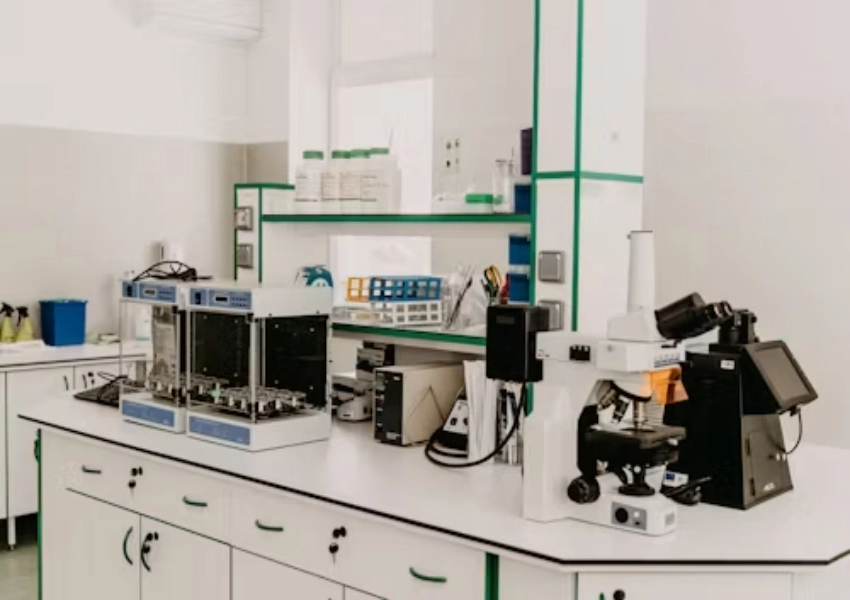
A cost-effective food testing lab is not built by buying the cheapest instrument in every category. It is built by matching instruments to the questions the lab must answer most often. One team may need fast checks on beverages, vitamins, color, enzymes, or additives. Another may need trace lead and cadmium in food ingredients. A third may face pesticide residues, fragrance components, volatile compounds, or supplier disputes that need confirmation by mass spectra. The right mix of food testing lab equipment keeps those jobs moving without turning every result into a high-cost method.
For many new or expanding laboratories, UV-Vis, AAS, and GC-MS form a practical core. UV-Vis handles many routine optical and colorimetric methods. AAS is strong for metal elements, from nutritional minerals to toxic metals. GC-MS adds separation plus mass spectral confirmation for volatile and semi-volatile organic compounds. The three platforms do not replace one another. They divide the workload so the lab can spend the budget where the chemistry truly needs it.
Start With the Food Matrix and Test Menu
Before choosing brands or models, list the actual samples and decisions. A beverage producer may care about color, additives, preservatives, vitamins, flavor-related checks, and water quality. A third-party lab may see meat, seafood, oil, tea, dairy powder, alcohol, oral liquid, spices, and imported ingredients in the same month. The test menu should separate screening, routine release, complaint investigation, and confirmation work.
Keep Routine Tests Off Expensive Platforms
One way to control cost is to avoid using a high-end platform for a simple measurement. If a validated UV-Vis method can answer a routine question, there is little business sense in tying up a GC-MS system. If a flame AAS method is enough for a mineral range, graphite furnace time can be saved for trace toxic elements. Cost-effective food testing lab design is often about routing samples wisely, not about buying one instrument that tries to do everything.
Leave Room for Regulatory and Customer Changes
Food testing work changes as customers, markets, and standards change. A lab may start with nutrients and color checks, then add heavy metals, pesticide residues, or volatile flavor work later. A staged plan should include bench space, gases, extraction areas, digestion capacity, pure water, software records, staff training, and service access. The cheapest first purchase can become expensive if it blocks the next method.
Use UV-Vis for Fast Routine Food Measurements
UV-Vis food testing is often attractive because the workflow is familiar, the consumable cost is modest, and many methods are easy to teach. PERSEE’s molecular spectrometer lists food and beverage quality control applications such as additives, preservatives, flavors, fat contents, enzymes, glucose, minerals, and vitamins. Those broad application areas make UV-Vis a sensible first platform for labs that need daily colorimetric or absorbance-based measurements.
Choose Optical Performance by Method Need
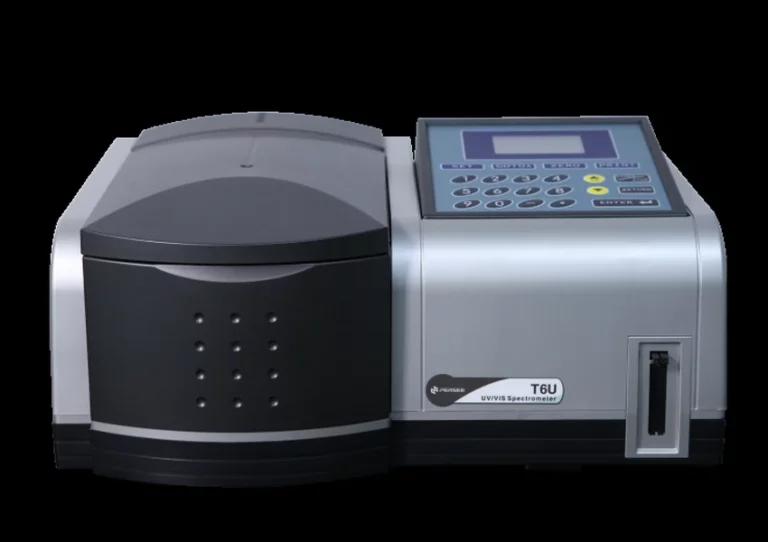
Şu T6U UV-Vis gives a practical starting point for general laboratory work, with a 190 to 1100 nm range, a fixed 2 nm bandwidth, a split-beam optical design, and local fixed-wavelength photometry. It suits buyers that want a dependable routine spectrophotometer for common food and beverage checks without paying for advanced variable bandwidth they may not use.
Labs with more demanding method control can move higher. The T8DCS is a true double-beam spectrophotometer with continuously selectable 0.1 to 5 nm spectral bandwidth, PMT detection, automatic wavelength correction, and UV-Win software as standard. For food labs handling more varied assays or pharmaceutical-adjacent documentation habits, that extra bandwidth control and software workflow may justify the spend.
Use AAS for Minerals and Toxic Metals
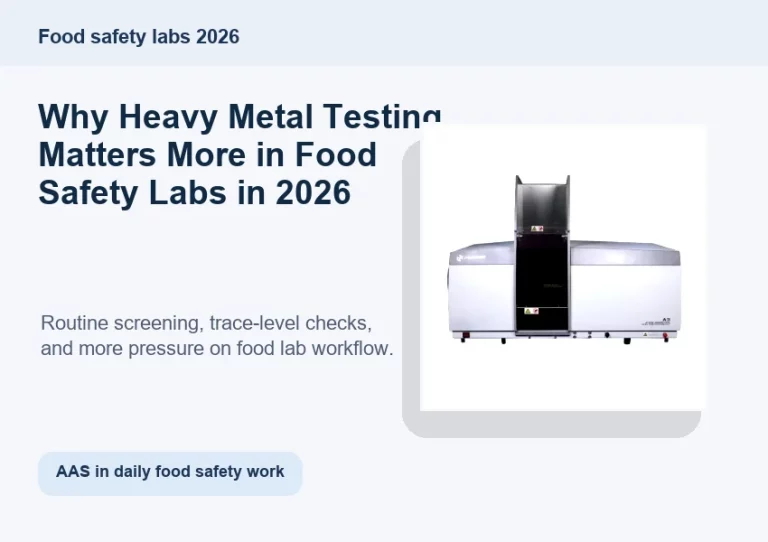
AAS heavy metal analysis belongs in the plan when the lab must report lead, cadmium, arsenic-related routes, zinc, iron, potassium, magnesium, or other elements. PERSEE application material includes zinc and iron in milk powder, lead in olive oil after microwave digestion, cadmium in surface water, lead in drinking water, and lead in nutrient salts for fermentation. These are not abstract examples. They reflect common food and environmental links: ingredients, water, packaging contact, process aids, and raw material safety.
Match Flame and Graphite Furnace Work
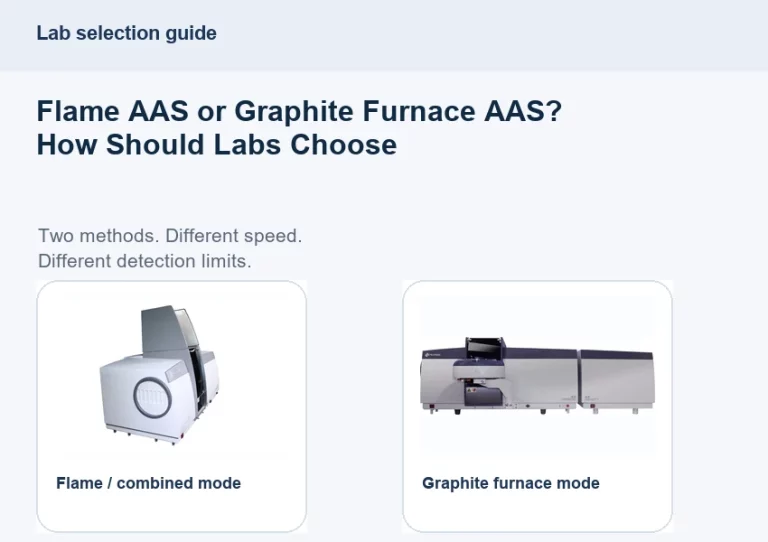
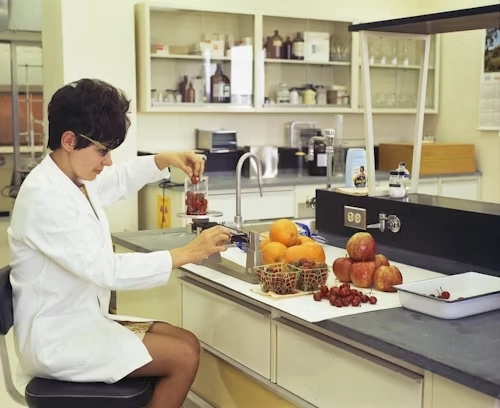
A low-cost food lab should not assume every element needs the same atomization mode. Flame AAS can suit higher-level elements and routine mineral work. Graphite furnace AAS is stronger when trace levels matter, as in lead or cadmium checks. The A3G atomic absorption spectrometer is an automatic graphite furnace instrument with computer control, safety protections, and a universal autosampler for flame and graphite furnace use. It fits labs that expect trace work and want a controlled daily workflow.
Where workloads are mixed, the AA990AFG combines flame, hydride generation, and graphite furnace electrothermal heating in one AAS platform operated by AAWIN software. For a lab trying to keep capital spending under control, one flexible atomic absorption system may make more sense than separate purchases too early.
Use GC-MS for Organic Contaminants and Flavor Work
GC-MS food safety testing becomes important when the question is not just how much absorbance or how much metal but what organic compound is present. Pesticide residues, volatile flavor compounds, fragrances, solvent residues, PAHs, and some semi-volatile contaminants often need separation and mass spectral confirmation. Sample preparation still matters, especially with fatty, sugary, pigmented, or high-protein samples, but GC-MS gives the lab a stronger identification handle after extraction and cleanup.
Do Not Buy GC-MS for Every Food Test
GC-MS is powerful, but it brings columns, gases, liners, source cleaning, calibration discipline, and trained interpretation. It should sit where confirmation value is high. PERSEE’s M7'nin Single quadrupole GC-MS is designed for routine mass analysis and research applications, with food safety, environmental protection, material chemical industry, life science, medicine research, and other fields in its application range. The EI source, dual filaments, vacuum system, workstation, and remote support features make it relevant for labs building pesticide, volatile, or contaminant workflows.
A GC-only instrument can also reduce pressure on the mass spectrometer. PERSEE’s G5 GC offers injector and detector choices including FID, TCD, FPD, NPD, ECD, and PID, while the GC1100 line covers food safety, quality inspection, environmental protection, petrochemical, and research fields. A lab may run established detector methods on GC, then reserve GC-MS for confirmation or more complex target lists.
Budget for the System Around the Instruments
The instrument price is only one part of the food lab setup. UV-Vis needs cuvettes, lamps, cells, software, and reference materials. AAS needs hollow cathode lamps, gases, graphite tubes, digestion supplies, standards, and safety controls. GC-MS needs carrier gas, columns, liners, septa, solvent, extraction consumables, source parts, and trained analysts. Pure water, glassware washing, balances, fume handling, digestion, extraction, sample storage, and data management may decide whether the lab runs smoothly.
Pansiyon is useful here because its portfolio covers moleküler spektrometreler, atomic spectrometers, chromatography, and laboratory support equipment. Buyers can compare UV-Vis, AAS, GC, and GC-MS needs inside one supplier discussion while still checking each method carefully. The goal is not to fill a room with instruments. It is to build a defensible workflow: fast routine tests on UV-Vis, metals on AAS, organic confirmation on GC-MS, and enough preparation capacity to keep all three honest.
Sık Sorulan Sorular
Q1: What is the best first instrument for a small food testing lab?
A1: It depends on the test menu. Many labs start with UV-Vis for routine absorbance methods, then add AAS for metals and GC-MS when organic contaminant confirmation becomes necessary.
Q2: Can AAS replace GC-MS in food safety testing?
A2: No. AAS measures elements such as lead, cadmium, zinc, and iron. GC-MS targets volatile and semi-volatile organic compounds such as pesticide residues, solvents, PAHs, and flavor compounds.
Q3: How can a buyer keep a food testing lab cost-effective?
A3: Route each sample to the simplest defensible method, buy flexible platforms where workload is mixed, budget for sample preparation and consumables, and confirm supplier support before installation.