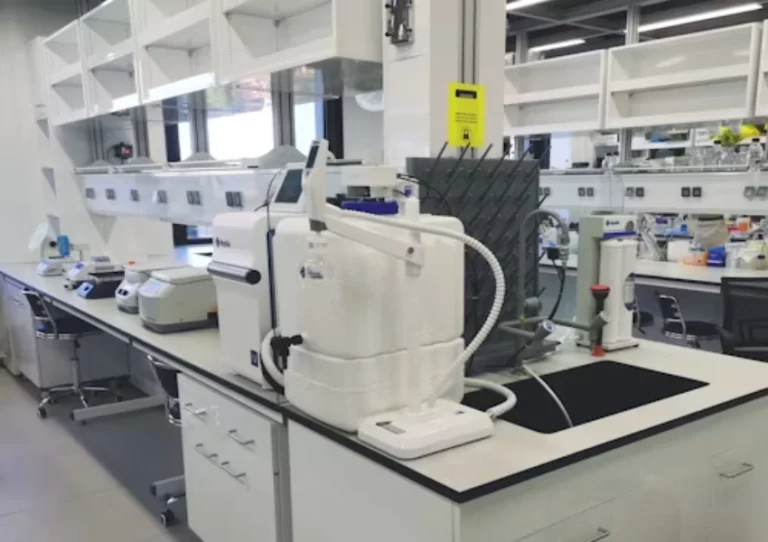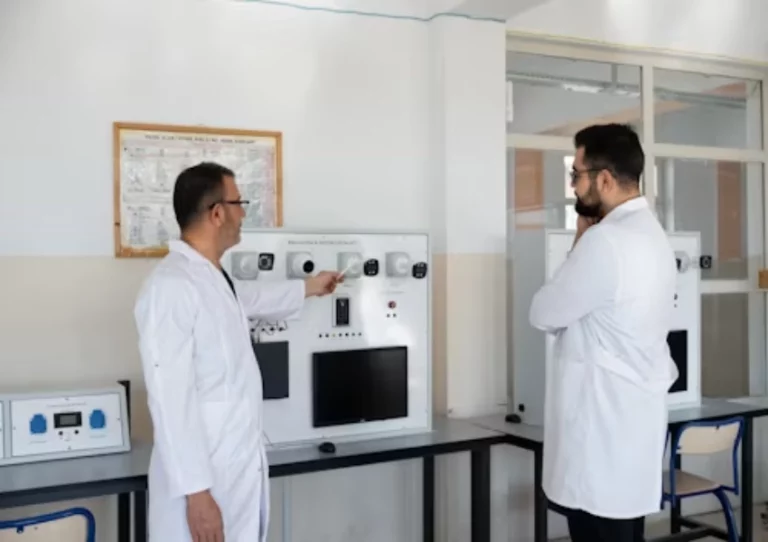
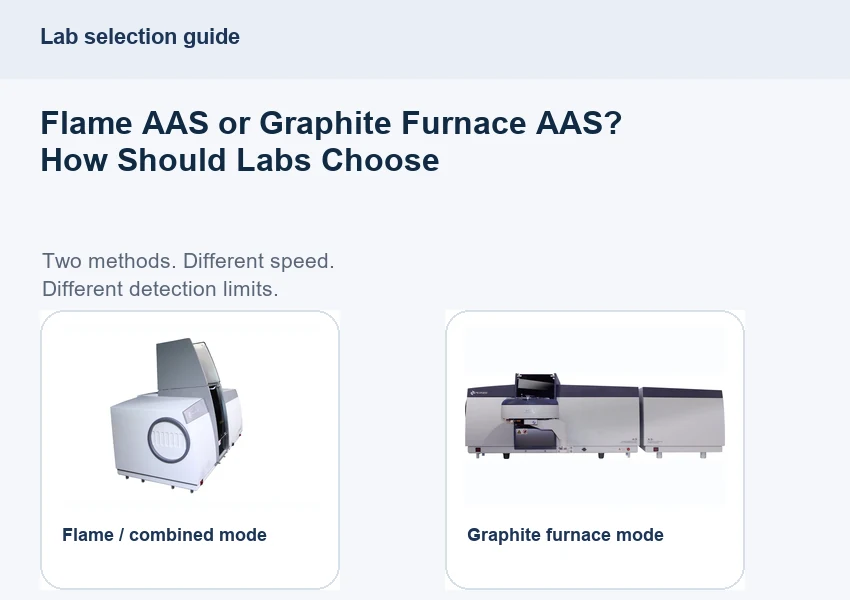
Alevli AAS ve grafit fırınlı AAS arasında seçim yapmak, aslında hangi ismin daha gelişmiş göründüğüyle ilgili değildir. Seçim, numune yüküne, konsantrasyon seviyesine, işlem süresine ve her hafta ortaya çıkan laboratuvar çalışmalarının türüne bağlıdır. Yüzlerce sıradan numune işleyen bir laboratuvarın ihtiyaçları, zamanının çoğunu düşük seviyeli eser metalleri aramakla geçiren bir laboratuvarın ihtiyaçlarından çok farklıdır. PERSEE'nin Atom spektroskopisi yelpazesinde bu seçeneğin her iki tarafını da kapsıyor ve bu da kararı daha az soyut hale getiriyor. Soru, hangi sistemin daha güçlü ses çıkardığı değil, hangisinin gerçek iş akışına uyduğudur.
Flame AAS'nin En İyi Yaptığı Şey
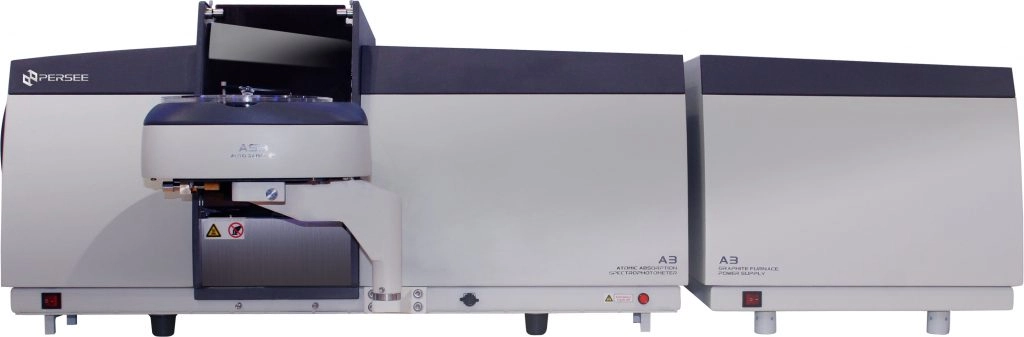
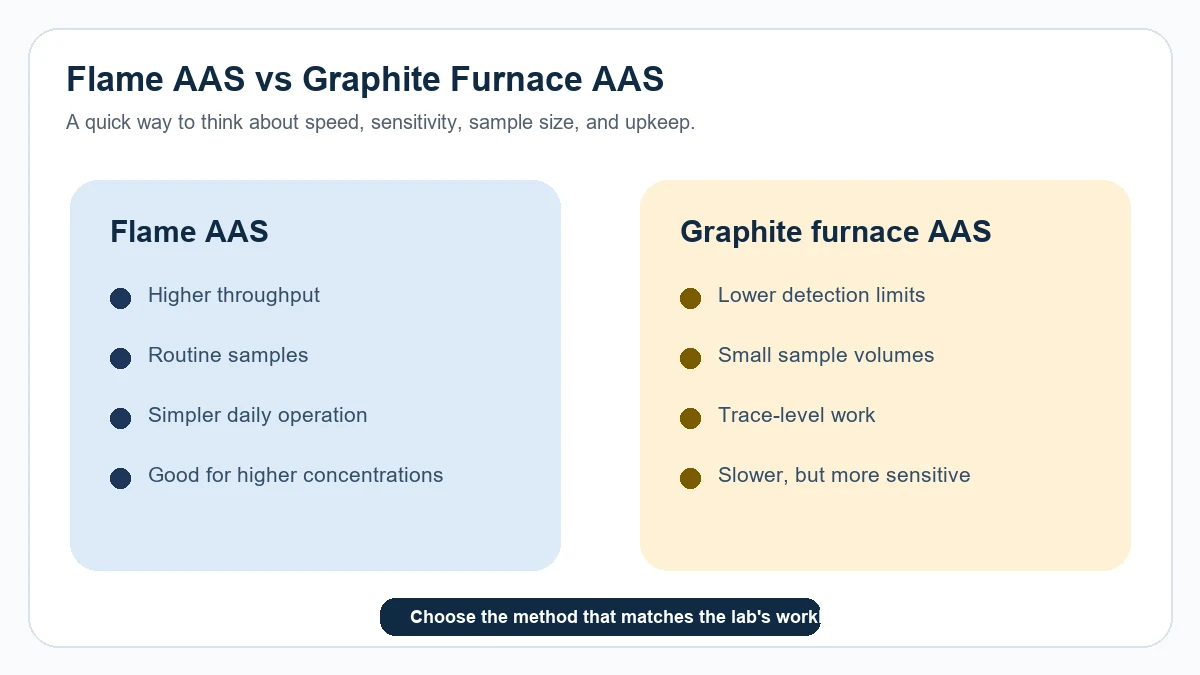
Laboratuvarlar istikrarlı bir günlük iş akışı istediklerinde, alevli atomik absorpsiyon spektrometresi (AAS) genellikle başlamak için daha kolay bir yöntemdir. Yüksek konsantrasyonlu numuneler, rutin tarama ve istikrarlı bir ritim gerektiren işler için pratiktir. Analistler genellikle bu yöntemi severler çünkü yöntem doğrudan ve çalışma mantığı kontrol altında tutulması kolaydır. Bu nedenle, alevli AAS veya grafit fırınlı AAS'ye bakan birçok laboratuvar hala alevli bir platformla başlar. Ekibin her numune için yavaşlamasını gerektirmeden birçok standart işi halleder. Yoğun bir laboratuvarda bu önemlidir. A3F Atomik Absorpsiyon Sspektrofotometre Bu tür rutin kullanıma uygundur. Laboratuvarın yüksek verimliliğe ihtiyacı olduğunda, yüksek düzeyde uzmanlaşmış düşük seviyeli bir kurulum gerektirmediğinde, basit bir seçimdir.
Grafit Fırınlı AAS'nin Kazandığı Noktalar
Grafit fırınlı AAS ise farklı bir konu. Daha düşük tespit limitleri, daha küçük numune miktarları ve eser miktarların gerçekten önemli olduğu çalışmalar için tasarlanmıştır. Bu da onu çevre testlerinde, gıda güvenliği takibinde, ilaçlarda ve analistin alevin genellikle sağlayabileceğinden daha fazla hassasiyete ihtiyaç duyduğu diğer durumlarda değerli kılar.
Karar gerçekten alevli AAS mi yoksa grafit fırınlı AAS mi arasında ise, numune konsantrasyonu düşükse veya raporlama limiti darsa genellikle fırınlı yöntem tercih edilir. Daha yavaş olabilir, ancak bunun karşılığında eser madde analizi için çok daha uygun bir yöntem sunar.
Şu A3G Bu fikir üzerine kurulmuştur. Düşük seviyeli metallerin günlük sorun olduğu laboratuvarlar için daha doğal bir çözümdür. Özellikle zorlu grafit çalışmaları için ise... AA990G Sıcaklık homojenliğini artırmak ve hafıza etkisini azaltmak için enine ısıtmalı grafit fırın teknolojisini kullanır. Bir izleme yönteminin her çalıştırmada hatasız kalması gerektiğinde bu tür ayrıntılar önemlidir.
Laboratuvarlar Bu Seçimi Nasıl Düşünmeli?
Alevli AAS ile grafit fırınlı AAS'yi karşılaştırmanın en iyi yolu, öncelikle numune karışımına bakmaktır. Laboratuvar çoğunlukla rahatlıkla ölçülebilir konsantrasyonlara sahip numuneleri test ediyorsa, alevli yöntem genellikle yeterlidir. Laboratuvar düşük seviyeli hedefleri sürekli olarak kaçırıyorsa veya ön konsantrasyon için çok fazla zaman harcıyorsa, grafit fırınlı yöntem daha uygun hale gelir. Numune akışı her ikisi arasında gidip geliyorsa, seçim daha ilginç hale gelir.
Bütçe de devreye giriyor. Alevli sistemler genellikle daha kolay çalıştırılır ve bakımı daha kolaydır. Fırınlı sistemler daha fazla hassasiyet sağlar, ancak yöntem geliştirme ve bakımda daha fazla özen gerektirir. Bir laboratuvar, daha güçlü göründüğü için daha hassas seçeneği satın almamalıdır. Gerçek iş yüküne uygun olanı satın almalıdır. Seçim, etiketlere göre değil, numune gerçekliğine göre yapılmalıdır. Bu nedenle, alevli AAS ile grafit fırınlı AAS arasındaki soru genellikle bir teknoloji yarışması yerine bir iş akışı tartışmasına dönüşür.
Modelin İş Akışına Uygun Hale Getirilmesi
PERSEE'nin burada kullanışlı bir yayılımı var. A3F rutin işler için uygundur. A3G ise yoğun izleme gerektiren işler için uygundur. A3AFG Alev ve grafit modlarını tek bir platformda birleştiren bu sistem, laboratuvarın işleri ayrı ayrı cihazlara bölmeyi göze alamadığı durumlarda kullanışlıdır. Laboratuvarın rutin tarama ve alt sınır onayı karışımı beklediği durumlarda, birleşik kurulum genellikle en temiz çözümdür. İş yükü sürekli olarak yüksek ve basit kalıyorsa, alev yöntemi çalışma alanını hareketli tutar. İş yükü eser miktarda ise, grafit fırını avantajlıdır.
Ek Bölüm
Sıklıkla gözden kaçan bir diğer nokta da numune matrisinin kendisidir. Bir alev sistemi, temiz su, basit sindirimler ve birçok rutin numuneyi sorunsuz bir şekilde işleyebilir. Ancak matris ağırlaştıkça, iş hızla değişir. Yüksek tuz içeriği, yağlar ve organik kalıntılar stabiliteyi etkileyebilir ve tekrarlanabilirliği bozabilir. Bu tür çalışmalarda, grafit fırın genellikle laboratuvara raporlama sınırına daha yakın kalma imkanı sağlar. Bu nedenle, aynı hedef elemente sahip iki laboratuvar yine de farklı sistemler seçebilir. Numune hazırlığı aynı değildir ve gerçek dünyadaki iş yükü de aynı değildir.
Bakım da işin bir parçası. Alevli AAS'nin her gün çalışır durumda tutulması genellikle daha kolaydır, ancak yine de temiz brülörlere, istikrarlı gaz beslemesine ve doğru hizalamaya bağlıdır. Grafit fırın daha fazla dikkat gerektirir. Tüp ömrü, sıcaklık programları, matris değiştiriciler ve kalıntılar önemlidir. Bunların hiçbiri onu kötü bir seçim yapmaz. Sadece laboratuvarın yönteme biraz daha yakın çalışmaktan rahat olan insanlara ihtiyacı olduğu anlamına gelir. Zaten sürekli eser metal çalışmaları yapan bir ekip için bu normaldir. Çoğunlukla hızlı rutin tarama yapmak isteyen bir ekip için ise ekstra bir yük gibi gelebilir.
Maliyet, laboratuvarın bundan ne elde ettiğiyle de değerlendirilmelidir. Bir alev ünitesi başlangıçta daha uygun fiyatlı görünebilir ve birçok laboratuvar için gerçekten de daha iyi bir yatırımdır. Ancak laboratuvar sürekli olarak düşük seviyeli numuneleri doğrulama için dışarı gönderiyorsa veya limit çok gevşek olduğu için sürekli olarak tekrarlanan işlemler yapıyorsa, daha ucuz cihaz beklenenden daha pahalıya mal olmaya başlar. Öte yandan, nadiren bu hassasiyet seviyesine ihtiyaç duyulan işler için bir grafit fırın sistemi satın almak da bütçenin iyi bir kullanımı değildir. Daha iyi soru sadece cihazın maliyeti değil, yöntem çalışmaya başladıktan sonra her sonucun maliyetidir.
İşte bu noktada birleşik bir platform anlam kazanmaya başlıyor. A3AFG, laboratuvarın iş akışını iki ayrı sisteme bölmeden rutin tarama ve alt düzey doğrulama arasında geçiş yapması gerektiğinde kullanışlıdır. Bu tür bir kurulum, tezgah alanından, eğitim süresinden ve hafta boyunca numune türleri değiştiğinde çok fazla gidip gelmeden tasarruf sağlayabilir. AA990G, özellikle fırın performansı ve tutarlılığının ham hızdan daha önemli olduğu durumlarda, çok hassas izleme çalışmaları konusunda hassas olan laboratuvarlar için bir adım daha ileri gider. Farklı laboratuvarlar farklı yönlere yönelecektir ve bu normaldir.
Daha Güçlü Kapanış Versiyonu
Alevli AAS veya grafit fırınlı AAS'de tek bir kazanan yok. Laboratuvarın hız, basit kullanım ve yüksek verim gerektirdiği durumlarda alevli sistem daha uygundur. Grafit fırınlı sistem ise, çalışma tespit limitine daha yakın olduğunda ve daha fazla hassasiyet gerektirdiğinde daha uygundur. Her iki tür numune de aynı laboratuvarda bulunduğunda, kombine bir sistem mantıklıdır. Sonuç olarak, doğru seçim, kağıt üzerinde daha gelişmiş görünen değil, laboratuvardaki numunelerle eşleşen sistemdir.
Birleşik Sistem Ne Zaman Mantıklı Olur?
Bir laboratuvarın aynı anda iki işi birden yaptığı durumlarda, entegre bir platform ciddi olarak değerlendirilmeye değerdir. Bir gıda laboratuvarı tüm hafta boyunca normal serbest bırakma testleri yapabilir, ardından bir tedarikçi sorunu ortaya çıktığında izleme kontrollerine geçebilir. Bir çevre laboratuvarı bir gün rutin numuneleri inceleyebilir, ertesi gün ise daha sıkı limitleri ele alabilir.
Bu, alevli AAS ile grafit fırınlı AAS arasındaki "ya o ya bu" tartışmasının sona erdiği kullanım örneğidir. Çift modlu bir sistem, laboratuvarın hız için bir cihaz, hassasiyet için başka bir cihaz satın almasını engelleyebilir; çünkü tek bir platform her ikisini de kapsayabilir. Pratikte, en iyi seçim, analistlerin gereksiz ödünler vermeye zorlanmadan ilerlemesini sağlayan seçimdir. Laboratuvarın talep profili karma ise, esnek bir platform genellikle çok hızlı bir şekilde kendini amorti eder.
Çözüm
Alevli AAS ile grafit fırınlı AAS arasında evrensel bir kazanan yoktur. Laboratuvarın hız, basitlik ve daha yüksek verimliliğe ihtiyacı olduğunda alevli yöntem daha uygundur. Laboratuvarın daha düşük tespit limitlerine ihtiyacı olduğunda ve daha yavaş bir tempoyu kabul edebildiğinde grafit fırınlı yöntem daha uygundur. Laboratuvarın aynı odada her iki tür çalışmaya da ihtiyacı olduğunda, birleşik bir platform cazip hale gelir. Asıl soru, hangi yöntemin daha yetenekli göründüğü değil, hangi yöntemin laboratuvarın her gün kullandığı örneklere, limitlere ve iş akışına uygun olduğudur.
Sık Sorulan Sorular
S1: Rutin testler için alevli AAS yeterli midir?
A1: Genellikle evet. Yüksek konsantrasyonlu numuneler ve günlük tarama çalışmaları için oldukça uygundur.
S2: Grafit fırınlı AAS ne zaman gerekli hale gelir?
A2: Laboratuvarın daha düşük tespit limitlerine ihtiyaç duyduğu veya çok küçük numune miktarlarıyla çalıştığı durumlarda daha kullanışlı hale gelir.
S3: Bir laboratuvar hem alevli hem de grafit fırınlı AAS kullanabilir mi?
A3: Evet. Bu, genellikle farklı numune tiplerine ve değişen konsantrasyon aralıklarına sahip laboratuvarlar için en iyi kurulumdur.