
The problem of heavy metal content in food on earth is persistent. Heavy metals can enter environment through pollution and various industrial processes and human consumption of heavy metal-containing food poses serious risk to human health as these bio-accumulate in the food chain. There are many sources of heavy metal contamination in foods and environment and heavy metals such as Pb, Hg, Cd, As and several others are critical because they pose severe and persistent health effects including neurological and kidney diseases and cancer after prolonged exposure. A critical challenge thus faces analysis of trace level of heavy metal in food, which is strictly regulated by agencies world over to set acceptable levels of exposure to these hazardous elements through foods. The acceptability of analytical methodology is related to trueness and reproducibility and to achieve the trace levels required, present day methodologies require state of the art tools and techniques to achieve the goals.
Analytical Requirements for Reliable Detection
Finding heavy metals precisely calls for testing systems with strong sensitivity and exactness to measure small amounts, often under parts per billion. Preparing samples remains a vital step because tricky food mixtures might lead to interference or reduced signals. So, acid digestion or microwave-assisted extraction often gets used to free up bound metals without causing contamination. Getting repeatable analytical results relies on steady calibration with certified reference materials and internal standards that fix instrument shifts as time passes. Labs have to make sure calibration curves keep their straightness over important concentration ranges for solid quantification.
Fundamentals of Atomic Absorption Spectroscopy (AAS)
Atomic absorption spectroscopy (AAS) counts as one of the best-proven ways to analyze elements in food safety labs. For more than a hundred years, people have understood that atoms of certain elements get excited when vaporized and put into a flame. Then, as these atoms go back to their ground state, they give off radiation at distinct wavelengths that can be measured. Most elements do not excite simply in a flame, and so most atoms stay in the ground state. Those unexcited atoms can take in energy from a light beam at the matching characteristic wavelength. This effect builds the base of AAS, where light from a hollow cathode lamp goes through an atomized sample, and the drop in light strength at wavelengths specific to elements links directly to the analyte’s concentration based on the Beer–Lambert law.
Components of an Atomic Absorption Spectrophotometer
Light Source and Optical System
A common atomic absorption spectrophotometer uses hollow cathode lamps or electrodeless discharge lamps as sources of radiation tailored to elements. He found that a source of radiation matching the wavelength of the absorption line makes fewer demands on the monochromator’s resolution than a source with broad radiation. Monochromators pull out the wanted wavelengths and cut stray light interference, which guarantees correct measurements even at very low trace levels.
Atomization Systems: Flame vs Graphite Furnace Techniques
Flame AAS (FAAS) employs an air-acetylene or nitrous oxide-acetylene flame to break down samples fast with fair sensitivity that fits everyday analysis. By comparison, graphite furnace AAS (GFAAS) gives better sensitivity through thermal atomization of samples inside an electrically heated graphite tube protected by inert gas, which suits ultra-trace metal finding when the sample volume is small.
Detection and Data Processing Systems
The photodetector gauges the intensity of light that passes through, and the signal from the photodetector gets boosted and sent to circuitry that makes a manual electronic balance together with a digital readout that matches the concentration of the metal under study. Current instruments blend in automatic calibration steps and digital software for managing data, which helps with exact quantification and quality checks.
Application of AAS in Heavy Metal Detection in Food Samples
Food samples need full digestion before analysis to change organic matter into soluble inorganic forms fit for atomization. Wet acid digestion with nitric acid or microwave-assisted digestion ensures good breakdown while cutting down on analyte loss. To stop contamination, all glassware must be acid-washed and used in clean surroundings.
Quantitative Analysis of Common Heavy Metals in Food Products
Lead (Pb) Determination
Lead brings real toxicity risks even at microgram levels, so calibration plans must use standards matched to the matrix or standard-addition methods to adjust for matrix effects correctly. The standard-addition technique is used when the solids content of the sample is so high that its effect on absorption is hard to compensate for with aqueous standards or when an interference is present that cannot be corrected.
Cadmium (Cd), Mercury (Hg), and Arsenic (As) Analysis
These elements show volatility or heat instability that calls for fine-tuned atomization conditions. Matrix modifiers like palladium-magnesium nitrate mixes often get added to steady analytes in heating steps within graphite furnaces, which improves analytical exactness over different food matrices.
Validation and Quality Control Procedures
Solid quantification depends on checking methods with certified reference materials plus internal standards that make up for instrument ups and downs. Steady checks of performance make sure of following international rules that cover food safety testing.
Advances in Atomic Absorption Spectroscopy Technology
Automation has changed atomic spectroscopy by adding autosamplers that lower errors from hand handling and raise steady throughput. Sequential multi-element analysis lets labs check many metals well without hurting sensitivity—a key part of big food monitoring plans.
Integration with Other Analytical Techniques
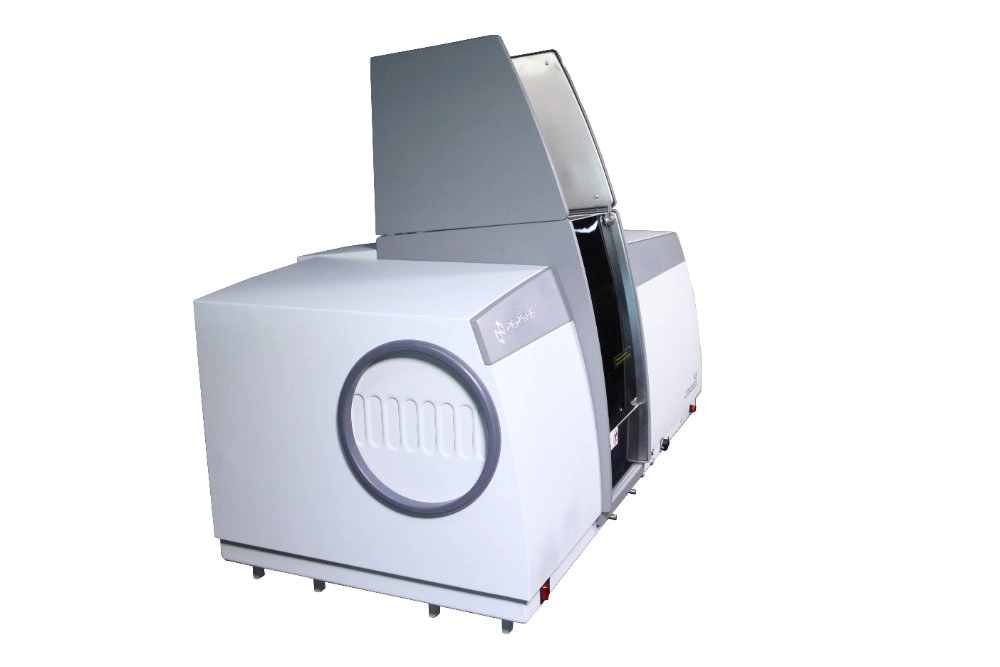
To widen the analysis range, AAS can join with supporting technologies such as inductively coupled plasma mass spectrometry (ICP-MS) or optical emission spectrometry (ICP-OES). These mixed systems grow the dynamic range and allow, at the same time, multi-element outlines over complex matrices like dairy products or seafood.
PERSEE: Um Fabricante Fiável de Instrumentos Analíticos
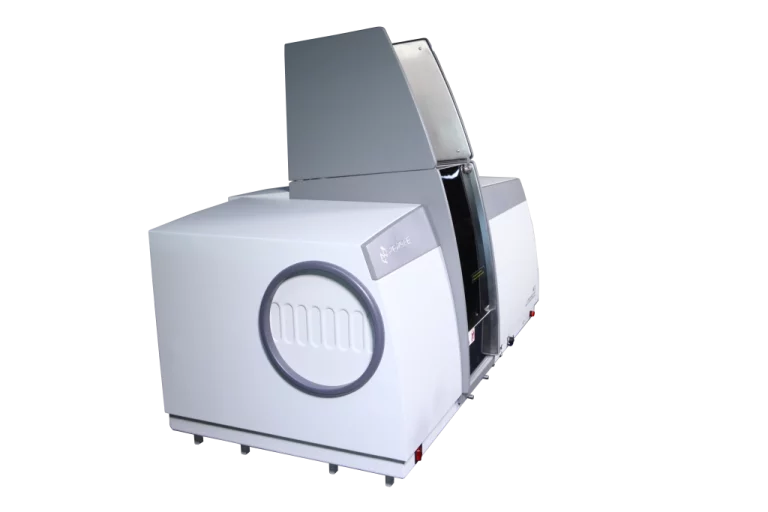
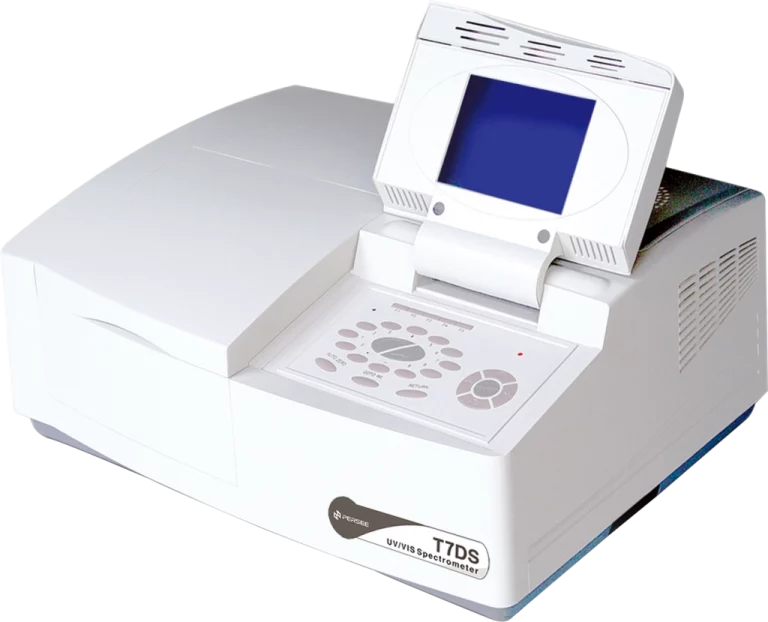
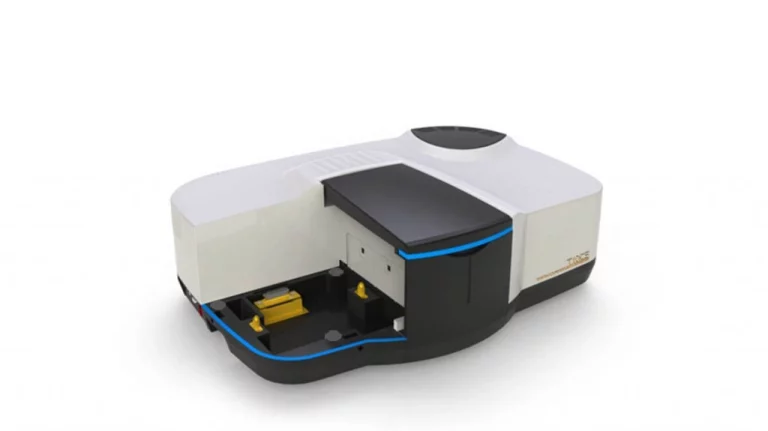
Em Persee, we have put 35 years into pushing forward atomic spectroscopy tools built for labs everywhere. Beijing Purkinje General Instrument Co., Ltd. is a modern high-tech enterprise that was founded in 1991. It specializes in scientific instrument research and development, manufacturing, and sales. Our mission combines innovation with reliability—delivering instruments certified under ISO9001 quality management systems and CE compliance standards to ensure consistent performance across regulatory testing environments. With more than 30% of employees engaged in R&D activities and a postdoctoral research workstation, we continuously enhance our technology portfolio, supporting laboratories engaged in environmental monitoring, pharmaceutical production, agriculture testing, and food safety assurance. Our global service network ensures rapid technical support wherever our instruments operate.
Representative Models from PERSEE’s Product Lineup
A3F
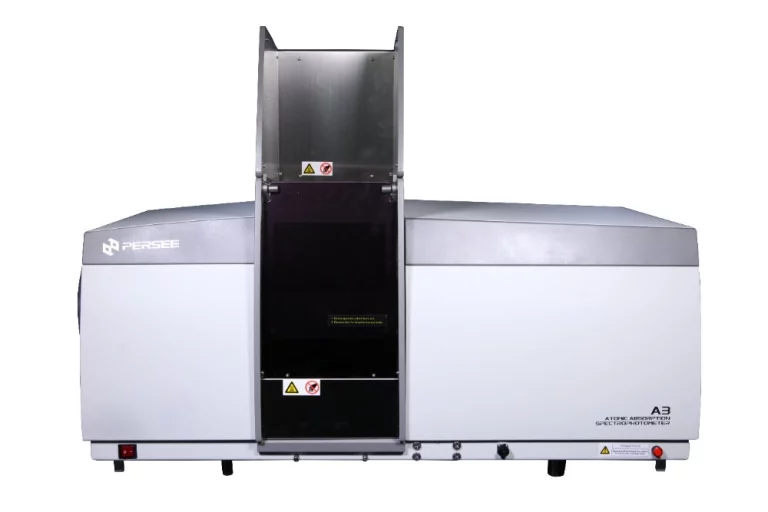
A3F is equipped with a flame atomizer only. The positioning is fully controlled by embedded computer systems using AA-Win 3.0 software. Its air/acetylene configuration provides excellent performance for most elements encountered in routine food testing, while optional N₂O/acetylene flames extend capability toward refractory metals like calcium or titanium. Integrated safety features—including gas leak detection and burner identification—ensure secure operation during continuous analysis.
A3G
A3G adopts multiple safety protection measures, where all controls except power are computer-managed. Equipped with transversely heated graphite tubes featuring precision feedback temperature control, it achieves superior sensitivity suitable for trace-level detection required by modern food laboratories analyzing toxic elements like mercury or cadmium.
A3AFG
The A3AFG model integrates both flame atomizer and graphite atomizer configurations within one system, allowing seamless transition between modes through AA-Win 3.0 software selection. This modular design supports versatile laboratory applications—from agricultural soil studies to processed-food contamination assessment—making it an ideal solution where flexibility meets analytical rigor.
Conclusão
Atomic absorption spectroscopy remains indispensable for ensuring global food safety through precise heavy metal detection at trace concentrations. Its selectivity, cost-effectiveness, and adaptability make it foundational across regulatory testing frameworks. Continuous innovations such as automation integration and hybridized systems further enhance efficiency while maintaining compliance and integrity worldwide. As developers committed to advancing atomic spectroscopy solutions, we continue providing dependable instruments empowering laboratories to protect public health through accurate elemental analysis across diverse food products. If you would like to learn more, please don’t hesitate to contact us immediately!
FAQ
Q1: What advantages does AAS offer over other atomic spectroscopy techniques?
A1: AAS provides high specificity with excellent detection limits for single-element analysis at lower operational costs compared to ICP-based methods while maintaining simpler operation workflows suitable for routine laboratory use.
Q2: How can matrix interference be minimized during heavy metal analysis using AAS?
A2: Proper digestion procedures combined with matrix modifiers like palladium nitrate improve stability; background correction via deuterium lamps further compensates optical interferences, ensuring accurate quantification even within complex food matrices.
Q3: Why choose PERSEE instruments for food safety laboratories?
A3: Our instruments combine advanced optical design with robust construction, delivering consistent accuracy supported by global after-sales service accessible through our contact page.