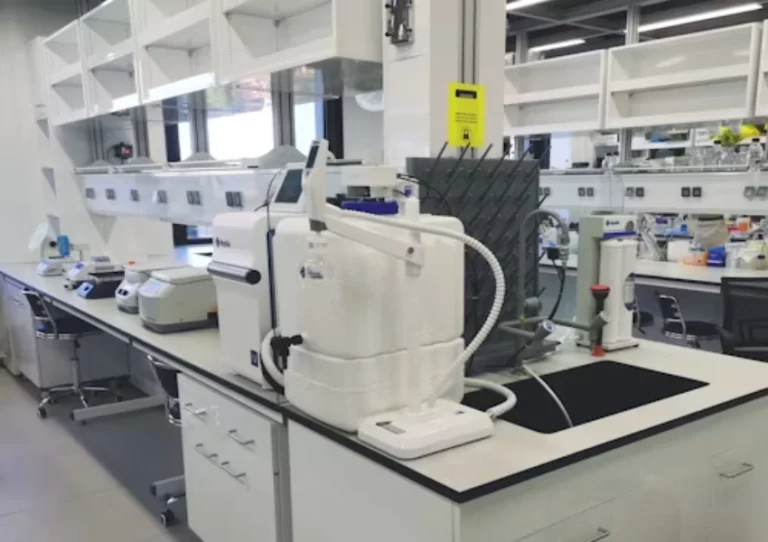
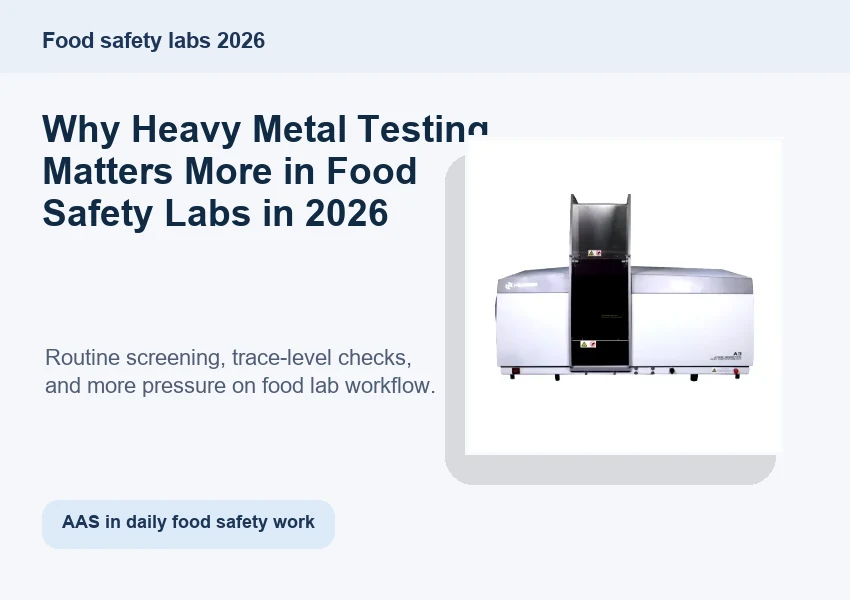
Nel 2026, i laboratori di sicurezza alimentare sono sottoposti a una pressione maggiore rispetto a qualche anno fa. Gli audit dei fornitori sono più rigorosi, i prodotti si esauriscono più rapidamente e le tracce di contaminazione sono più difficili da liquidare come un caso isolato. Per questo motivo, le analisi dei metalli pesanti nei laboratori di sicurezza alimentare sono passate da un'attività di routine a uno dei primi controlli su cui molti laboratori fanno affidamento. Non si tratta solo di conformità, ma anche di affidabilità dei risultati, di rilascio dei lotti e di cosa succede quando in seguito emergono dei dubbi.
PERSEE Mostra una vasta gamma di spettrometri atomici, e questo è importante perché i laboratori alimentari raramente desiderano una strategia basata su uno strumento una tantum. Hanno bisogno di qualcosa che si adatti al flusso dei campioni, al team e ai tempi di refertazione senza creare complicazioni.
Perché l'analisi dei metalli pesanti è diventata un elemento fondamentale del flusso di lavoro per la sicurezza alimentare.
Oggigiorno, un laboratorio alimentare raramente analizza un solo tipo di campione. Potrebbe ricevere lotti di produzione di routine al mattino e campioni di verifica dei fornitori nel pomeriggio. Alcuni campioni sono puliti e facili da analizzare. Altri contengono sale, zucchero, grassi, pigmenti o proteine che rendono i risultati meno affidabili.
È qui che il valore dei test sui metalli pesanti nei laboratori di sicurezza alimentare diventa evidente. Il laboratorio ha bisogno di un metodo stabile, riconosciuto e sufficientemente pratico per il lavoro quotidiano. L'AAS si adatta ancora bene a questo scopo perché offre ai laboratori un percorso chiaro per l'analisi elementare senza forzare ogni caso in una configurazione più complessa del necessario. Per i laboratori che desiderano un punto di partenza più ampio, il categoria spettrometro atomico Riunisce in un unico luogo le opzioni di fiamma, forno e assorbimento atomico combinato.
Quali metalli sono più importanti nei test sugli alimenti?
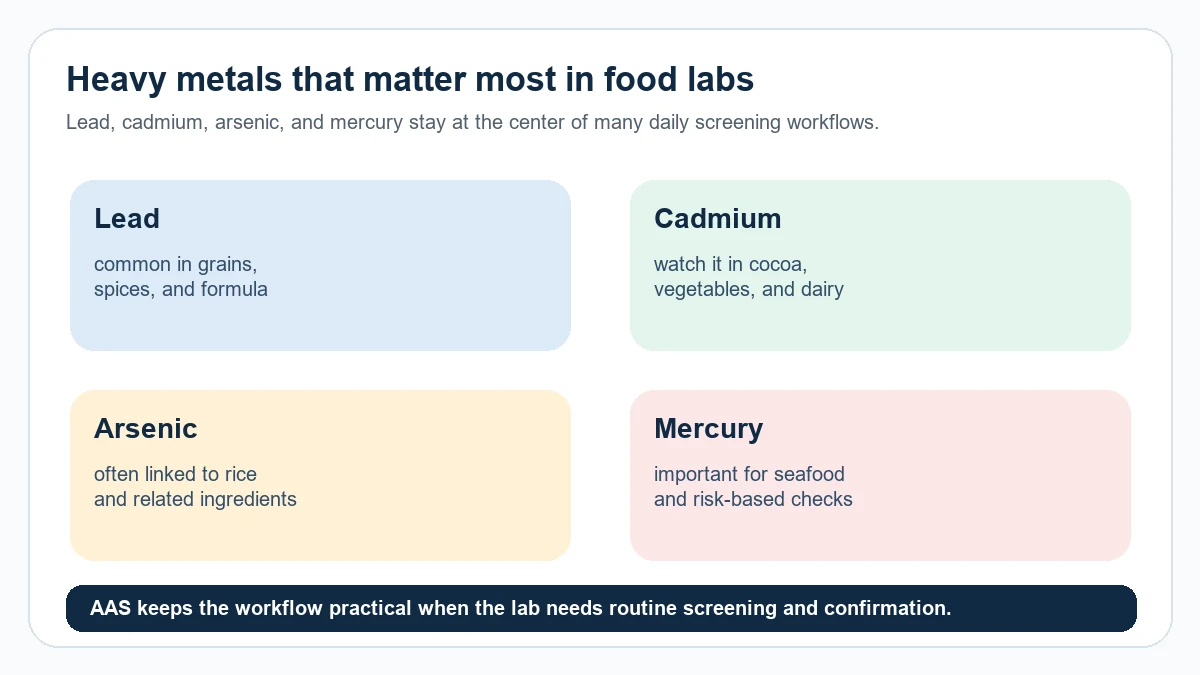
Il piombo rimane la principale fonte di preoccupazione in molte categorie di alimenti. Il cadmio lo segue a ruota, soprattutto nei cereali, nelle verdure, nel cacao e in alcuni ingredienti trasformati. L'arsenico è spesso presente nel riso e nei prodotti derivati. Il mercurio continua a essere un elemento importante nei prodotti ittici e in alcuni prodotti di origine animale.
Il punto non è semplicemente elencare i metalli. È capire quali di essi influenzano il carico di lavoro del laboratorio. Se il flusso di campioni continua a presentare sempre gli stessi elementi a rischio, l'analisi dei metalli pesanti nei laboratori di sicurezza alimentare diventa un flusso di lavoro ripetibile, non un progetto speciale occasionale. Questo cambia il modo in cui il laboratorio dovrebbe considerare la produttività, la calibrazione e il tempo di funzionamento degli strumenti. La stessa logica si applica alla preparazione dei campioni. Le matrici pulite si elaborano più velocemente. Le matrici contaminate richiedono maggiore attenzione. In entrambi i casi, il laboratorio deve comunque raggiungere un risultato di cui gli uffici acquisti, controllo qualità e autorità di regolamentazione possano fidarsi.

Perché la spettrometria di assorbimento atomico (AAS) è ancora adatta a molti laboratori di sicurezza alimentare
L'AAS non è mai stato lo strumento più appariscente, ma rimane comunque uno dei più utili. Per le analisi elementari di routine, è diretto, ben compreso e più facile da mantenere nella rotazione giornaliera di quanto molti laboratori si aspettino. Kit AAS IQ/OQ/PQ È un promemoria discreto ma utile che la qualificazione e il controllo di routine sono parte integrante del flusso di lavoro reale. Un metodo è efficace solo se lo strumento che lo supporta è configurato correttamente e mantenuto in perfette condizioni.
Molti laboratori suddividono il loro lavoro in base al livello di servizio. Una piattaforma a fiamma gestisce la maggior parte degli screening di routine. Una piattaforma combinata ha senso quando il laboratorio desidera una gamma più ampia di analisi in un unico sistema. Aa990f è un esempio pratico di punto di ingresso basato sulla fiamma, mentre il A3afg Mostra come le modalità fiamma e grafite possano coesistere quando il laboratorio necessita di maggiore flessibilità.
Quali sono le priorità dei laboratori nel 2026?
La discussione sui test per i metalli pesanti nei laboratori di sicurezza alimentare non riguarda solo il rilevamento. Riguarda la realtà quotidiana. I laboratori si preoccupano in genere di quattro cose principali: lo strumento è in grado di gestire il volume di campione previsto? Riesce a raggiungere livelli sufficientemente bassi per i limiti target? Il team può utilizzarlo senza complicare eccessivamente la pianificazione? E può continuare a funzionare senza interventi continui?
Ecco perché la spettrometria di assorbimento atomico (AAS) ha ancora un suo ruolo. È una tecnica familiare agli analisti, pratica per l'uso di routine e sufficientemente flessibile per diverse concentrazioni, a patto di scegliere la configurazione giusta. Un sistema a fiamma può essere sufficiente per un laboratorio di routine ad alto volume. Un sistema a forno diventa più interessante quando prevalgono le analisi a livello di tracce. Una piattaforma combinata è la soluzione ideale quando il laboratorio deve passare da un sistema all'altro. Il segnale del mercato è inequivocabile: i laboratori desiderano meno sorprese, trasferimenti più puliti e strumenti di facile manutenzione. Un metodo che appare elegante sulla carta ma rallenta ogni lotto non avrà lunga vita in un laboratorio alimentare molto impegnato.
Dove la spettrometria di assorbimento atomico (AAS) funziona meglio nelle applicazioni per la sicurezza alimentare.
I casi d'uso più rilevanti sono quelli che i laboratori affrontano quotidianamente. Latte artificiale. Spezie. Latte in polvere. Ingredienti per bevande. Prodotti a base di cereali. Integratori in polvere. Non tutti questi campioni necessitano della stessa finestra di rilevamento, ma è fondamentale ottenere risultati affidabili per il team.
È qui che l'analisi dei metalli pesanti nei laboratori di sicurezza alimentare diventa una decisione cruciale per il flusso di lavoro. Se l'attività principale del laboratorio consiste nello screening di routine e nel rilascio dei lotti, la spettrometria di assorbimento atomico a fiamma (AAS) può semplificare notevolmente il lavoro. Se invece il laboratorio è costretto a lavorare con limiti più bassi e quantità di campioni inferiori, la spettrometria di assorbimento atomico a fiamma (AAS) diventa più importante. L'AAS offre al laboratorio un compromesso pratico tra velocità e sensibilità. In questo senso, lo strumento migliore non è quello con le promesse più eclatanti nella brochure, ma quello che permette al laboratorio alimentare di rimanere operativo, entro i limiti del metodo e compatibile con il tipo di flusso di campioni che il team già gestisce.
Conclusione
Nel 2026, le analisi dei metalli pesanti nei laboratori di sicurezza alimentare assumono un'importanza ancora maggiore, poiché la posta in gioco è più alta e i campioni sono più complessi. L'obiettivo non è solo rilevare piombo, cadmio, arsenico o mercurio, ma farlo in modo coerente, entro i limiti di rilevabilità corretti e a un ritmo sostenibile per il laboratorio. Ecco perché la spettrometria di assorbimento atomico (AAS) ha ancora un ruolo fondamentale nei laboratori di sicurezza alimentare. Non si tratta di una soluzione semplicistica e inadeguata, ma di un metodo pratico e affidabile per i campioni che effettivamente analizzano.
Domande frequenti
D1: Perché l'analisi dei metalli pesanti è importante nei laboratori di sicurezza alimentare?
A1: Aiuta i laboratori a individuare tempestivamente i rischi di contaminazione, a garantire la conformità alle normative e a proteggere la qualità del prodotto prima che i beni raggiungano il mercato.
D2: La spettrometria di assorbimento atomico (AAS) è sufficiente per l'analisi di routine dei metalli pesanti negli alimenti?
A2: Per molti casi di routine, sì. La fiamma o la configurazione del forno adeguate possono gestire gran parte del lavoro quotidiano in materia di sicurezza alimentare.
D3: Quali matrici alimentari sono più difficili da analizzare per la ricerca di metalli in tracce?
A3: Spezie, latte artificiale, campioni ad alto contenuto di grassi, prodotti salati e matrici pigmentate richiedono in genere una preparazione e un controllo del metodo più accurati.