Spektrofotometri berfungsi sebagai metode analisis utama yang mengukur berapa banyak cahaya yang diserap bahan pada panjang gelombang tertentu. Sebagai alat analitis, spektrofotometer muncul di hampir setiap jenis laboratorium kimia, biologi, atau ilmu kehidupan. Ini bekerja berdasarkan hukum Beer-Lambert, yang menghubungkan penyerapan dengan konsentrasi. Hal ini memungkinkan para ilmuwan untuk mengetahui tingkat molekuler dan memeriksa kecepatan reaksi dengan akurasi yang besar. Setiap bahan kimia mengambil, melewati, atau memantul kembali cahaya (radiasi elektromagnetik) melalui rentang panjang gelombang tertentu. Keandalan hasil numerik dalam spektrofotometri UV-Vis sangat bergantung pada pengaturan optik dan pengaturan perangkat - elemen yang mempengaruhi stabilitas garis dasar, kontrol cahaya sesat, dan ketepatan panjang gelombang.
Komponen inti dan prinsip optik
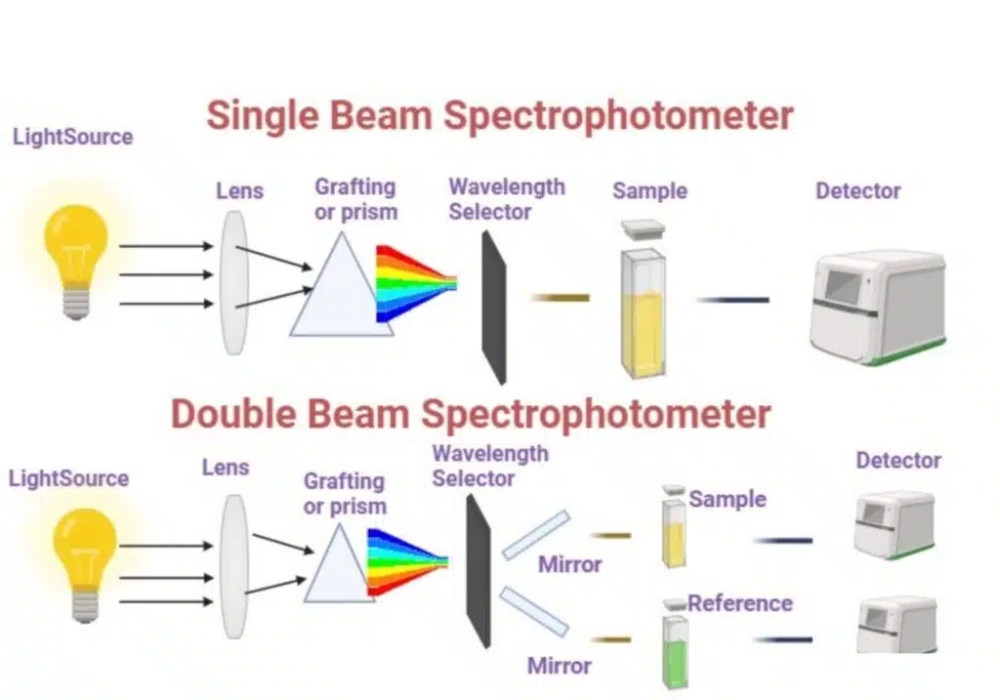
Spektrofotometer standar mencakup sumber cahaya, monokromator, area sampel, detektor, dan penangani sinyal. Cahaya dari sumber melalui celah masuk di monokromator, yang mempersempit balok ke lebar yang dapat dilakukan. Kemudian bergerak melalui jaring difraksi, di mana pecah menjadi strip cahaya warna tunggal. Pengaturan rute optik menentukan pengukuran pengulangan dan ketegangan; Dengan demikian, perangkat’ struktur secara langsung membentuk kelurusan fotometrik dan jumlah kebisingan. Dalam pengaturan yang lebih maju, optik dual-beam atau pengaturan split-beam meningkatkan perbaikan garis dasar dengan mengimbangi perubahan kekuatan lampu selama berjalan panjang.
Spektrofotometer UV-Vis Single-Beam
Dalam spektrofotometer sinar tunggal, semua cahaya yang masuk bergerak satu demi satu melalui pemegang sampel atau kosong. Pembacaan dasar harus dicatat terpisah sebelum setiap tes untuk menyesuaikan penyerapan pelarut atau kubet. Tata letak dasar ini mengurangi komplikasi dan biaya optik sambil menjaga fungsi yang kuat untuk pemeriksaan umum atau penggunaan sekolah.
Keuntungan Sistem Single-Beam
Perangkat sinar tunggal memberikan aliran optik yang kuat karena mereka memiliki lebih sedikit cermin atau pembagi sinar di jalur cahaya. Ukuran kecil mereka mengurangi kebutuhan ruang di bangku dan membuat pemeliharaan lebih mudah. Dalam hal biaya, mereka membuat pilihan awal yang baik untuk laboratorium melakukan tes reguler atau mengajar siswa ide-ide spektroskopi dasar.
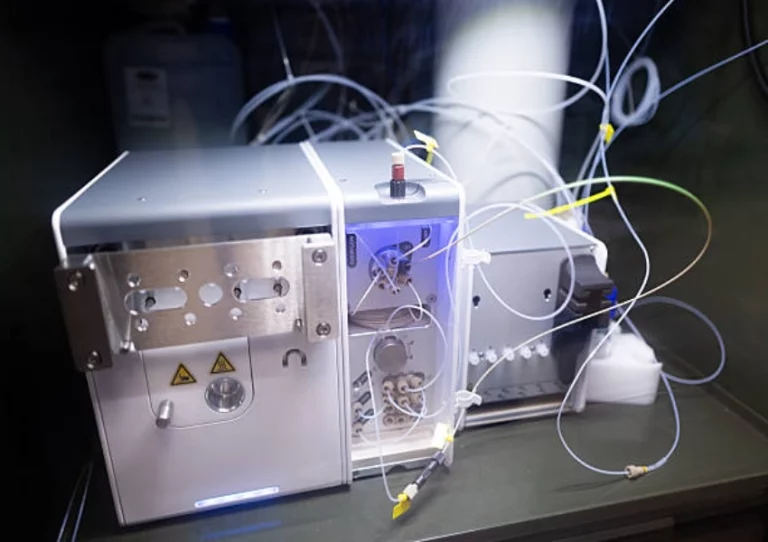
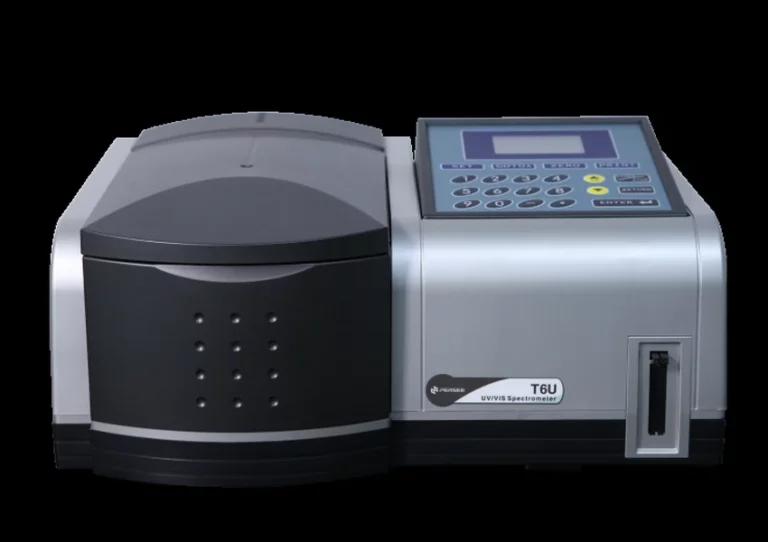
Contoh yang jelas adalah kita T7D UV-VIS, spektrofotometer UV-Vis sinar tunggal yang mampu dibangun untuk pekerjaan laboratorium sehari-hari. Ini menangani pemeriksaan fotometrik dan penyapu spektral dengan baik sambil menjaga kemudahan mekanis yang menjanjikan kehandalan abadi di sekolah dan lokasi pabrik.
Batasan dalam Kinerja Analisis
Bahkan dengan titik-titik kekuatannya, pengaturan balok tunggal membutuhkan kalibrasi ulang secara teratur karena kemungkinan pergeseran daya lampu selama periode. Perubahan di sekitar, seperti pergeseran suhu, dapat mempengaruhi ketegangan pengukuran karena tidak ada perbaikan referensi yang sedang berlangsung. Ketika berurusan dengan banyak sampel berturut-turut, pekerja harus mengukur kosong berulang kali - tindakan yang dapat memakan banyak waktu dalam rutinitas yang cepat.
Spektrofotometer UV-Vis Double-Beam
Perangkat balok ganda membagi balok masuk menjadi dua rute yang berbeda: satu ditujukan pada pemegang sampel dan yang lain pada pemegang referensi dengan pelarut saja. Energi atau sinar cahaya dari sumber dibagi oleh helikopter berputar menjadi sinar referensi dan sinar sampel. Rasio yang terus-menerus antara dua balok ini secara otomatis menyesuaikan untuk perubahan lampu atau pergeseran detektor, memberikan ketegangan garis dasar yang lebih baik bahkan dalam uji panjang. Metode deteksi berpasangan ini meningkatkan kebenaran pengukuran di area panjang gelombang yang luas dan mengubah pengaturan laboratorium.
Manfaat kinerja dalam analisis presisi
Tata letak balok ganda menawarkan keseimbangan sinyal-ke-kebisingan yang lebih baik, yang sangat penting untuk pekerjaan penghitungan jumlah kecil seperti pemeriksaan obat atau studi biokimia. Mereka memegang ketepatan panjang gelombang bahkan dalam kondisi laboratorium yang bergeser dan menghapus bacaan kosong berulang dengan selalu memeriksa kedua balok pada saat yang sama. Pengaturan ini membantu kerja kinetik di mana pengawasan yang stabil dari waktu ke waktu diperlukan tanpa istirahat kalibrasi ulang tangan.
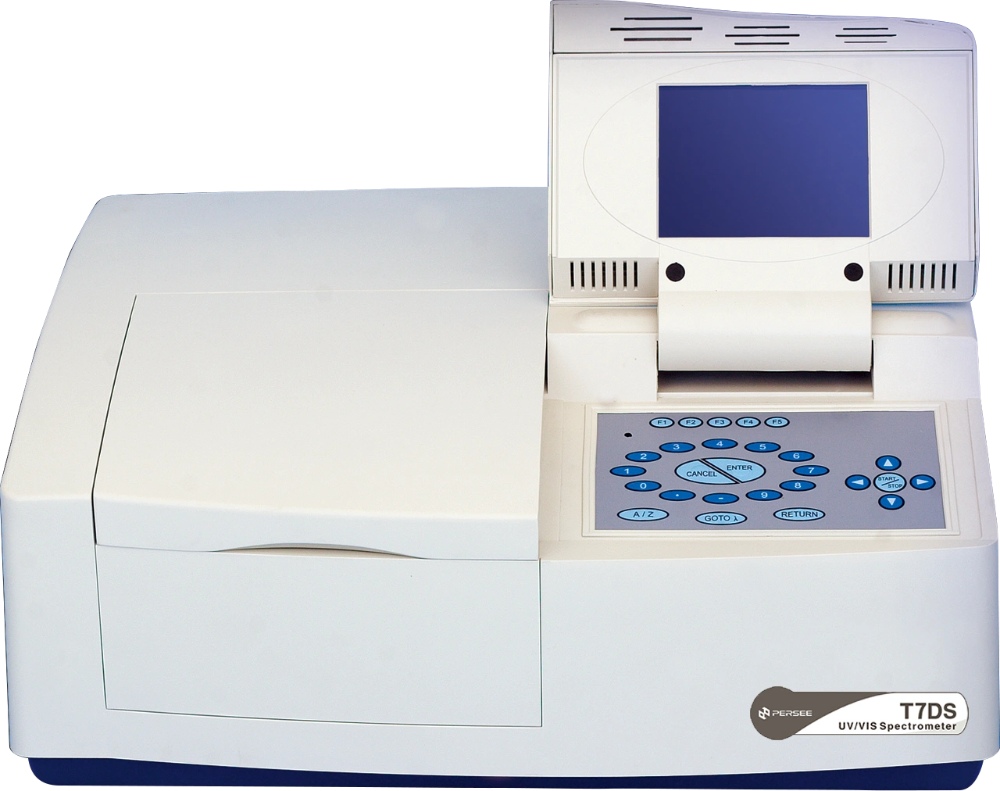
Kami T7DS UV-VIS menunjukkan ide ini dengan optik balok ganda yang memastikan stabilitas garis dasar yang halus dan kisi holografi yang sangat menurunkan masalah cahaya liar - kunci untuk mengambil pengukuran penyerapan rendah di rentang ultraviolet dan terlihat. Fitur otomatisnya memungkinkan pengguna melakukan tes standar dengan beberapa tekanan tombol, sementara perangkat lunak yang kuat mendukung tampilan spektrum 3D dan penanganan data yang disetujui GLP.
Pertimbangan Teknis dan Aspek Pemeliharaan
Sementara sistem balok ganda memberikan ketepatan analitis tertinggi, penyelarasan optik mereka lebih terlibat daripada pada perangkat balok tunggal, sehingga mereka menyerukan tinjauan kalibrasi rutin untuk menjaga aturan akurasi yang ditetapkan oleh kelompok seperti USP atau ASTM. Biaya pemeliharaan yang sedikit lebih tinggi berasal dari dua jalur cahaya; Namun, rencana listrik modular membuat pertukaran bagian lebih sederhana, dan sirkuit canggih memastikan kinerja jangka panjang yang stabil.
Evaluasi Perbandingan: Sistem Single-Beam vs Double-Beam
Dari sudut pandang analitis, perangkat balok ganda menyediakan perbaikan garis dasar yang lebih kuat berkat penyeimbangan referensi side-by-side yang mengurangi dampak drift selama waktu penggunaan yang panjang. Di sisi lain, jenis balok tunggal mungkin menunjukkan lebih banyak perubahan tetapi tetap sangat responsif ketika digunakan untuk tes penghitungan sederhana di mana kontrol sekitarnya tetap stabil.
Efisiensi Operasional dan Optimalisasi Aliran Kerja
Struktur balok ganda meningkatkan kecepatan alur kerja dengan melewati bacaan kosong berulang-ini menghemat waktu pekerja kunci saat mengelola kelompok sampel besar atau menjalankan tes jam tangan kinetis. Sebagai perbandingan, jenis balok tunggal lebih sederhana untuk dijalankan tetapi kurang efektif untuk titik pengujian nonstop yang membutuhkan otomatisasi.
Penilaian Biaya-Manfaat dalam Pengaturan Laboratorium
Laboratorium harus menimbang biaya awal terhadap kebutuhan sehari-hari: unit balok ganda mendapatkan harga yang lebih besar melalui kehandalan yang lebih baik untuk tugas-tugas berat studi; Pada saat yang sama, tempat pengajaran sering memilih jenis balok tunggal murah yang cocok untuk latihan pelatihan dasar.
Skenario Aplikasi Di Seluruh Industri
Spektrofotometer UV-Vis bertindak sebagai alat utama untuk studi kecepatan reaksi, pemeriksaan struktur molekul, dan pelacakan langkah sintesis di bidang penelitian sekolah di mana pengulangan menandai keberhasilan tes.
Kontrol Kualitas Farmasi dan Analisis Biokimia
Dalam bidang yang dikendalikan seperti farmasi atau bioteknologi, spektroskopi sinar ganda memastikan penghitungan yang tepat dari bagian aktif atau biomolekul yang sesuai dengan aturan kualitas dunia - mendukung langkah-langkah persetujuan yang dibutuhkan oleh laboratorium GMP-fit.
Pengujian Lingkungan dan Aplikasi Industri
Metode spektrofotometrik memegang bagian penting dalam pemeriksaan kualitas air, menemukan tingkat pewarna dalam membuat langkah-langkah, dan tugas bukti bahan di seluruh pekerjaan pabrik, mencari deteksi skala kecil.
PERSEE: Produsen Instrumen Analisis yang Terandal
PerseeDimulai pada tahun 1991, berdiri sebagai perusahaan teknologi tinggi saat ini yang berfokus pada penelitian dan pengembangan alat ilmiah, pembuatan, dan penjualan. Kami telah mendapatkan persetujuan seperti kredit sistem mutu ISO9001, persetujuan penanganan lingkungan ISO14001, persetujuan keselamatan kerja OHSAS18001, dan penandaan CE dalam pengaturan Uni Eropa, memastikan semua barang memenuhi aturan laboratorium dunia untuk keselamatan dan kebenaran.
Tujuan kami mencampur kemajuan teknologi dengan bantuan publik; Lebih dari 30% staf kami bekerja tepat pada R& Tugas D bertujuan untuk mendorong maju teknologi alat analitis yang melindungi kesehatan masyarakat sambil membantu pertumbuhan pabrik hijau. Kami bangga bisa berada di antara Merek alat spektroskopi terkemuka Cina- posisi yang dimenangkan melalui bertahun-tahun membangun keterampilan yang didukung oleh rencana penelitian pasca doktoral yang ditetapkan pada keuntungan yang stabil di seluruh rentang produk di situs web resmi kami. Jika Anda ingin mempelajari lebih lanjut, silahkan Hubungi kami segera!
Kesimpulan
Baik spektrofotometer single- dan double-beam memiliki cocok kuat yang jelas cocok untuk berbagai tujuan analitis: tipe single-beam stres mudah dan harga rendah, sedangkan pengaturan double-beam membawa ketegangan yang lebih baik yang diperlukan untuk tugas yang didorong dengan tepat dengan menonton jangka panjang atau pekerjaan penghitungan tingkat kecil.
FAQ (Pertanyaan umum)
Q1: Faktor apa yang harus diprioritaskan ketika memilih antara spektrofotometer sinar tunggal dan ganda?
A1: Frekuensi uji, tingkat ketepatan yang diinginkan, pembagian anggaran, kebutuhan otomatis, dan kontrol sekitarnya harus mengarahkan panggilan pilihan berdasarkan apakah kecepatan aliran atau kenaikan harga pertama.
Q2: Bagaimana desain balok ganda meningkatkan keandalan pengukuran?
A2: Dengan selalu mencocokkan sinyal dari kedua balok sampel dan referensi, itu memperbaiki pergeseran real-time dari drift daya lampu, memastikan ada pembacaan penyerapan yang stabil selama tes panjang.
Q3: Di mana dukungan teknis atau spesifikasi rinci dapat diperoleh?
A3: Kertas produk lengkap ditambah bantuan ahli siap melalui garis layanan pro kami yang dicatat di halaman kontak kami.