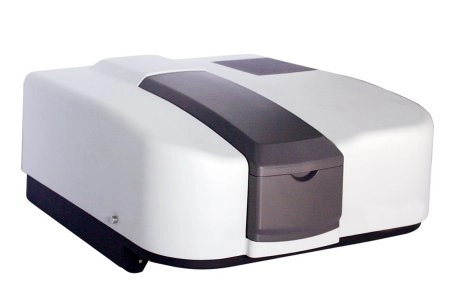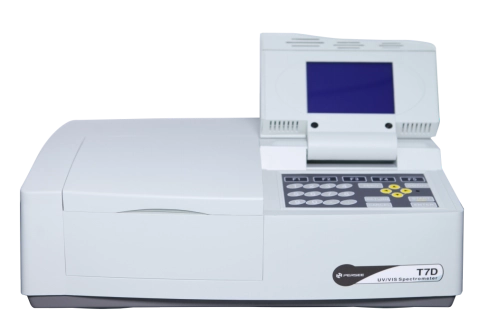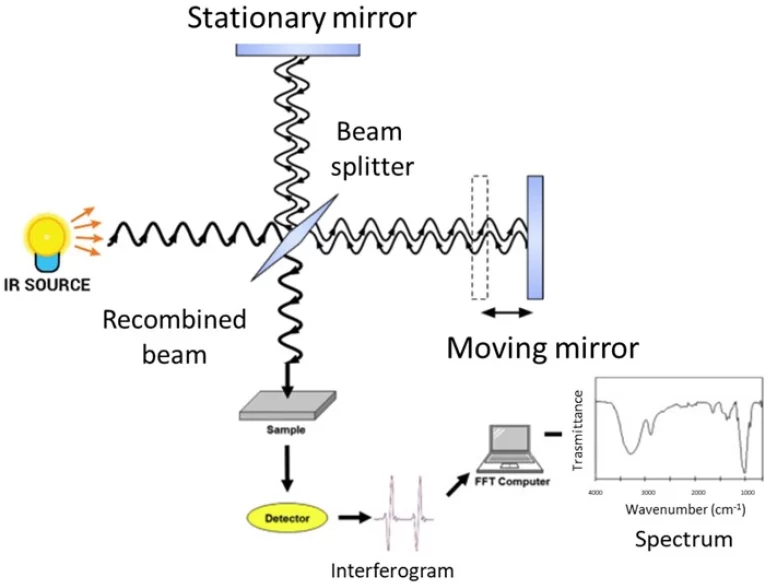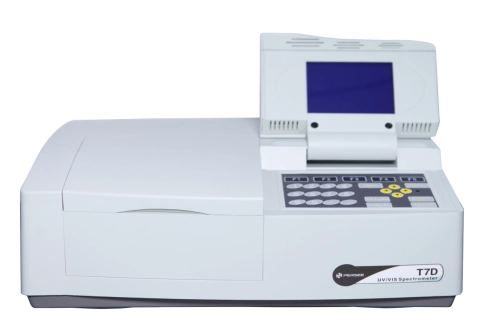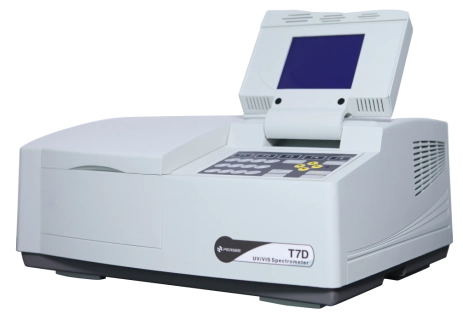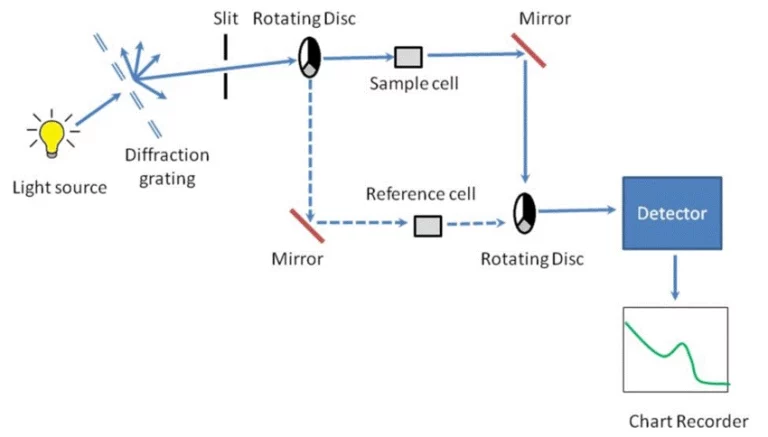
Zu den aktuellen Anforderungen an die klinische Diagnostik gehören präzise und schnelle Ergebnisse mit zuverlässigen Ergebnissen, die die UV-Vis-Spektrophotometrie perfekt erfüllt. Die Methode ermöglicht es medizinischem Personal und Laborarbeitern, die Quantifizierung von Biomolekülen und die Überwachung der metabolischen Veränderungen sowie die Prüfung der Probenqualität für mehrere wissenschaftliche Anwendungen durchzuführen. Das Beer-Lambert-Gesetz beschreibt die lineare Beziehung zwischen Absorbenz, Konzentration und optischer Weglänge, so dass UV-Vis-Instrumente präzise quantitative biochemische Messungen durchführen können.
Persee bietet leistungsstarke UV-Vis-Lösungen für die medizinische Diagnose durch ihre Spektrophotometer T8DCS, T9DCS und T10DCS, die die klinischen Operationen und die diagnostische Genauigkeit verbessern. Der Anwendungskatalog von PERSEE zeigt, wie ihre Systeme in Pharma- und Life Science-Laboren auf der ganzen Welt funktionieren.
Rolle der UV-Vis-Spektrophotometrie in der klinischen biochemischen Analyse
Die UV-Vis-Spektrophotometrie dient als grundlegendes Werkzeug in der biochemischen Diagnostik, da sie die Messung essentieller Blut- und Serumbestandteile ermöglicht. Die Methode ist für medizinische Labore unerlässlich geworden, da sie sowohl die Enzymaktivitätsüberwachung als auch die Beurteilung der Proteinkonzentration ermöglicht.
Quantitative Bestimmung von Blut- und Serumbiomarkern
Die Diagnose von Stoffwechsel- und Nierenstörungen hängt von quantitativen Messungen von Biomarkern wie Glukose und Harnstoff sowie Kreatinin ab. Die enzymatischen Reaktionen in der spektrophotometrischen Analyse erzeugen chromogene Produkte, die Wissenschaftler durch spezifische Wellenlängenmessungen erkennen. Die bei diesen Messungen verwendeten Reaktionen liefern bessere Ergebnisse in Bezug auf Spezifizität und Empfindlichkeit.
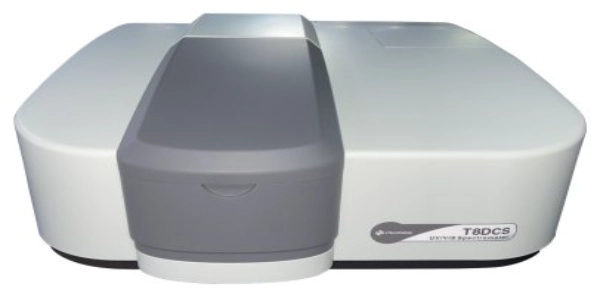
Die T8DCS UV-Vis Spektrophotometer bietet eine optimale Leistung. Das Instrument bietet optimale Leistung für die Durchführung von Standard-klinischen Chemietests.
Messung der Enzymaktivität in diagnostischen Assays
Spektrophotometrie ermöglicht es Wissenschaftlern, enzymkatalysierte Reaktionen in Echtzeit durch die Messung von Absorptionsänderungen zu verfolgen. Leberenzymassays für ALT und AST verlassen sich auf gekoppelte enzymatische Reaktionen, die NADH in NAD umwandeln ⁺, und die Absorptionsabnahme bei 340 nm wird kinetisch zur Bestimmung der Enzymaktivität überwacht.
Das T9DCS ermöglicht eine kontinuierliche Enzymreaktionsüberwachung durch seine kinetischen Modi, die präzise Wellenlängenmessungen für eine vollständige Aktivitätsprofil liefern.
Proteinkonzentrationsbewertung mittels kolorimetrischer Methoden
Die Gesamtproteinbestimmung wird durch kolorimetrische Assays möglich, bei denen als zuverlässige Methoden Biuret oder Bradford Farbstoffreagenzien verwendet werden. Biuret-Assays quantifizieren Proteine durch Kupfer-Peptid-Bindungskomplexation, während Bradford-Assays auf die Bindung des Coomassie Brilliant Blue G-250-Farbstoffs an hydrophobe Proteine und basische Rückstände beruhen.
Das T10DCS führt ein Multi-Wellenlängen-Scanning durch, das bei der Analyse von Proben mit mehreren sich überlappenden spektralen Merkmalen präzise Ergebnisse liefert. Das Instrument arbeitet über einen breiten Messbereich, der sowohl diagnostische Tests als auch Proteomik-Qualitätskontrollanwendungen unterstützt.
Anwendung der Spektrophotometrie in der Metabolitenprofilierung
Obwohl sich die moderne Metabolomik hauptsächlich auf MS- oder NMR-basierte Plattformen stützt, bleibt die UV-Vis-Spektrophotometrie für spezifische Metaboliten mit starken UV-Absorptionssignaturen wie NADH / NAD nützlich. ⁺ oder aromatische Verbindungen. Die Methode ermöglicht es Forschern, die Metabolitkonzentrationen und ihre Veränderungen im Laufe der Zeit zu untersuchen, was sowohl bei der Erkennung von Krankheiten als auch bei der Follow-up der Behandlung hilft.
Erkennung von Stoffwechselstörungen durch Absorptionssignaturen
Die Stoffwechselkrankheiten Phenylketonurie und Ahornsirup Urinkrankheit produzieren unterschiedliche spektrale Muster, weil ihre Körper übermäßige Mengen an abnormalen Metaboliten produzieren.
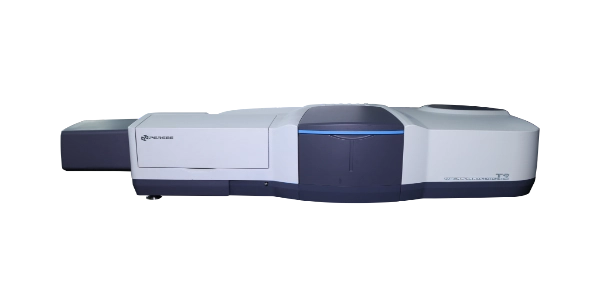
Die T9DCS UV-Vis Das System bietet eine verbesserte Wellenlängengenauigkeit durch seine eingebaute Quecksilberlampe und das Design mit ultraniedrigem Streulicht, was es für die Erkennung kleiner spektraler Veränderungen in Metabolomik-Diagnoseanwendungen geeignet macht.
Überwachung des therapeutischen Arzneimittelmetabolismus in Plasmaproben
Der Stoffwechsel von Medikamenten produziert identifizierbare Metaboliten, die unterschiedliche UV-Absorptionsmuster zeigen. Die Messung der Plasmaabsorbanz ermöglicht pharmakokinetische Forschung, die Ärzten hilft, individuelle Behandlungsentscheidungen durch richtige Dosierungsanpassungen zu treffen.
Das T8DCS liefert konsistente Ergebnisse beim Testen verschiedener klinischer Proben, was es für die therapeutische Medikamentenüberwachung (TDM) geeignet macht. Das System ermöglicht es Klinikern, Behandlungspläne durch präzise Beurteilungen der Medikamentclearance-Rate zu optimieren.
Spektraler Fingerabdruck für die Analyse von Ernährungsbiomarkern
Der Ernährungsstatus der Patienten kann durch ihre charakteristischen Absorptionsspektra von Vitamin-Coenzymen und Aminosäuren zur Erkennung von Malabsorptionssyndromen bewertet werden.
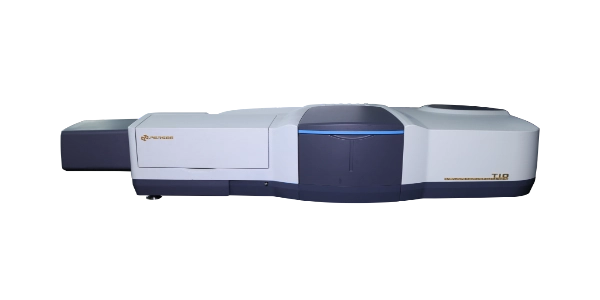
Die T10dcs ermöglicht es Klinikern, mehrere Wellenlängentests durchzuführen, die ihnen helfen, verschiedene Absorptionssignale zu trennen, die beim Testen komplexer biologischer Proben auftreten. Das T10DCS-System liefert bessere Diagnoseergebnisse zur Erkennung von Mikronährstoffmangeln.
Integration von UV-Vis-Systemen in automatisierte klinische Workflows
Moderne Labore benötigen Automatisierung zusammen mit digitaler Interoperabilität, um ordnungsgemäß zu funktionieren. Die Integration von UV-Vis-Systemen in die Laborinfrastruktur ermöglicht ein besseres Datenmanagement und erhöht die Laborproduktivität.
Kompatibilität mit Laborinformationssystemen (LIS) und LIMS-Plattformen
Das T9DCS-Instrument ermöglicht die digitale Kommunikation über seine USB- und Ethernet-Schnittstellen, die eine direkte Verbindung zu LIS- oder LIMS-Softwaresystemen ermöglichen. Das System bietet Rückverfolgbarkeit und beschleunigt die Validierung der Ergebnisse.
Automatisierung von Probenbehandlungs- und Messprotokollen
Die programmierbare Natur dieser Methoden eliminiert menschliche Beteiligung und verhindert gleichzeitig, dass Benutzer Fehler machen. Klinische Labore mit hohem Volumen benötigen als Hauptbetriebsbedarf Chargeanalysefähigkeiten.
Die Spektrophotometer von PERSEE ermöglichen es den Anwendern, programmierbare Protokolle zu erstellen, die die Betriebseffizienz steigern, da sie sich für Labore eignen, die täglich mehr als 100 Proben verarbeiten müssen.
Standardisierung in mehreren Standorten
Durch die Implementierung von Kalibrierungsprotokollen können Labore an verschiedenen Standorten Ergebniskonsistenz erzielen. Die Spektrophotometer-Prüfparameter umfassen die photometrische Genauigkeit (Absorptionslinearität) und Wellenlängengenauigkeit sowie Bandbreite und Streulicht.
Die T8DCS-Serie erfüllt GLP/GMP-Anforderungen durch umfangreiche Validierungsverfahren, die zuverlässige Diagnoseergebnisse in verschiedenen Anlagen liefern.
Leistungsmerkmale, die für die Genauigkeit der Diagnose entscheidend sind
Die Genauigkeit der Diagnoseergebnisse hängt von stabilen Instrumenten ab, die sowohl hohe Empfindlichkeit als auch lineare Messungen über alle Konzentrationsniveaus zeigen, insbesondere bei der Analyse niedriger Biomarkermengen oder breiter Konzentrationsbereiche.
Anforderungen an Wellenlängenpräzision und fotometrische Stabilität
Die erfolgreiche Quantifizierung diagnostischer Assays hängt sowohl von engen Bandbreiten als auch von stabilen Baselines ab.
Das T10DCS ermöglicht eine präzise Wellenlängenmessung durch seine eingebaute Quecksilberlampe, die zuverlässige enzymatische Kinetikstudien über verschiedene Zeitpunkte hinweg ermöglicht.
Empfindlichkeitsschwellen für Analyten mit niedriger Konzentration
Die Erkennung früher Erkrankungen hängt von der Messung kleiner Mengen an Biomarkern ab. Die Nachweisgrenzen müssen empfindlich genug sein, um winzige Biomarkermengen zu messen, die während des frühen Krankheitsprogressions auftreten.
Die optische Konstruktion der PERSEE-Instrumente verbessert das Signal-Rausch-Verhältnis zur Erkennung kleiner biochemischer Veränderungen bei niedrigen Absorbenzniveauen.
Linearität über einen breiten Dynamikbereich hinweg
Die Konzentrationsniveaus von Analyten in klinischen Proben reichen von Nanogrammmessungen von Hormonen bis hin zu Milligrammmessungen von Proteinen. Die Menge der Lichtabsorption durch eine Probe bei einer bestimmten Wellenlänge hängt direkt von der Konzentration der Probe ab.
Das T9DCS behält eine ausgezeichnete Linearität in einem typischen klinischen Bereich (0-2,5 Abs) und unterstützt sowohl niedrige als auch hohe Konzentrationsassays.
Vorteile von PERSEE-Instrumenten in der klinischen Diagnostik
PERSEE schafft medizinische Instrumente, die den klinischen Anforderungen durch langlebige Geräte und intelligente Programmiersysteme für einen zuverlässigen Einsatz im Gesundheitswesen gerecht werden.
Gestaltungsmerkmale auf die Zuverlässigkeit des Labors zugeschnitten
Die Systeme verfügen über robustes Design und Temperaturstabilität sowie benutzerfreundliche Touchscreen-Steuerungen, die Betriebs- und Wartungsaufgaben vereinfachen. Die Systeme’ Die kleine Größe ermöglicht es ihnen, perfekt auf Laborbänke zu passen und gleichzeitig eine reibungslose Integration aufrechtzuerhalten.
Einhaltung internationaler Qualitätsstandards
Das Labor muss Kalibrierung und Qualitätskontrolle sowie Methodenvalidierung und Qualifizierung durchführen, da diese Schritte sowohl den Standards für gute Laborpraktiken als auch den regulatorischen Anforderungen entsprechen.
Die PERSEE-Systeme erfüllen die ISO/CE-Zertifizierungsstandards und liefern Dokumentation, die die CLIA- und CAP- sowie ISO 15189-Auditanforderungen für die Einhaltung der Inspektionen unterstützt.
Produktsupport für klinische Anwender optimiert
PERSEE bietet kontinuierliche Unterstützung durch Schulungen und technische Unterstützung, um sicherzustellen, dass Sie immer Anleitung erhalten. Das Wissenszentrum von PERSEE stellt Anwendungshinweise zur Verfügung, die bei der Methodenentwicklung helfen, und ihre Ferndiagnosedienste minimieren Betriebsunterbrechungen während wesentlicher Verfahren.
Neue Trends treiben Innovation in der Spektrophotometrischen Diagnostik voran
Die klinischen Anwendungen der UV-Vis-Spektrophotometrie haben sich durch Entwicklungen in miniaturisierten Systemen und maschinellen Lernbasierten Analysen sowie hybriden Analysemethoden erweitert.
Erweiterung in Point-of-Care-Testanwendungen
Wissenschaftler arbeiten daran, kleine UV-Systeme zu schaffen, die an Bettstellen oder in Feldomgebungen funktionieren können. Die Systeme ermöglichen es Gesundheitsdienstleistern, schnelle Entscheidungen zu treffen, wenn sie keinen Zugang zu zentralen Laboreinrichtungen haben.
Die bevorstehenden Versionen von PERSEE könnten ihre optischen Fähigkeiten integrieren, um tragbare Geräte zu erstellen, die krankenhausqualitätsresultate in außerkrankenhausumgebungen liefern würden.
Integration mit Algorithmen der Künstlichen Intelligenz
Maschinelles Lernen Algorithmen arbeiten, um komplexe Absorptionsprofile mit hoher Geschwindigkeit und präzisen Ergebnissen zu analysieren. Die KI-unterstützte Spektralinterpretation hilft Ärzten, schnellere Diagnosen zu stellen und ihre Fehler zu minimieren.
Der T10DCS-Feed generiert datenreiche Ausgänge, die Analysemaschinen direkt verarbeiten können.
Modalitätsübergreifende Synergie mit anderen Analysetechniken
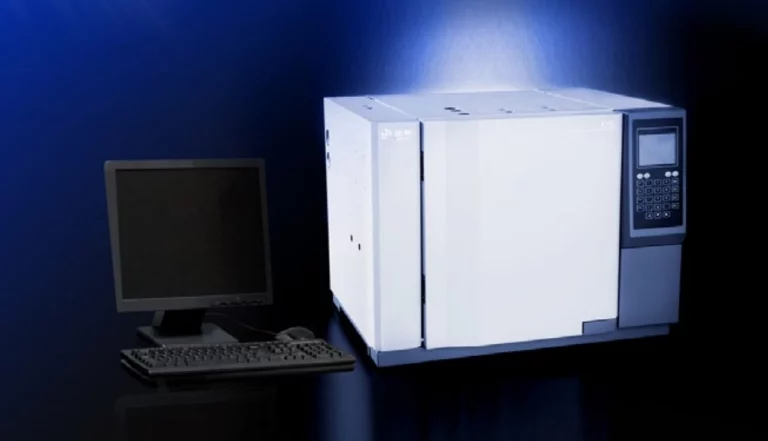
Die Kombination von UV-Vis Spektrophotometrie mit Massenspektrometrie- oder Chromatographiesystemen ist in der modernen Laborarbeit immer häufiger geworden. Die Hybridmethode vereint schnelle optische Erkennung mit präziser molekularer Identifizierung, um tiefere Diagnoseergebnisse für die Omikforschung zu erzeugen.
Die Instrumente von PERSEE fungieren als Einstiegspunkte für komplette Analysesysteme.
Empfehlungen basierend auf diagnostischen Bedürfnissen
Die Auswahl der Laborsysteme hängt von der Menge an Arbeit ab, die Ihr Labor ausführt, und den spezifischen analytischen Tests, die es durchführen muss.
Für allgemeine biochemische Assays: UV-Vis-Spektrophotometer T8DCS
Das Modell bietet ein ausgezeichnetes Preis-Leistungsverhältnis, da es sowohl erschwingliche Kosten als auch starke Betriebsfähigkeiten bietet. Das Modell bietet eine ausgezeichnete Leistung für Standard-klinische Chemietests, da es hohe Empfindlichkeit und breite Bandbreitenoptionen bietet.
Für die hochempfindliche Detektion von Metaboliten: T9DCS UV-Vis Spektrophotometer
Das System bietet außergewöhnliche Streulichtunterdrückung und photometrische Leistung, die es für Anwendungen eignet, die eine hohe Präzision erfordern, insbesondere während der Metabolomik und therapeutischen Medikamentenüberwachungsstudien.
Für fortgeschrittene Kinetik und Multi-Wellenlängen-Scanning: UV-Vis-Spektrophotometer T10DCS
Das Instrument eignet sich für Forschungslabors, die komplexe biomolekulare Analysen für verschiedene klinische Anwendungen durchführen. Das Instrument führt mehrere Wellenlängen-Scans durch, um es Forschern zu ermöglichen, detaillierte kinetische Studien und spektrale Dekonvolution durchzuführen.
FAQ (häufig gestellte Fragen)
Q1: Was macht UV-Vis Spektrophotometrie für die klinische Diagnose geeignet?
A: Das System liefert quantitative Ergebnisse durch wellenlängenspezifische Absorbenzmessungen, die eine präzise Biomarker-Erkennung sowie eine Enzymaktivitätsüberwachung und Metabolitanalyse mit hoher Geschwindigkeit ermöglichen.
Q2: Wie wähle ich zwischen T8DCS, T9DCS und T10DCS Spektrophotometern?
A: T8DCS eignet sich für routinemäßige Assays; T9DCS bietet hohe Empfindlichkeit für fortgeschrittene Diagnostik; T10DCS unterstützt Multi-Wellenlängen-Scanning, das sich für Forschungskranken und komplexe Bioassays eignet.
Q3: Können diese Instrumente in mein LIS- oder LIMS-System integriert werden?
A: Das Modell T9DCS umfasst USB/Ethernet-Schnittstellen, die die digitale Integration mit Laborinformationssystemen über USB- und Ethernet-Anschlüsse ermöglichen.
Q4: Sind diese Geräte mit internationalen Standards konform?
A: Das Unternehmen verfügt über ISO/CE-Zertifizierungen und stellt eine vollständige Validierungsdokumentation zur Verfügung, die den CLIA- und CAP-Standards sowie den ISO 15189-Standards entspricht.