While purchasing a model of atomic absorption for the analysis of heavy metals, attention is often focused on the spectrometer itself. For example, one might compare models of different manufacturers, check the detection limits, weigh up the advantages and disadvantages of a graphite furnace as opposed to a hydride system, compare the background correction, check out the software etc.
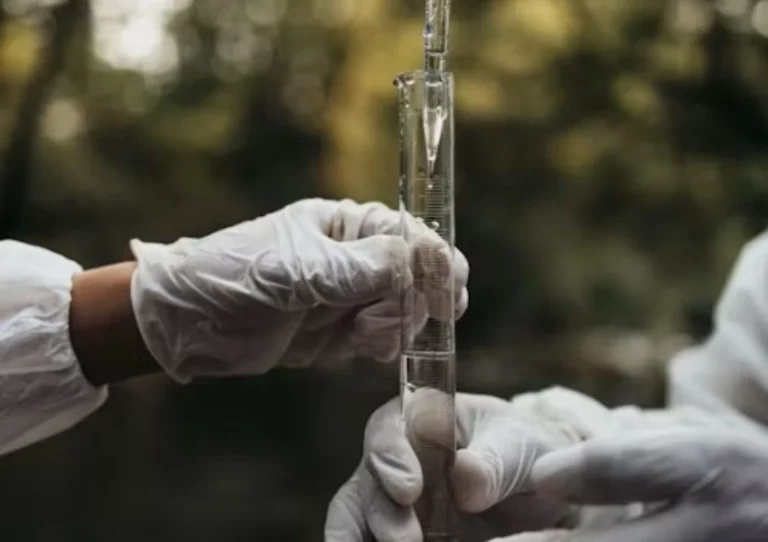
However, all this attention to the spectrometer itself can be of no avail if, in the digestion of the samples, there are errors that are not spotted. If the sample does not get dissolved at all, if it does not dissolve uniformly, or if it gets contaminated during the process of dissolution, then even the most sophisticated spectrometer will not be able to produce any reliable results. And, last but not least, the sample must be dissolved in a manner that is appropriate for the given matrix. The digestion of samples for the analysis of heavy metals is thus not an accessory but is an essential component that must be checked out first of all. The following describes the application of microwave digestion for the analysis of heavy metals.
Heavy Metal Results Depend on What Reaches the Atomizer
Atomic absorption does not measure a whole olive oil droplet, soil particle, milk powder grain, or plant leaf. It measures atoms formed from a prepared solution. In graphite furnace AAS heavy metal analysis, the sample normally passes through drying, ashing, and atomization stages. Matrix components are removed or reduced before the target element absorbs light from a matching hollow cathode lamp. The instrument can be sensitive, but it cannot fix a sample that never fully released the target metal.
Incomplete Digestion Becomes a Hidden Error
Some matrices are simple. Others are stubborn. Oil, dairy powder, leafy plants, soil, nutrient salts for fermentation, alcohol products, and processed foods each carry different organic matter, salts, minerals, fats, and suspended solids. When digestion leaves residue behind, metals may stay trapped in particles or bind to the leftover matrix. The calibration curve can still look fine because standards are clean. The sample result, however, may be biased low, noisy, or hard to repeat.
Contamination Can Be Just as Costly
Trace metal analysis also lives with the opposite problem: contamination. Acid quality, vessels, water, pipette tips, digestion blanks, and handling habits can push a result upward. A clean microwave digestion workflow gives the lab better control over time, temperature, pressure, reagent volume, blank behavior, and batch consistency. It also makes it easier to explain an unusual lead or cadmium result during a supplier audit or client dispute.
Where Microwave Digestion Fits Best
Microwave digestion is most useful when the matrix needs controlled acid breakdown and repeatable energy input. Open hotplate digestion can work in many laboratories, but it may take longer and expose the sample to more handling. Closed-vessel microwave digestion reduces evaporation losses, keeps conditions more consistent from vessel to vessel, and helps analysts process batches with less manual watching. That becomes valuable when the same laboratory handles food and water heavy-metal testing every week.
Food Samples Need Matrix Control
Food testing is rarely one matrix. Olive oil is not milk powder. Nutrient salts for fermentation are not tea, meat, seafood, dairy, or alcohol. The PERSEE application material includes lead in olive oil after microwave digestion followed by graphite furnace measurement at 283.3 nm, with quantitation against a calibration series. It also covers zinc and iron in milk powder using an A500 Zeeman atomic absorption spectrometer for method verification and lead in nutrient salts for fermentation by graphite furnace AAS after digestion. Those examples point to the same lesson: the digestion step has to match the sample before the instrument can do its job.
Water and Plant Samples Add Their Own Risks
Water looks easier, but surface water can carry suspended matter and natural matrix components. The PERSEE method material for cadmium in surface water uses pretreatment before graphite furnace atomization, with cadmium atoms absorbing radiation from a cadmium hollow cathode lamp. For drinking water lead, prepared samples are atomized in a graphite furnace and measured at 283.3 nm. A plant example for cadmium in nettle leaves uses microwave digestion before atomic fluorescence comparison with a standard series. Different methods, same operational point: preparation sets the boundary for the result.
Choose the Analyzer Around the Prepared Sample
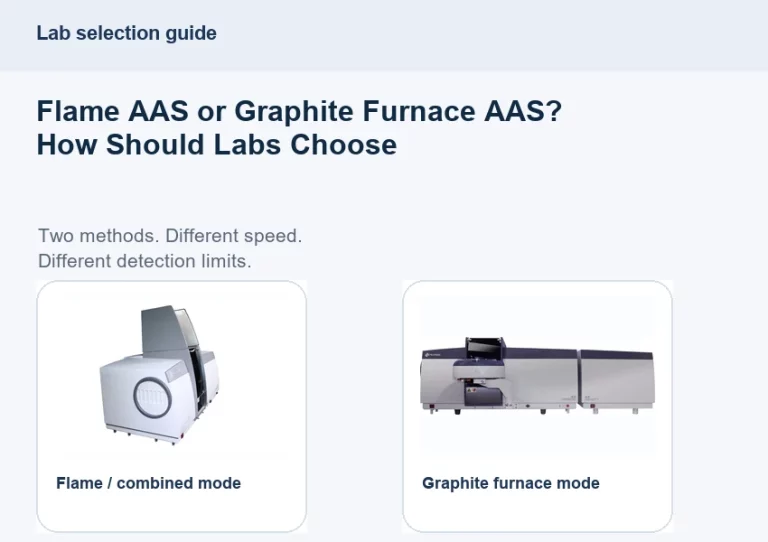
Once the digestion route is clear, instrument selection becomes more practical. A lab should ask which elements are routine, what concentration range is expected, how dirty the final solution will be, and whether the method needs a flame, graphite furnace, hydride generation, or a combined platform. A simple nutrient element program may not need the same setup as trace lead, cadmium, arsenic, or mercury work.
Graphite Furnace for Trace Work
PERSEE’s A3G أتوميك أbsorption قالمقياس is an automatic graphite furnace instrument with computer control, safety protections, and a universal autosampler for flame and graphite furnace use. The graphite furnace route is suited to trace levels because the element is atomized inside the tube and absorbance is proportional to concentration within the chosen range. For laboratories comparing AAS heavy metal analysis options, that combination of sensitivity, automated control, and safety is more relevant than a headline specification alone.
Combined Atomization for Mixed Workloads
Some labs do not have one clean workload. They may run nutritional minerals, toxic elements, teaching works, water samples, and food inspection jobs on the same bench. TheAA990AFG combines air-acetylene flame, hydride generation, and graphite furnace electrothermal heating in one atomic absorption spectrophotometer with AAWIN software operation. That makes it a more flexible conversation for buyers who need room to add methods without buying a separate analyzer for every atomization route.
Entry-level flame work still has a place. The AA990F أتوميك أbsorption قمطياف ضوئي uses a Czerny-Turner monochromator and computer-controlled air-acetylene flame for general laboratory requirements, with applications across agricultural, environmental, commodity inspection, and food inspection fields. It fits labs where major and minor elements dominate and trace graphite furnace work is limited or outsourced.
Build Method Control Into Daily Routine
A mature digestion program is more than a microwave recipe. It includes sample mass limits, acid selection, vessel cleaning, reagent blanks, spiked samples, certified reference materials when available, dilution checks, and a clear rule for re-digestion. The lab should document how oily, high-salt, high-sugar, and mineral-heavy samples are handled. It should also record whether the final solution is clear, whether residue remains, and whether dilution brings the acid strength into the analyzer’s comfort zone.
The purchase team should connect that routine to the spectrometer. برسي‘s atomic spectrometer line covers graphite furnace, flame, and combined configurations, while the company also offers AAS IQ/OQ/PQ support for labs that need qualification structure. A supplier discussion should include method transfer, consumables, hollow cathode lamps, graphite tubes, autosampler use, background correction, safety, and software reporting. PERSEE can also be part of a wider lab conversation when buyers need spectroscopy, chromatography, atomic spectrometry, and support equipment from one instrument manufacturer.
أسئلة متكررة
Q1: Is microwave digestion always required for heavy metal analysis?
A1: No. Some clean aqueous samples may need simpler pretreatment. Microwave digestion becomes more important for oils, powders, plants, foods, soils, and other matrices where metals must be released from organic or mineral material.
Q2: Why does graphite furnace AAS need careful sample preparation?
A2: Graphite furnace AAS is sensitive, so both incomplete digestion and trace contamination can affect the final answer. Good preparation helps the target element enter solution and keeps blanks under control.
Q3: What should buyers discuss with an AAS supplier before purchase?
A3: They should discuss element lists, sample matrices, digestion route, expected concentration range, atomization mode, background correction, autosampler needs, qualification support, and local service.