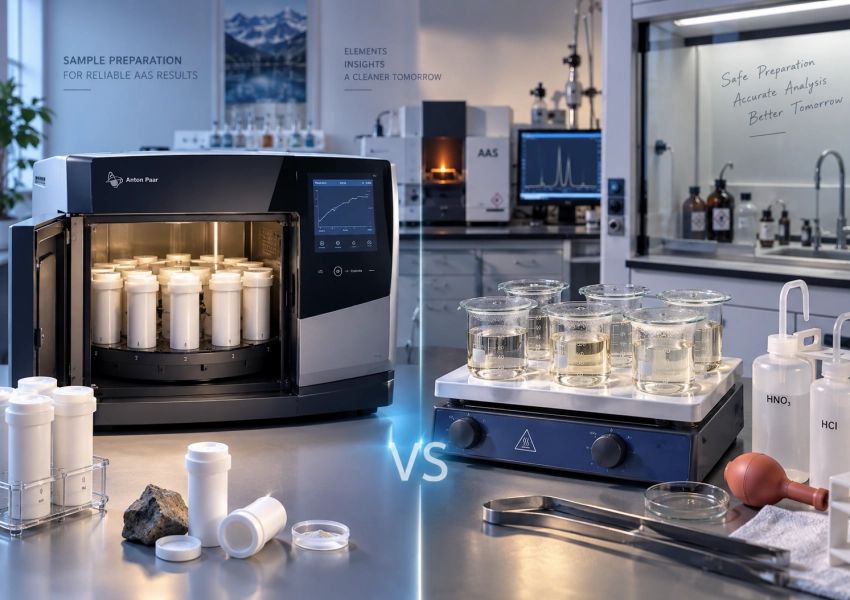
The better digestion route is the one that leaves the analyte in a stable, representative solution that the AAS method can measure without creating avoidable blanks, deposits, or matrix effects. Microwave digestion and hot plate digestion can both produce useful AAS samples. They are not interchangeable by default. A simple aqueous sample may need only modest preparation, while oil, milk powder, soil, metal, or high-organic material can expose the limits of a casual acid digestion.
The choice affects more than speed. It changes how well a laboratory can contain volatile components, handle difficult matrices, run batches, document repeatability, and keep the final solution compatible with flame or graphite furnace atomization. The right question is not which tool is universally better. It is which route gives the planned AAS method a cleaner, more repeatable starting point.
Start with the Sample and the AAS Measurement Route
Digestion should be selected alongside the element list, expected concentration, matrix, target final volume, and atomization mode. Flame AAS often receives a different sample load from graphite furnace AAS, and a preparation that looks clean can still carry acids or dissolved solids that affect aspiration, background, or furnace behavior.
AAS Sample Preparation Has Two Jobs
First, the preparation must bring the target element into the test solution in a form the method can measure. Second, it must reduce or manage matrix components that disrupt atomization or background correction. The PERSEE olive-oil application uses microwave digestion before graphite furnace AAS for lead. Its relevance is practical: a difficult organic matrix was not treated as if it were a simple water sample. The actual acid system, vessel loading, temperature program, and final dilution still need to follow the laboratory’s approved method.
Do Not Let Instrument Choice Decide the Chemistry
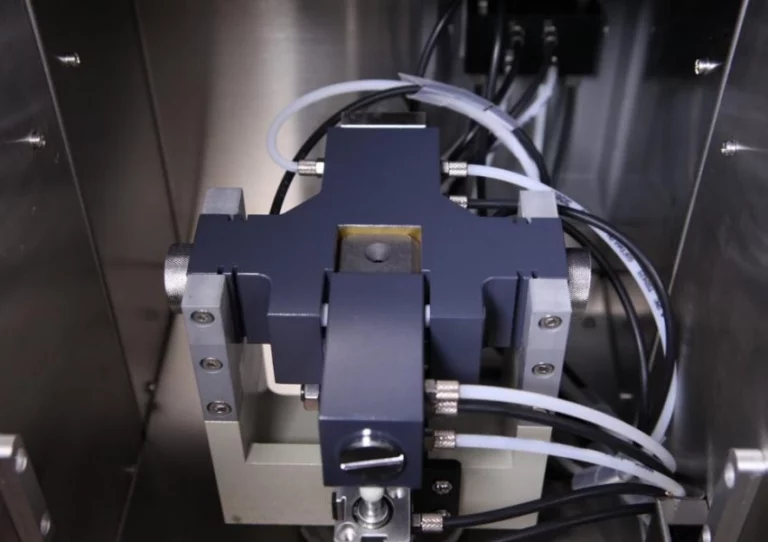
A capable spectrometer cannot repair an incomplete digest. The A3G platform is documented for graphite furnace atomization, a controlled transversely heated tube, automatic lamp handling, and AAWin-based method control. Those capabilities support trace work, but they do not tell an analyst which acids or heating conditions are valid for a particular food, mineral, polymer, or environmental sample. Start with the reference method and sample chemistry, then set the AAS configuration around that decision.
Where Microwave Digestion Has the Stronger Case
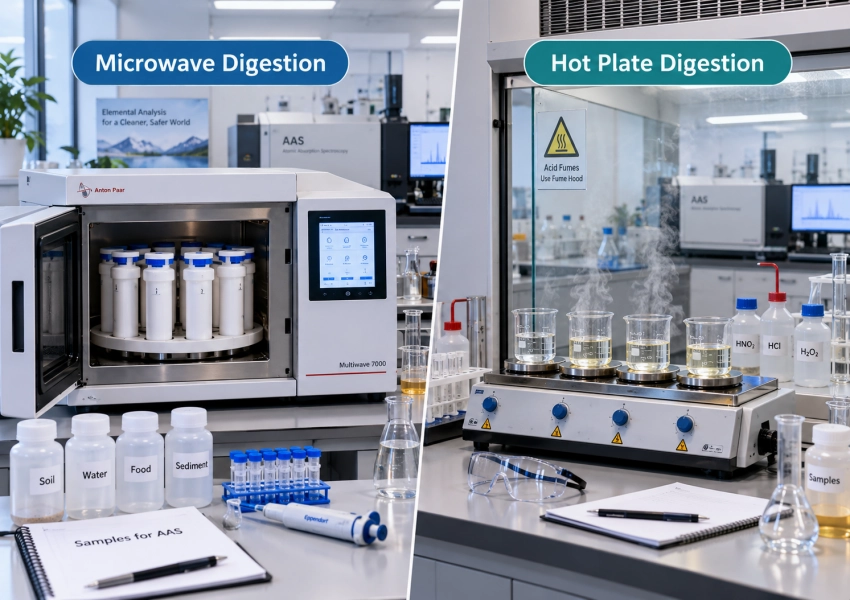
Microwave digestion is often considered when the laboratory needs a more enclosed, repeatable heating workflow for batches of challenging samples. It can be a strong fit for high-organic foods, oils, powders, and other materials where open heating may be slow or may expose the preparation to unnecessary variability. It still needs careful vessel loading, reagent compatibility, cooling, and blank management.
Complex Foods and Organic Samples
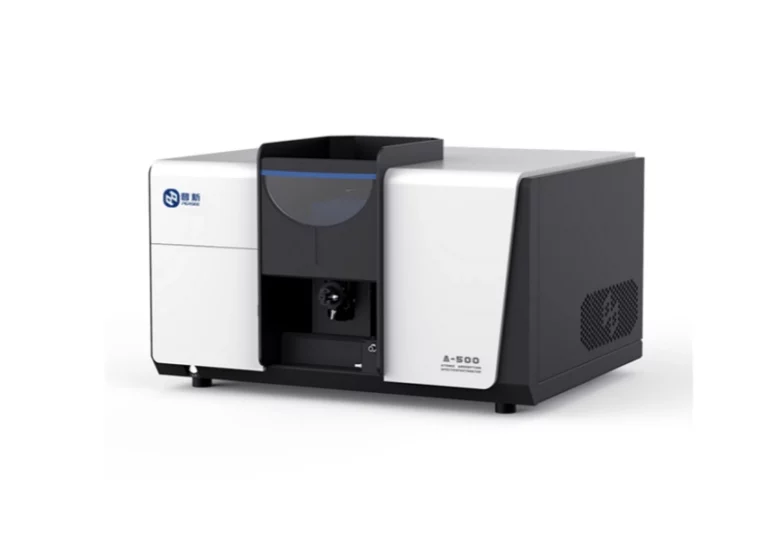
PERSEE has a microwave digester with acid removal equipment in the zinc and iron determination workflow for milk powder using an A500 flame AAS. A separate lead-in-olive-oil workflow also uses microwave digestion before graphite furnace AAS. These examples support microwave digestion as a relevant option for difficult food matrices, not as a blanket claim that every food sample requires it. Verify sample mass, reagents, vessel type, cooling, and any acid-removal step with the governing method.
Batch Consistency and Containment
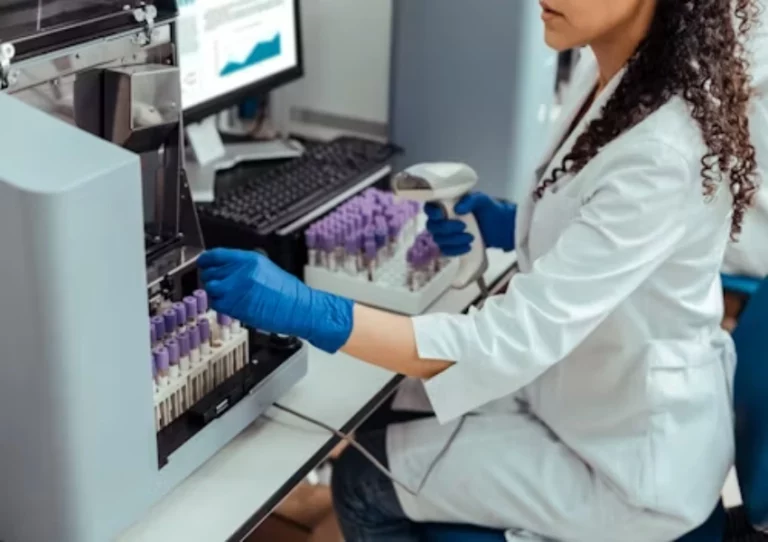
For routine trace metal analysis, consistent treatment across a batch can be as valuable as shorter hands-on time. An enclosed system can help laboratories keep a defined program, provided operators load vessels consistently and use an appropriate blank sequence. The M40 microwave digestion system is a relevant product page to review when procurement teams need a dedicated preparation platform. Before purchase, ask for evidence on the actual matrix, vessel capacity, safety features, cooling workflow, consumables, and service support rather than relying on a generic sample list.
Where Hot Plate Digestion Still Makes Sense
Hot plate digestion remains useful when a method calls for an open acid treatment, when sample volume or vessel geometry makes it practical, or when the laboratory needs a simple route for a limited and well-characterized workload. It can also be the more transparent approach during method development, since operators can observe evaporation and dissolution directly. Those advantages come with more exposure to contamination, evaporation differences, and operator technique.
Established Open-Acid Procedures
Wet digestion with hydrochloric acid, nitric acid, and hydrogen peroxide before flame AAS for lead in aluminum alloys, and aqua regia digestion before copper measurement in graphite powder. Those examples show that open acid digestion can belong to an AAS workflow when the sample and method support it. They do not validate a single acid recipe for every alloy, powder, or food. Local safety assessment, ventilation, reagent purity, and method validation still govern the procedure.
Low-Volume and Flexible Workloads
For occasional samples, a hot plate may be easier to introduce than a full microwave platform. The tradeoff is tighter dependence on analyst timing, cover use, evaporation management, and cleaning discipline. It becomes less attractive when high throughput, high blank sensitivity, or difficult organic matrices make individual attention hard to sustain. The right evaluation compares total preparation effort, reruns, blank failures, and recovery checks, not only capital cost.
Judge the Final Digest Before It Reaches the AAS
Neither route should be accepted because the liquid looks clear. A usable digest needs evidence that it represents the sample and behaves in the selected measurement mode. That evidence is built from blanks, spikes, duplicates, reference materials where available, dilution checks, and inspection of the final solution.
Check Recovery, Blanks, and Dilution Behavior
Run a reagent blank through the same preparation sequence. Add matrix spikes or suitable controls where the method calls for them, and compare duplicates that pass through the whole digestion process. If a final solution needs dilution to fit the calibration range, confirm that dilution does not create a new response problem. These checks reveal incomplete digestion, contamination, suppression, or unstable preparation more reliably than a visually clean solution.
Match the Digest to Flame or Furnace Atomization
A flame method may be sensitive to aspiration behavior, burner deposits, and dissolved solids. A graphite furnace method can be sensitive to contamination, carryover, background, and the furnace temperature program. The A500 is documented for both flame and graphite furnace atomization with Zeeman background correction, providing a useful platform for laboratories that must match preparation routes to different matrix challenges. Ask for a demonstration using a representative digest rather than a clean standard alone.
Make the Purchase Decision Around the Whole Workflow
A digestion purchase is really a workflow purchase. Consider sample receipt, weighing, reagent handling, vessel cleaning, blank load, cooling, transfer, dilution, AAS queue time, waste handling, and documentation. A laboratory that runs only a few stable samples may prefer a disciplined hot plate method. A lab managing diverse food, environmental, or trace-metal samples may justify microwave digestion when it removes recurring preparation risk.
Questions to Put in the Supplier Demonstration
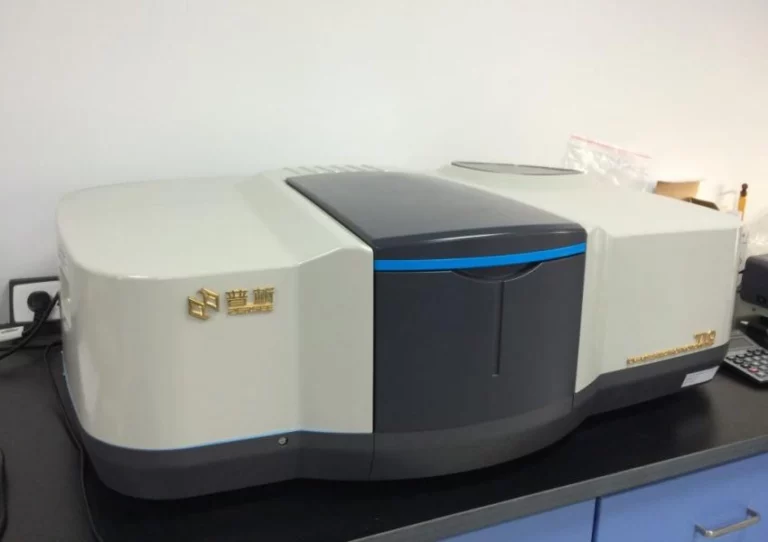
Bring a representative sample or verified surrogate. Ask which part of the workflow is instrument-supported and which parts remain method-specific. Review vessel cleaning, contamination safeguards, corrosion-sensitive components, training, installation needs, and the link between digestion output and AAS sample introduction. The categoria spettrometro atomico can help teams compare the AAS end of that workflow, while Persee is a useful starting point for the supplier discussion about the full preparation chain.
Domande frequenti
Q1: Is microwave digestion always better than hot plate digestion for AAS?
A1: No. Microwave digestion can be a strong choice for challenging matrices and repeatable batch work, while hot plate digestion can suit validated open-acid procedures and smaller stable workloads.
Q2: Can a clear digest be assumed ready for AAS?
A2: No. Check blanks, recovery, duplicate behavior, dilution response, and compatibility with the planned flame or graphite furnace method. Clarity alone does not prove complete or clean preparation.
Q3: What should be compared before buying a microwave digestion system?
A3: Compare representative matrices, sample throughput, vessel and consumable needs, blank performance, cooling, cleaning, safety, method support, service coverage, and downstream AAS compatibility.