소식

How Does a Spectrophotometer Accurately Quantify Concentration Levels?

Accurate concentration measurement often feels like a technical challenge, especially when the sample is subtle, light-sensitive, or requires dependable repeatability. A spectrophotometer solves this by converting how much light a sample absorbs into a numeric result that you can use directly. Before stepping into the scientific side, it helps to know that reliable instruments matter just as much as method. Many labs today turn to PERSEE for stable optical systems, practical software, and instruments built for routine chemical, environmental and educational use.


How Does a Spectrophotometer Accurately Quantify Concentration Levels

What Principles Allow a Spectrophotometer to Measure Concentration Accurately?

A spectrophotometer works by directing light through a sample and detecting how much of that light is absorbed. The amount absorbed links directly to the concentration. This principle has been the backbone of laboratory analysis for decades because it behaves predictably. When you use a system built with stable optics, the numbers remain consistent day after day, even when operators change.

Wavelength Selection Through Precision Optics

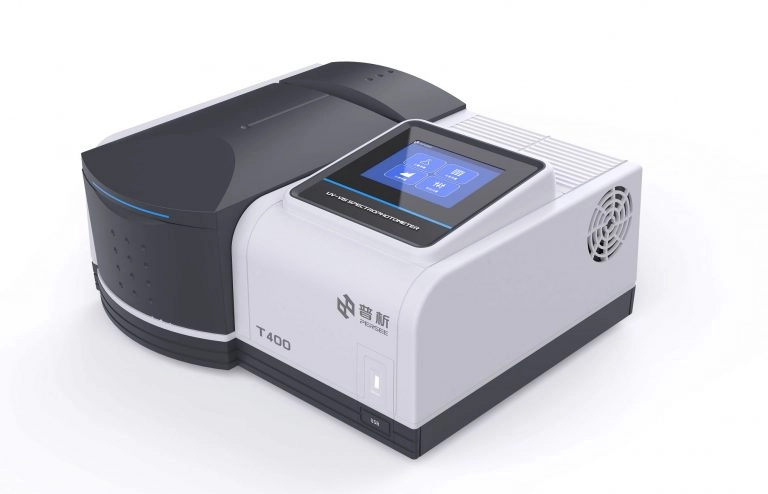
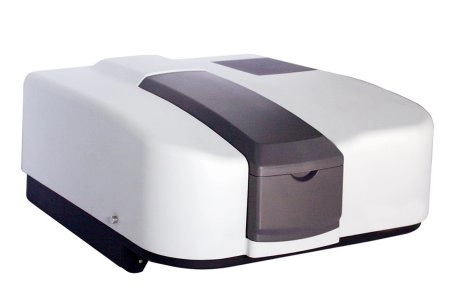
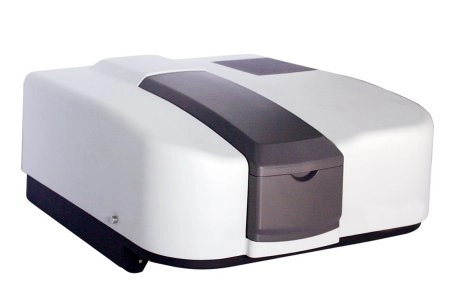
Measurements remain possible at other wavelengths, but selecting the absorption maximum improves sensitivity, precision, and linear dynamic range. Poor wavelength accuracy causes drifting results. Instruments such as the TU400 VIS use stable optical components to keep their wavelength alignment steady. That stability helps when you run multiple batches of the same test or need to repeat earlier work after several weeks.


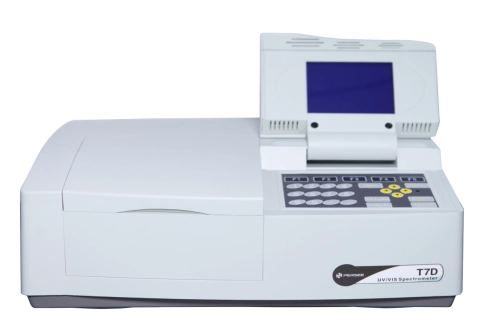
TU400 VIS

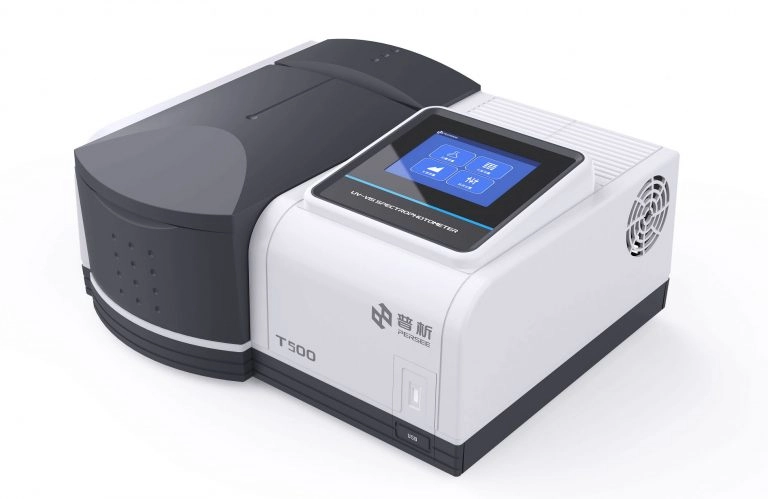
Signal Detection and Calibration Stability in TU400 and TU500

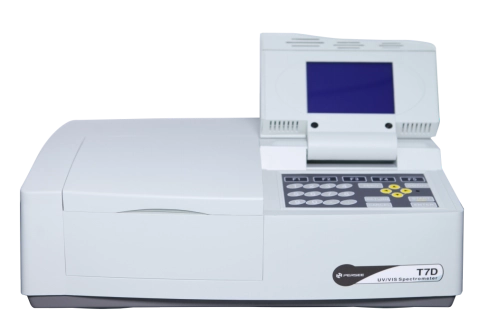
Detector quality can influence your entire workflow. When the detector is stable and low-noise, slight concentration changes become visible rather than lost in the background. Wide spectral coverage (typically 190–800 nm) provides access to both UV transitions of organic and inorganic species and visible transitions of colored complexes, making TU500 UV-VIS applicable to a broad range of sample types.

How Does Wavelength Precision Influence Measurement Reliability?

Even a 1 nm shift can distort measurements for narrow absorption bands, so UV-Vis instruments typically need wavelength accuracy within ±0.5 nm to ensure repeatable quantification. If you are working with samples like dyes, metal ions or organic compounds, the absorbance peak can be narrow. You need the instrument to hit that peak repeatedly. Otherwise, the results may look random even when your preparation is fine.

Role of High-Stability Optical Components in TU500 UV-Vis

The TU500 uses a stable optical bench, which helps the wavelength stay aligned even over long sessions.

Impact of Stray-Light Control on Analytical Accuracy

Stray light is light that slips through the optical system and reaches the detector when it shouldn’t. Too much stray light flattens the absorbance curve and lowers accuracy at high absorbance levels. A good optical design reduces this, letting your measurements keep their full dynamic range.

Importance of Spectral Resolution for Low-Concentration Samples

When the spectral resolution is sharp, the peak shape becomes clearer. This helps when you are working with low-concentration samples where tiny changes matter. Sharp resolution also improves the accuracy of quantitative tests that rely on narrow absorption bands.

Why Is Calibration Essential for Accurate Quantification?

Calibration acts like the reference point for all your future readings. With a proper calibration curve, you can test new samples without guessing. Even if the sample matrix changes slightly, a well-prepared curve still guides the instrument to the right concentration.

Standard Curve Establishment Using Reproducible Light Sources

UV-Vis instruments use a deuterium lamp for the UV region and a tungsten-halogen lamp for the visible region, and intensity drift—particularly from the deuterium lamp—can shift calibration curves over time. When the light source stays steady, your standard curve won’t shift unexpectedly.

Automated Calibration Support in PERSEE Instruments

Many instruments from the PERSEE product line include guided steps that walk you through blanking and calibration in a predictable order. This reduces operator mistakes. The workflow feels simple even for someone who is not familiar with spectroscopy.

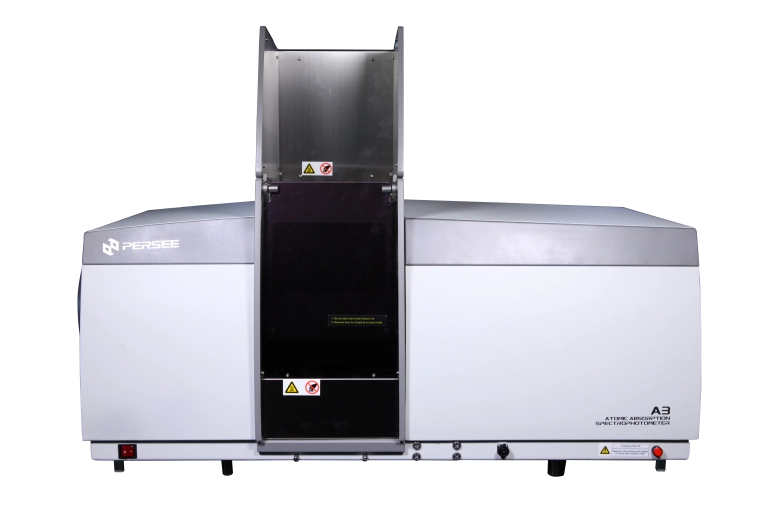
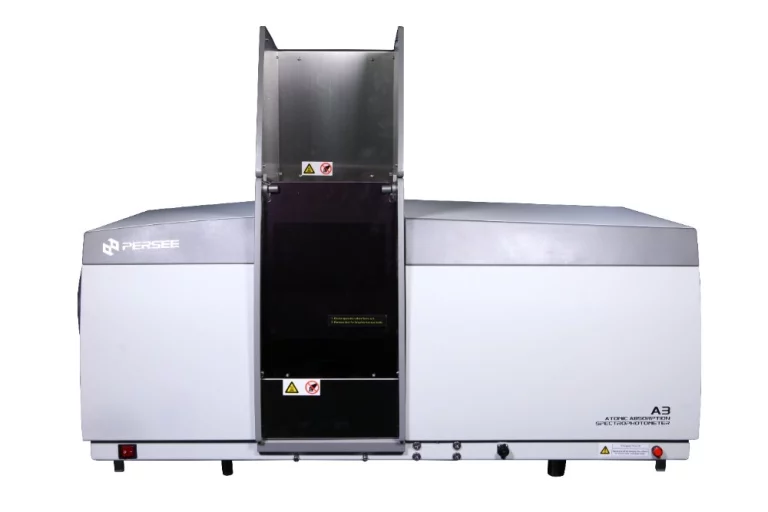
Reducing Human Error Through A3F Atomic Absorption System

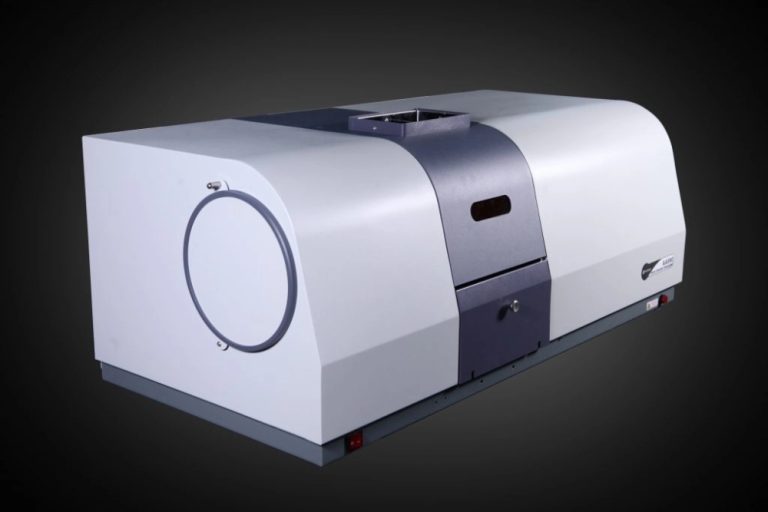
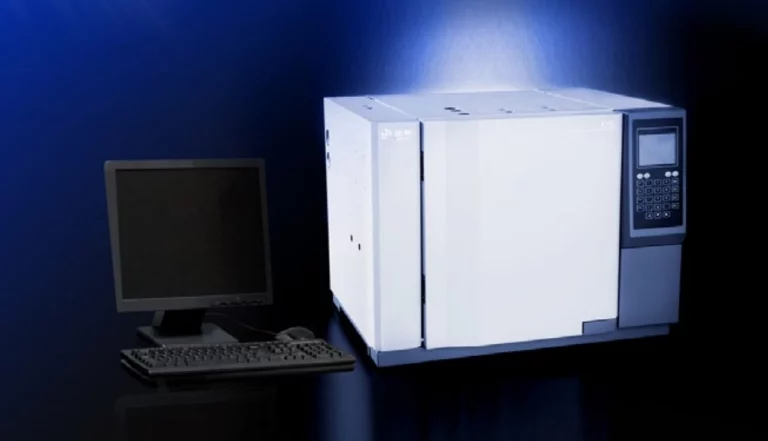
In some industries, you may need to quantify metals at trace levels. When absorbance becomes extremely low, atomic absorption brings higher selectivity. The A3F model uses a combination of lamp control and automated features that help minimize preparation errors.


A3F

How Do Sample Handling and Cuvette Quality Affect Results?

Even the best instrument cannot compensate for poor sample handling. Fingerprints on cuvettes, uneven mixing or scratched optical surfaces can distort the reading. Paying attention to these small steps usually brings a noticeable improvement in precision.

Influence of Cuvette Material and Path Length

Glass, quartz and plastic cuvettes all behave differently. Quartz is used for UV work because plastic absorbs too strongly in that range. The standard 10 mm path length is common, but longer paths can improve sensitivity for very dilute solutions.

Minimizing Contamination and Fingerprint Interference

It is common to see fingerprints introduce unexpected absorbance spikes. Wiping cuvettes with a lint-free cloth and holding them by the frosted sides helps avoid this. Even a small smudge can shift low-level measurements.

Temperature and Mixing Uniformity Management

Temperature affects absorbance by altering solvent refractive index, broadening spectral bands, and shifting chemical equilibria, so samples should be thermostated for consistent measurements. Keeping the sample at room temperature and mixing it properly before measurement avoids sudden variations.

What Role Does Detector Sensitivity Play in Measurement Precision?

Detectors convert light into electrical signals. A sensitive detector makes it easier to differentiate small changes. This matters in environmental testing or pharmaceutical analysis where results often fall near the lower limit.

Photodiode and PMT Performance Differences

PMTs are used in scanning monochromator systems requiring high sensitivity, while diode-array instruments use CCD or CMOS detectors for rapid full-spectrum acquisition. The choice depends on your sample type and the concentration range you work with most frequently.

Noise Reduction Techniques in TU400 Vis

The TU400 uses noise-reducing circuit design, which helps maintain clean baselines. Clean baselines matter because they let you see differences that would otherwise hide behind electrical variation.

Maintaining Linear Response at High and Low Absorbance Ranges

When the detector keeps its response linear, you can trust that doubling the concentration will double the absorbance. Non-linear detectors make calibration curves unpredictable.

How Do Modern Spectrophotometers Support Repeatability and Stability?

Repeatability is one of the most important metrics for any analytical instrument. If two operators repeat the same test, they should get nearly the same number. This builds trust in your process and helps you avoid unnecessary retesting.

Internal Reference Systems and Long-Term Drift Control

Many UV-Vis instruments use a double-beam optical design or reference compensation to stabilize the baseline and correct for lamp drift. This keeps your baseline steady, especially during long-term monitoring tasks.

Automated Self-Diagnosis and Baseline Correction

Self-diagnostic checks alert you when something needs attention. Baseline correction keeps the instrument ready even after lamp warm-up or wavelength shifts.

Mechanical and Optical Stability in TU Series

Sturdy design reduces vibration, which protects both the optics and electronics. This might seem like a small thing, but stable construction often leads to fewer recalibrations.

Why Are PERSEE Instruments a Strong Choice for Accurate Concentration Analysis?

Robust Optical Design Supporting Reliable Absorbance Data

Stable optical systems keep measurements consistent across batches. This matters when you need to repeat tests after weeks or share results between different operators.

User-Friendly Software Supporting Multiple Analytical Modes

Clear menus make the workflow faster. Operators can switch between standard curves, kinetics or wavelength scanning without relearning the interface.

Broad Application Coverage From TU400/TU500 to A3F Systems

Whether you need visible-range testing, full UV-Vis coverage or atomic absorption for trace metals, the product range offers multiple choices to match your sample type.

FAQ

Q1: Why do absorbance readings sometimes drift over time?

A: Drift can come from temperature changes, lamp aging or wavelength instability. Letting the instrument warm up and cleaning the cuvettes often helps.

Q2: Do different cuvette materials change the absorbance?

A: Yes. Quartz is used for UV because it transmits UV light better. Plastic blocks most UV, which affects your results.

Q3: How often should calibration curves be rebuilt?

A: They should be rebuilt when reagents change, when the lamp ages or when your results start showing unexpected variation.

미디어 연락처

전문가와 만나십시오

더 많은 뉴스

ko_KRKorean