TU400 VIS
TU500 UV-vis
T6V VIS
T6U UV-vis
TU600 UV-vis
T7 UV-vis
T7S UV-vis
T7D UV-vis
TU700 UV-vis
T7DS UV-vis
T8DCS UV-vis
T9DCS UV-vis
T10DCS UV-vis
UVWIN 6/GMP ソフトウェア
UV/VIS IQ/OQ/PQ 適格性評価キット
FTIR8000
FTIR8100
A3F
A3g
A3AFG
AA990F
AA990G
AA990AFG
PF7
FP912-2
FP912-3
FP912-4
FP912-5
AAS IQ/OQ/PQ
XD-2
XD-3
XD-6
M7シングル四重極GC-MS
G5 GC
GC1100 GC
L600高性能液体
I-Safe倉庫
GBW-1
GWB-1-B
GWB-2
GWB-2-B
M40マイクロ波消化システム
D70Eラボウェアワッシャー

ニュース

UV-Vis vs. Fluorescence Spectrophotometer: Choosing the Right Tool for Your Lab

UV-Vis vs. Fluorescence Spectrophotometer Choosing the Right Tool for Your Lab


Spectrophotometry serves as a basic technique for gauging the amount of light that a chemical substance absorbs or lets through. This happens when a light beam travels through a solution containing the material in question, and then one assesses the strength of the light coming out the other side. The whole setup creates the groundwork for UV-Vis spectrophotometers. These tools assess absorbance in the ultraviolet and visible light ranges. The Beer–Lambert Law points out a direct link between absorbance, concentration, and the length of the light path. As a result, scientists can figure out analyte concentrations with clear precision. One figures out the concentration of an analyte in a solution by looking at the absorbance or transmission traits of a material. These traits change based on wavelength. Such tools prove essential for quantitative work in areas like chemistry, biology, and environmental sciences. Their strength lies in steady accuracy and repeatable outcomes.

UV-Visスペクトロフォトメーターのアプリケーション

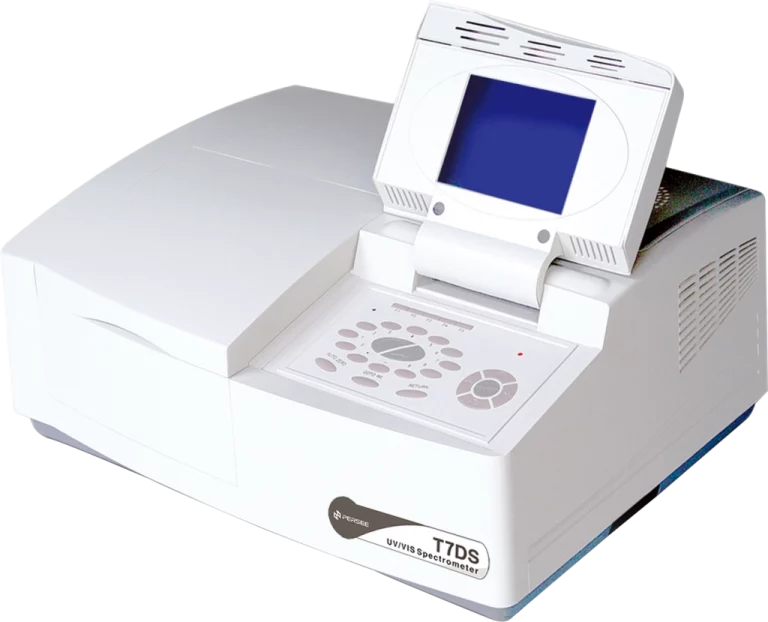
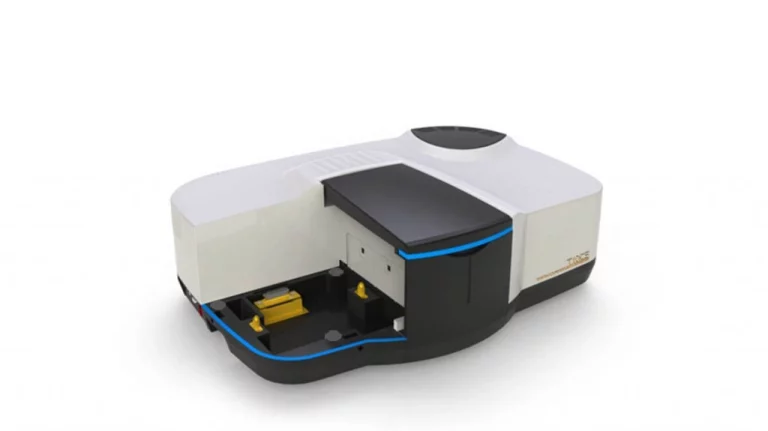
UV-Vis spectrophotometers find broad use in chemical and biochemical checks. They help study nucleic acids, proteins, and organic compounds. Moreover, they hold key spots in environmental checks, like watching water quality or spotting pollutants. Consider the T7D UV-Vis Spectrophotometer, which provides solid photometric measurement features right for DNA/protein analysis, quantitative checks, and spectrum scans. The T7 handles photometric measurements, and it also does spectrum scans, quantitative determinations, and DNA/Protein analysis. With a strong level of automation, it enables quick runs. This requires little hands-on work. Such qualities make it perfect for labs that need both exact work and smooth processes.

Key Features of Fluorescence Spectrophotometers

Numerous atomic and molecular types give off fluorescence. In other words, they take in energy from the UV-visible spectrum. Then, they quickly release most of that energy. The rest turns into heat or vibrational energy within the surrounding medium. The light that comes out appears at wavelengths longer than those from the excitation source. Experts call this the Stokes shift, which stands as the core idea behind fluorescence spotting. Fluorescence checks the light that emits, not the light that gets absorbed. For that reason, it offers much better sensitivity compared to old absorbance methods. This quality makes it especially good for finding traces. Here, analyte levels sit at very small amounts.

Applications of Fluorescence Spectrophotometers

Fluorescence tools see heavy use in life sciences, and they aid in examining biomolecular links and cells’ inner workings. These devices allow sharp counting of nucleic acids or proteins, which works even at nanomolar amounts. One spots fluorescent compounds via their special fluorescence patterns. In certain cases, a non-fluorescent substance gets marked with a fluorescent dye or fluorophore, which lets the non-fluorescent substance show up on fluorescence gear. Further, these setups help medical diagnostics and pharmaceutical studies. They make it possible to conduct keen tests. Examples include enzyme kinetics or drug-binding exams. All these depend on good optical clarity.

Comparing UV-Vis and Fluorescence Spectrophotometers

Fluorescence spectrophotometry brings greater sensitivity. It picks up emitted photons set against a dark setting, which differs from gauging light that passes through an absorbing setup. Still, detection limits shift with sample kind, device setup, and optical plan. Spectrophotometers can deal with visible (white) light or ultraviolet light. They go down to about 190 nm wavelength. This range in spectra keeps both approaches as helpful allies, and they do not fight each other in analysis flows.

Sample Requirements and Preparation

UV-Vis devices often call for simple sample preparation, which means clear solutions free of cloudiness. On the other hand, fluorescence usually needs set dyes or tags to spark emission signals that one can measure. For example, in checking non-fluorescent compounds like small organic molecules or inorganic ions, adding fluorescent marks may prove key. Only then can the measurement go forward well.

Factors to Consider When Choosing Between UV-Vis and Fluorescence Spectrophotometers

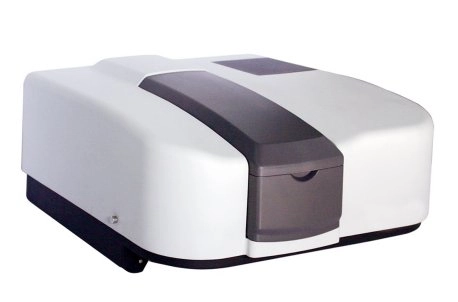
The pick between these two devices hinges mainly on the analysis aims. UV-Vis stands out in quantitative concentration determination through straight absorbance gauging. Fluorescence does better in qualitative looks that cover molecular ties or trace spotting. Labs set on daily quality oversight may lean toward sturdy UV-Vis types. Examples include the TU500 UV-vis. By contrast, research spots that look into biomolecular motions gain more from fluorescence setups. These can catch very faint signals.

Budget and Cost Efficiency

UV-Vis spectrophotometers tend to bring lower upfront costs, and they also have small upkeep demands. This stems from their basic optics. Fluorescence systems carry higher buying prices. Yet they deliver unbeatable sensitivity in needed places. This proves extra useful when sample sizes stay tight or odd reagents enter the mix. A spectrophotometer counts as a detailed lab tool. It fits into many scientific fields. Thus, the budget setup should match both current analysis wants and future running smoothly.

T8DCS UV-vis

Introduction to PERSEE as a Manufacturer

Started in 1991, 忍耐 has grown into one of China’s top manufacturers of analytical tools. It blends research and development, production, and worldwide spread lines. The firm has ISO9001 quality approval, and it also holds ISO14001 environmental handling badges. These ensure steady trust in its product sets. Beijing Purkinje General Instrument Co., Ltd. acts as a fresh high-tech outfit founded in 1991. It centers on scientific instrument research and development, manufacturing, and sales. Over 30% of its team join straight into research jobs. These aim at boosting optical techs like dual-beam design tweaks and auto calibration systems.

PERSEE’s outlook stresses fresh thinking tied to social good. As it says, “Science and technology are driven by individuals and aimed at benefiting society.” Its tools, from molecular spectrometers to chromatography systems, earn global nods. They shine for careful build and lasting strength across varied sectors. These include pharmaceuticals, food safety checks, petrochemicals, education, and environmental protection.

Product Range

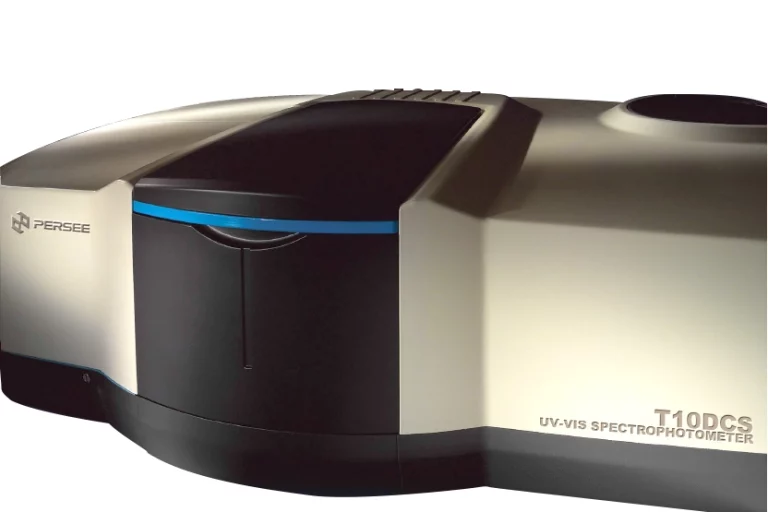
The firm’s lineup covers everything from basic models great for teaching labs to high-end double-beam plans fit for rule-based testing. Standout types include the T7D/T7DS series. These use holographic gratings to cut stray light. At the same time, they keep fast scan powers. The T8DCS gives an adjustable bandwidth from 0.1 to 5 nm. The T9DCS shows very low stray light (≤0.00004%T NaI at 220 nm). All aim to hit tough analytical marks set by today’s labs.

結論

UV-Vis and fluorescence spectrophotometers fill separate but matching roles in analytical science. UV-Vis brings ease and toughness for regular counting jobs based on Beer–Lambert ideas. Fluorescence offers top sensitivity key for tricky biological probes or trace finding work. The best pick rests on lab goals. These might stress concentration, rightness, or molecular detail. Working budgets play a part, too.

FAQについて

Q1: What are the main differences between UV-Vis and fluorescence spectrophotometers?
A1: UV-Vis measures absorbance directly from transmitted light following Beer–Lambert Law principles; fluorescence detects emitted light after excitation at specific wavelengths based on Stokes shift phenomena.


Q2: Can one instrument replace the other?
A2: No; each serves distinct analytical purposes—UV-Vis excels at quantitative concentration analysis while fluorescence specializes in ultra-sensitive detection involving fluorescent molecules.


Q3: How do I decide which spectrophotometer is right for my lab?
A3: Evaluate your primary analytical goals (quantitative vs qualitative), consider sample types handled regularly, review available budget allocations, including maintenance costs, and align these factors with long-term research objectives before selection.


メディアの連絡先

専門家と会う

その他のニュース