Spectroscopy is very important in the current analysis of fibers and textiles. Its uses are broad, helping with everything from forensic work to manufacturing quality control. Among the different instruments used, the single beam UV-Vis spectrophotometer is special. Why? Because of its simple design, affordability, and how well it measures absorbance and transmittance. A critical part of this device is its light source, which directly affects the precision and trustworthiness of spectral data. Grasping this and other basic principles is the key to improving analytical results. This article will explore these fundamental technologies. What’s more, it will use modern instruments as examples to show how to overcome the challenges in fiber and textile analysis.
Fundamentals of Spectroscopy in Fiber and Textile Analysis
Spectroscopy offers a way to examine materials without harming them, based on how they react to electromagnetic radiation. This reaction shows key details. It tells us about their molecular structure, chemical makeup, and physical traits.
Role of Light-Matter Interaction in Spectral Analysis
When light hits a substance, it can be absorbed, passed through, or bounced off. UV-Vis spectroscopy focuses on this. In this method, absorbance is measured against wavelength. This helps to figure out the existence and amount of certain compounds, known as chromophores, inside fibers or textiles.
Types of Spectroscopy Used in Material Characterization
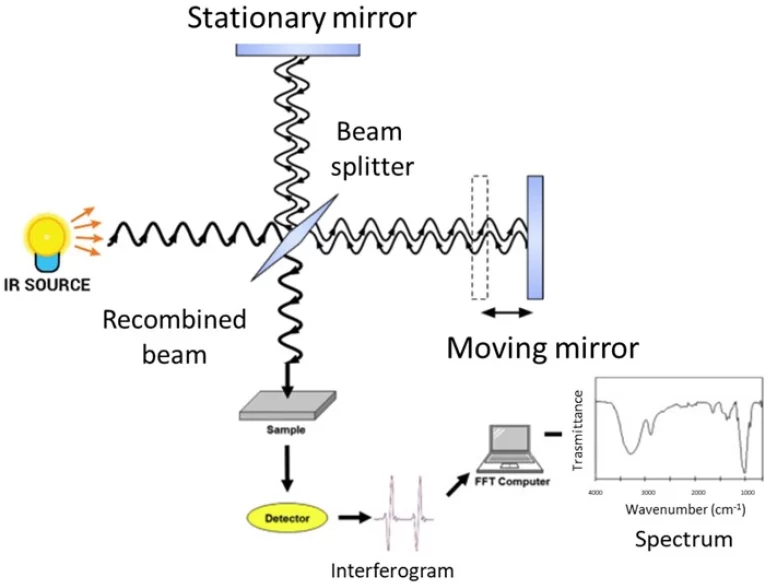
Different kinds of spectroscopy are used for fiber analysis. These include UV-Vis absorption spectroscopy, infrared (IR) spectroscopy, Raman spectroscopy, and atomic spectroscopy. Each method has its own special benefits. For instance, they are great for finding dyes, additives, polymers, or trace elements.
Importance of Accurate Color and Composition Measurement
In textile manufacturing, color uniformity and chemical makeup are very important factors. First of all, spectroscopic methods make sure that dyes are spread evenly. They also confirm that no harmful substances are found in the finished item.
Microspectrophotometry Techniques for Fiber Examination
Microspectrophotometry is a mix of two techniques. It merges microscopy with spectroscopic analysis. The purpose is to look at tiny samples, like single fibers.
Applications of Microspectrophotometry in Forensics and Industry
This technique sees a lot of use in forensic science. There, it is used to compare fiber evidence from crime scenes with materials from a suspect. In the industrial world, it helps with quality assurance by spotting flaws or differences on a microscopic level.
Instrument Configuration and Optical Requirements
Microspectrophotometers need top-quality optics. These optics must be able to focus light onto very small sample spots, often with a spatial resolution as sharp as 1 micrometer (µm). At the same time, they need to keep a high spectral resolution over a wide range of wavelengths.
Benefits of Using Microspectrophotometry for Trace Evidence
A big plus for microspectrophotometry is that it allows for non-destructive testing of trace evidence. It does not change or use up the sample. This is a vital feature for evidence to be allowed in court and for the option of doing more tests later.
Function of the Light Source in a Single Beam UV-Vis Spectrophotometer
In any UV-Vis spectrophotometer, the light source is basic to getting dependable absorbance data.
How Light Sources Enable Absorbance Measurements
The main job of the light source is to send out a steady stream of radiation across UV and visible wavelengths. This radiation goes through a monochromator, which pulls out specific wavelengths before they get to the sample. After that, the detector measures how much light gets through the sample to create an absorbance spectrum.
Characteristics of Deuterium and Tungsten Lamps
Spectrophotometers usually have two kinds of lamps to cover the whole spectrum. They use a deuterium lamp for the UV area (usually 190–400 nm). For the visible and near-infrared areas (usually 350–1100 nm), a tungsten-halogen lamp is used.
Wavelength Coverage and Stability Considerations
Deuterium lamps give a stable, strong output in the deep UV range. On the other hand, tungsten lamps have powerful emission in the visible areas. Instruments switch between the lamps by themselves at a set wavelength. This makes sure the full-spectrum coverage is smooth.
Impact on Measurement Accuracy and Reproducibility
The stability of a lamp has a direct effect on baseline drift and how repeatable a measurement is. A steady light source is absolutely needed to reduce noise. It also makes sure that any changes in the signal come from the sample, not the machine.
Comparison Between Single Beam and Double Beam UV-Vis Spectrophotometers
Knowing the design and functional differences between single and double beam spectrophotometers is important. It helps in picking the right instrument for a specific job.
Structural Differences in Instrument Design
Single beam spectrophotometers send all light through one optical path. First, a baseline reading is done with a reference (blank). Then, a reading of the sample is taken. In contrast, double beam designs work differently. They split the light into two paths at the same time: one goes through the reference and the other through the sample.
Advantages and Limitations of Each Configuration
Single beam systems are a great choice for many everyday jobs. They are mechanically less complex, smaller, and cheaper. In the past, they had one main weakness. This was the possible baseline drift over time, which happened because of lamp changes. On the other hand, double beam instruments naturally fix such issues. They do this by taking measurements at the same time, which gives them better stability but also makes them more expensive and complex.
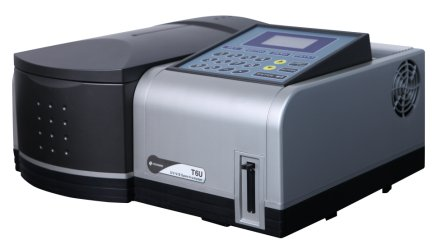
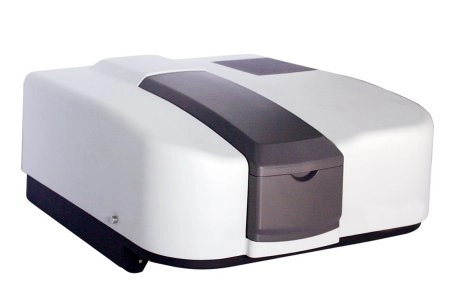
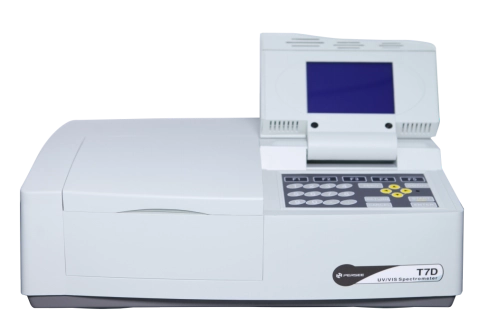
Things have changed, however. Modern engineering has mostly solved the old problems of single beam designs. For instance, instruments like PERSEE’s T6U UV-Vis Spectrophotometer use a very stable dual-lamp system with self-timers. This ensures the light is steady. Thus, it provides great baseline stability, making it a dependable and affordable choice for industrial testing and school labs.

Application of UV-Vis Spectroscopy in Fiber and Textile Testing
UV-Vis spectroscopy gives quick information about dye amounts, fiber treatments, impurities, or damage from breakdown. All of this is essential for textile quality control.
Detection of Dyes, Additives, and Impurities
Spectral peaks that match specific chromophores make it possible to identify the colorants used when dyeing fabric. It can also spot leftover chemicals.
Quantitative Analysis through Absorbance Peaks
By using the Beer-Lambert Law, UV-Vis spectroscopy can accurately measure the amount of compounds in a sample. The law is written as:
A = εbc
どこ:
- A is the absorbance (no units)
- ε (epsilon) is the molar absorptivity (a constant specific to the substance)
- b is the path length of the light through the sample (typically 1 cm)
- c is the concentration of the substance
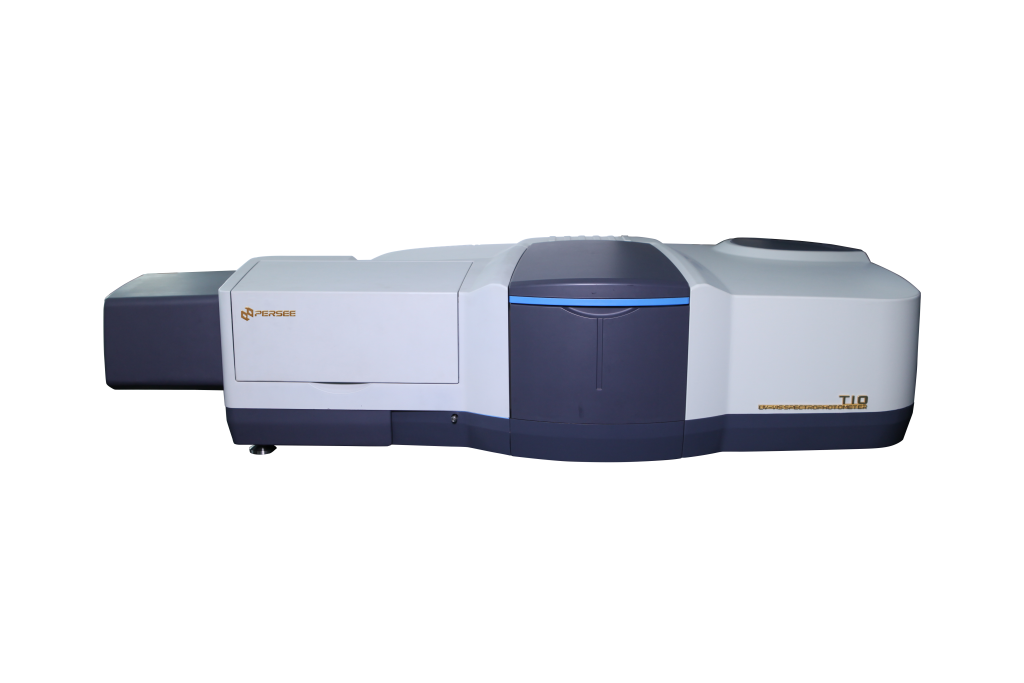
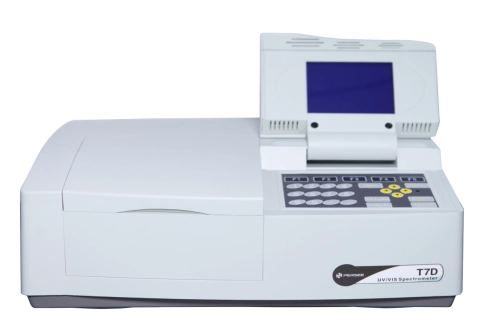
Getting precise quantitative results requires a machine with amazing performance. This is especially true for samples with high absorbance or very low concentrations. For these high-precision jobs, an instrument with ultra-low stray light (e.g., <0.01% T) is a must to ensure linearity. The PERSEE T10DCS UV-Vis Spectrometer, with its advanced low stray light optics, adjustable slit widths, and nitrogen purge feature, is made for such tough research needs.

Monitoring Photodegradation or Fading Effects
Watching for changes in absorbance spectra over time shows fading patterns caused by light exposure. This is helpful for guessing a fabric’s lifespan.
Evaluation of Optical Brighteners and Finishing Agents
Optical brighteners take in UV radiation and send it back out as blue light. Their presence clearly changes the spectra. This makes them easy to find even in small amounts.
Role of Atomic Spectrometers in Textile Elemental Analysis
Besides organic compounds, textiles might have tiny bits of metals added during their making.
Techniques: Atomic Absorption, Emission, and Fluorescence Methods
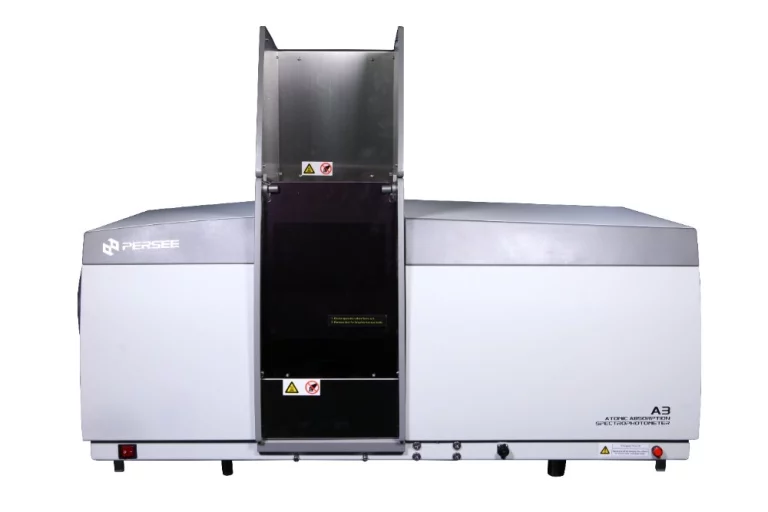
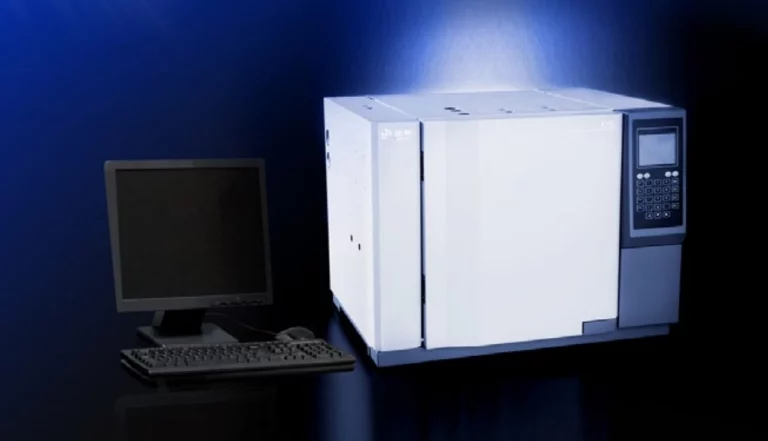
Atomic Absorption Spectroscopy (AAS) and Inductively Coupled Plasma-Optical Emission Spectrometry (ICP-OES) can profile elements down to parts-per-billion levels.
Elemental Profiling for Contaminants or Trace Metals in Fibers
These methods are vital for finding harmful leftovers like lead (Pb) or cadmium (Cd). This makes sure products follow safety rules like REACH (EU) or CPSIA (USA). What’s more, this is especially important for textiles made for children’s items.
結論
Picking the right analytical instrument is about more than just comparing technical details. The instrument’s long-run stability, the trustworthiness of its data, and its ability to handle future needs all come from the maker’s dedication to research, development, and quality. A good partner can offer solid technological help for every task, from simple quality checks to high-level research.
About PERSEE: Technical Strength and Quality Commitment
忍耐 has built a worldwide name in the analytical instruments industry. This is powered by a constant drive for technical improvement. The company puts a lot of money into its future, with over 30% of its employees working in research and development. This ensures its products not only fit today’s needs but also get ready for tomorrow’s problems. This focus on new technology can be seen in its wide range of products—from stable and dependable entry-level instruments like the T6U to high-performance systems like the T10DCS made for the toughest research.
Additionally, all PERSEE products follow strict international quality standards and have many global certifications. This promise to quality is supported by a quick-to-respond global customer service team. It is this complete dedication to new ideas, quality, and support that has won PERSEE many international awards. Thus, it has become a trusted partner for both schools and businesses.
FAQs:
Q1: What does a single beam spectrophotometer measure?
A: A single beam spectrophotometer measures how much light a sample soaks up at different wavelengths. It uses one light path. It takes a baseline reading with a blank solvent first, and then it measures the sample right after.
Q2: Can I use a single beam UV-Vis spectrophotometer for quantitative dye analysis?
A: Yes, for sure. By using the Beer-Lambert Law, which connects absorbance directly to concentration, you can do accurate quantitative checks. Modern machines, even small ones like PERSEE’s T6U, have stable dual-lamp systems. These provide the steady output needed for dependable and repeatable results in dye analysis.
Q3: Why is lamp stability important in UV-Vis spectroscopy?
A: Lamp stability makes sure that the light’s brightness stays the same over time. This reduces baseline drift. That is a huge factor that affects the precision and repeatability of measurements, especially when looking at low amounts of additives or contaminants in textiles.